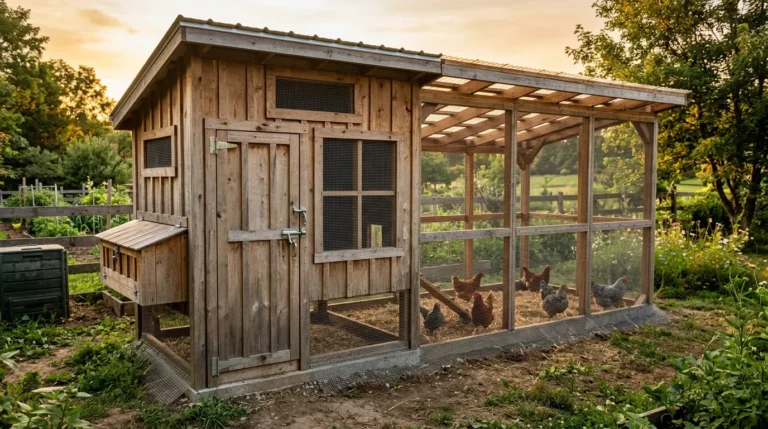
What Is a Chicken Coop Dig Apron and Why You Need One
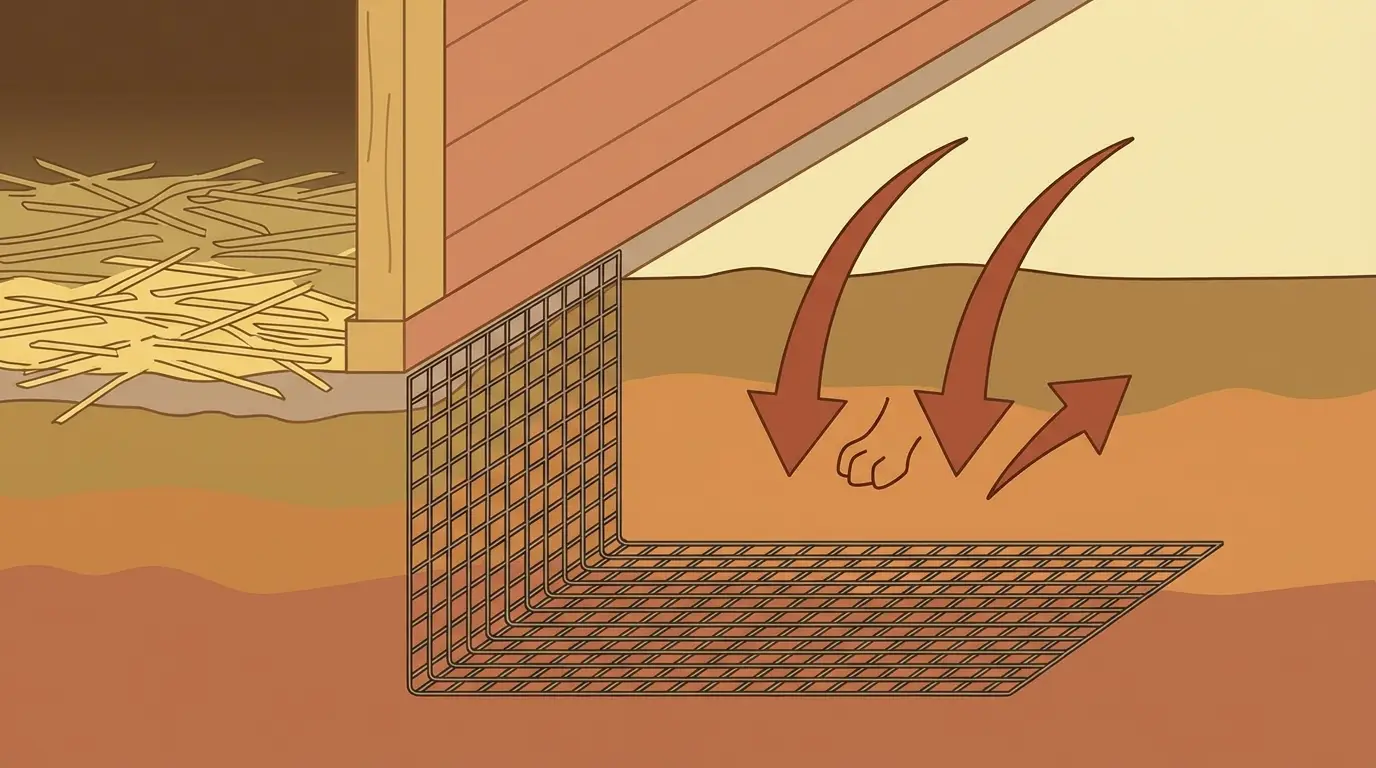
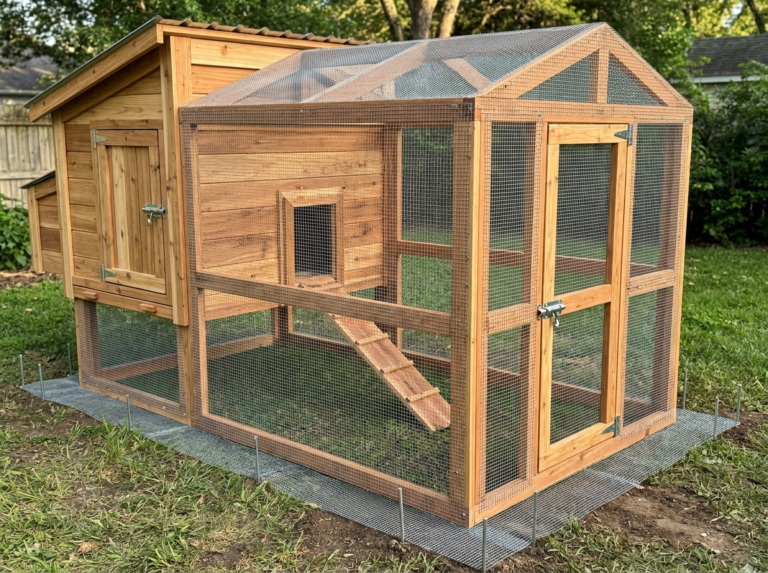
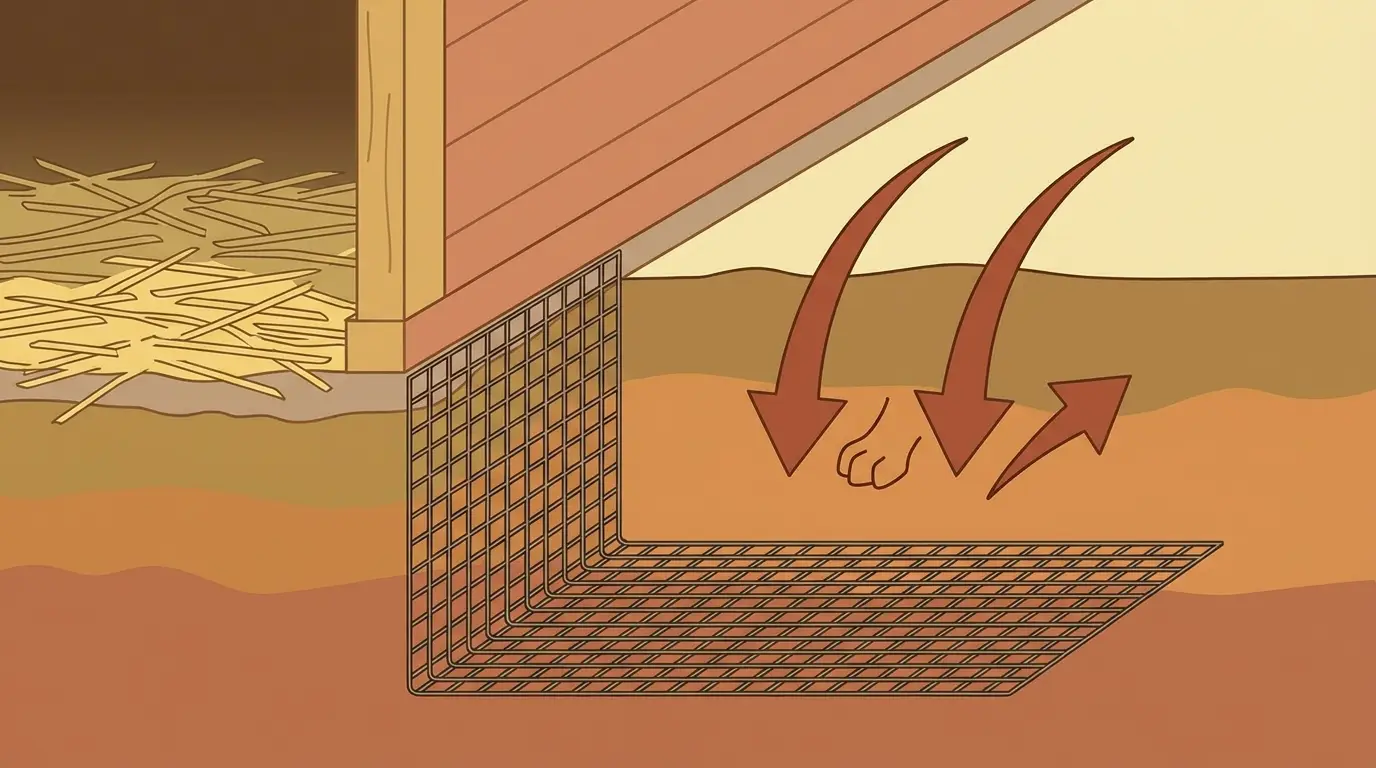
A dig apron is a horizontal strip of hardware cloth attached to the bottom of your coop walls and extending outward along the ground. It creates an underground barrier that stops predators from digging under your coop. If you do not have one, foxes, raccoons, and dogs can tunnel under your walls in minutes.
This guide explains exactly what a dig apron is, why it works better than burying wire straight down, and how to install one in an afternoon.
How Predators Dig Into Coops
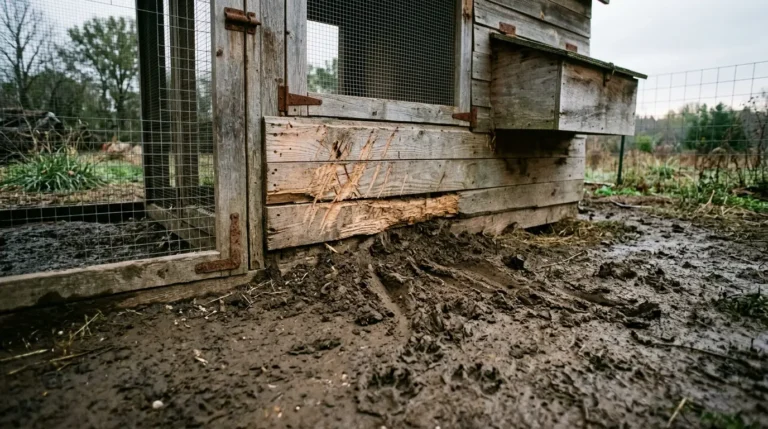
Digging predators — foxes, raccoons, dogs, coyotes, and skunks — all follow the same instinct. They approach the coop wall, press their nose against the base, and start digging right at the foundation line. They dig down and forward, trying to get under the wall.
This is why burying wire straight down often fails. A fox digging at the wall base goes straight down alongside your buried wire and may get under it. A horizontal apron changes the game: no matter where the predator digs at the wall base, it hits wire extending outward and cannot get past.
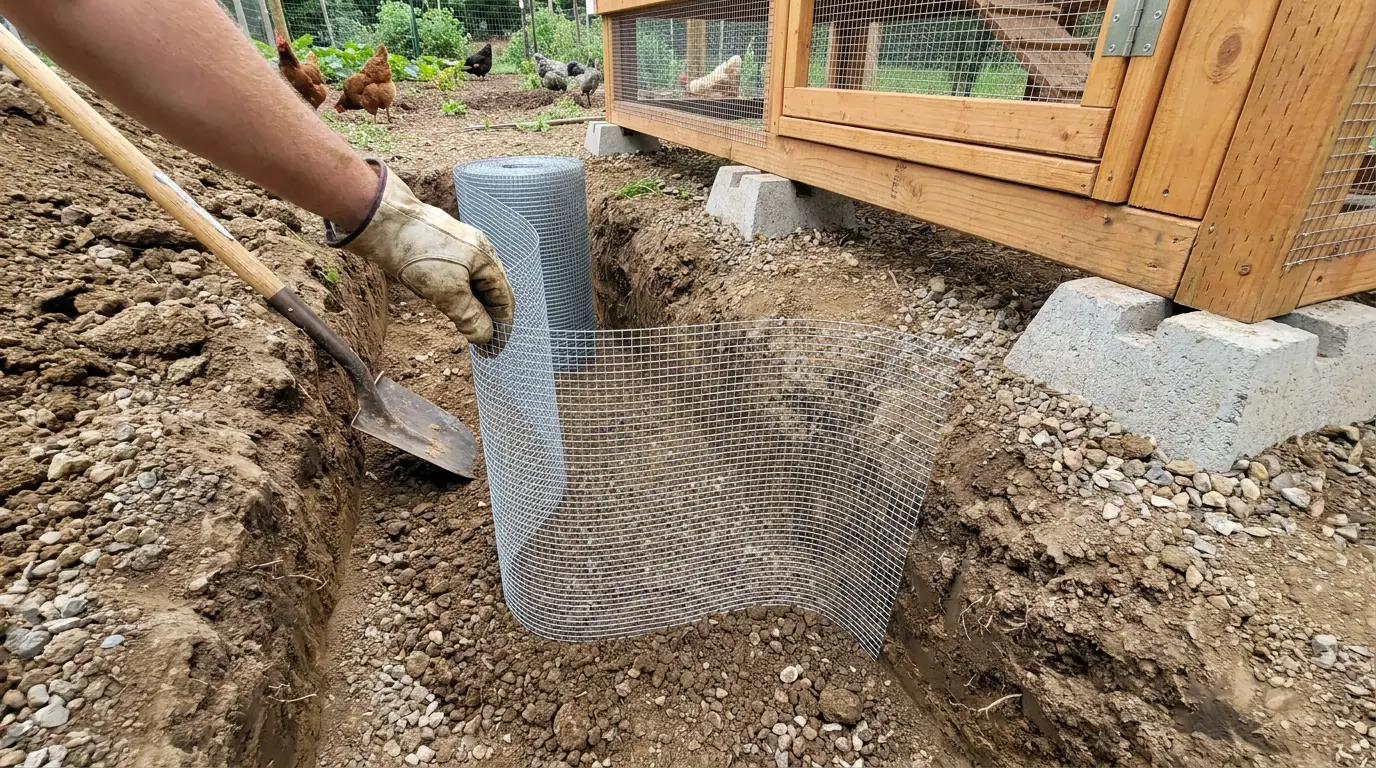
How a Dig Apron Works
The apron works on animal behavior. Predators dig at the wall — not 12 or 24 inches away from it. When they scratch down a few inches and hit a wire barrier extending outward, they do not think to back up and try farther away. They give up and leave.
The apron can be installed two ways:
- Buried method: Dig a shallow trench 4 to 6 inches deep along the wall, lay the apron flat in the trench extending outward, and backfill with soil.
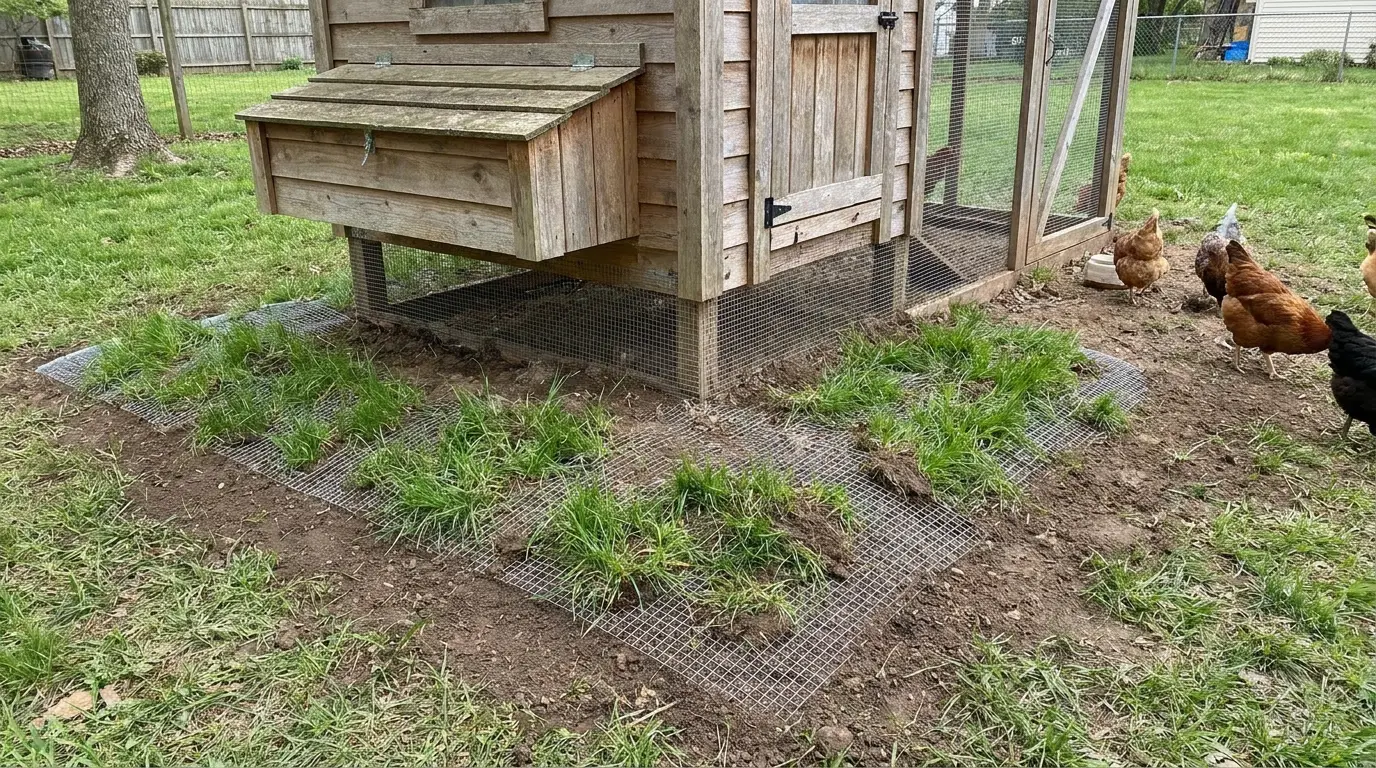
- Surface method: Lay the apron flat on the ground surface, secure it with landscape staples, and cover with soil, mulch, or gravel. Grass grows through and hides it within weeks.
Both methods work equally well. The surface method is faster and easier, especially if your soil is rocky or full of roots.
Dig Apron Dimensions
The apron should extend outward from the wall by at least 12 inches. For areas with heavy fox or coyote pressure, extend it to 24 inches. Use 1/2-inch galvanized hardware cloth — the same material used on your coop openings.
The apron should run the full perimeter of the coop and run. Do not skip sections, even along walls that seem less exposed. Predators circle the entire structure looking for the easiest entry point.
How to Install a Dig Apron (Step by Step)
Step 1: Gather Materials
- 1/2-inch galvanized hardware cloth in 12 or 24 inch width (or cut from a wider roll)
- Screws and fender washers
- Landscape staples (U-shaped ground pins)
- Tin snips or aviation snips
- Heavy work gloves
- Shovel (if burying)
Step 2: Attach the Apron to the Coop Wall
Secure one edge of the hardware cloth to the bottom frame of the coop wall using screws and fender washers. The cloth should bend at a 90-degree angle — one edge goes up the wall 2 to 3 inches, and the rest extends outward along the ground.
$i2
Step 3: Extend the Apron Outward
Lay the hardware cloth flat on the ground extending away from the wall. Pull it taut so it lies flat with no humps or gaps. At corners, overlap the two pieces by at least 4 inches and secure them together with hog rings or wire ties.
Step 4: Secure to the Ground
Drive landscape staples through the hardware cloth into the ground every 12 inches along the outer edge and every 18 inches along the middle. The staples keep the apron flat and prevent predators from lifting the edge.
Step 5: Cover and Conceal
Cover the apron with 2 to 4 inches of soil, mulch, or gravel. If you use soil, the grass will grow through the mesh within a few weeks, completely hiding the apron. The wire stays intact and functional underground for years.
Common Dig Apron Mistakes
- Using chicken wire instead of hardware cloth: Chicken wire rusts fast underground and tears easily. Always use galvanized hardware cloth.
- Leaving gaps at corners: Corners are the most common dig-in point. Overlap hardware cloth pieces generously at every corner.
- Skipping the apron on “safe” sides: Predators test every side of your coop. Cover the full perimeter.
- Not securing to the wall: If the apron is not attached to the coop frame, predators can push between the wall and the apron edge.
Frequently Asked Questions
Can I just pour a concrete footer instead?
A concrete footer works but costs significantly more and requires more labor. A hardware cloth dig apron provides the same level of protection at a fraction of the cost and can be installed in one afternoon.
Will the hardware cloth rust underground?
Galvanized hardware cloth resists rust for 10 to 15 years even when buried. Avoid non-galvanized or vinyl-coated options for underground use, as the coating can crack and expose bare metal to moisture.
How do I add a dig apron to an existing coop?
Use the surface method. Attach the hardware cloth to the bottom of your existing coop wall, extend it outward on the ground surface, pin it down with landscape staples, and cover with soil or mulch. No excavation needed.
All of our coop plans include dig apron specifications so your birds are protected from underground predators from day one.
Written by The CoopCrafts Team
Our team of DIY coop builders and backyard chicken keepers. We design, build, and field-test predator-proof coop plans so you can protect your flock with confidence.