Signs a Predator Is Stalking Your Chicken Coop
Predators rarely attack without scouting first. Before a raccoon tears through your wire or a fox digs under your wall, it visits multiple times testing for weaknesses. If you know what to look for, you can reinforce your coop before an attack happens.
Early Warning Signs
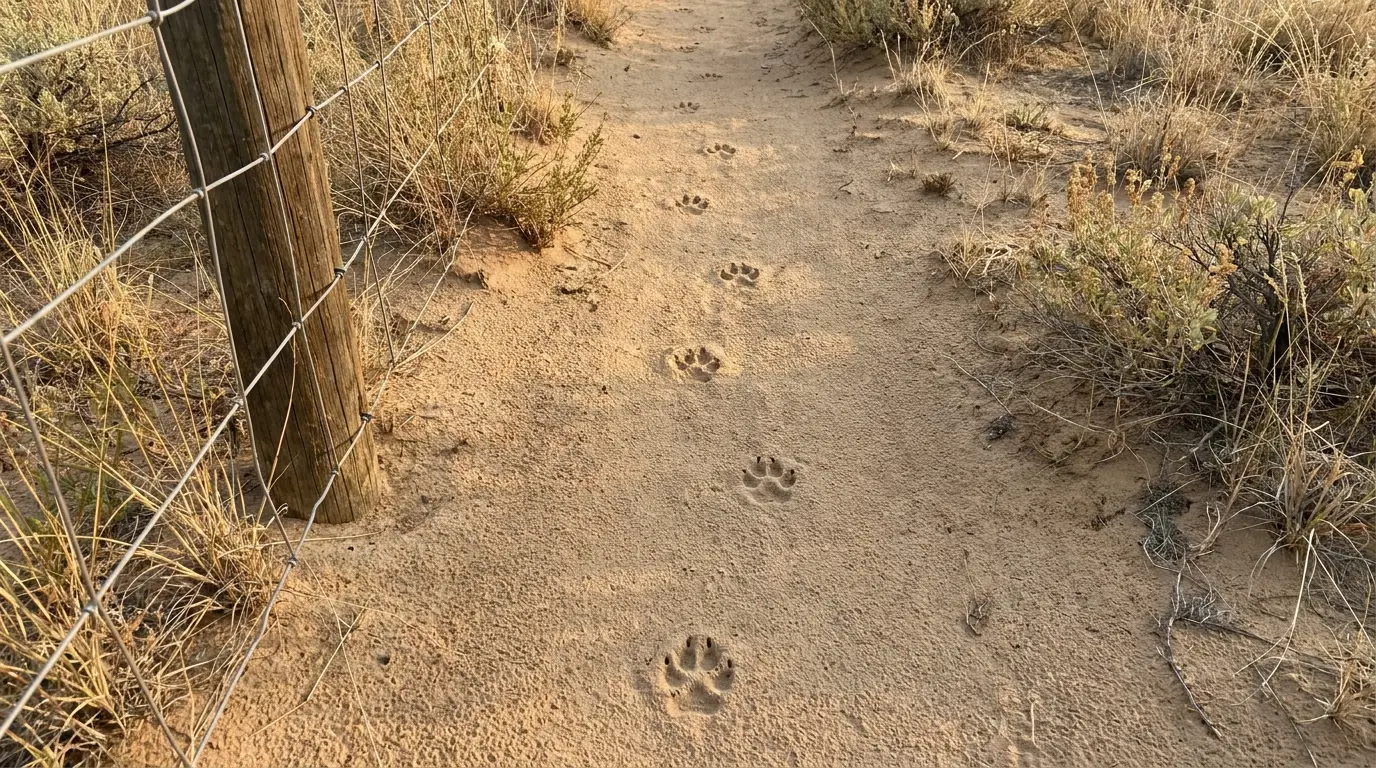
- Tracks near the coop: Check soft ground each morning. Fresh tracks mean a predator visited overnight.
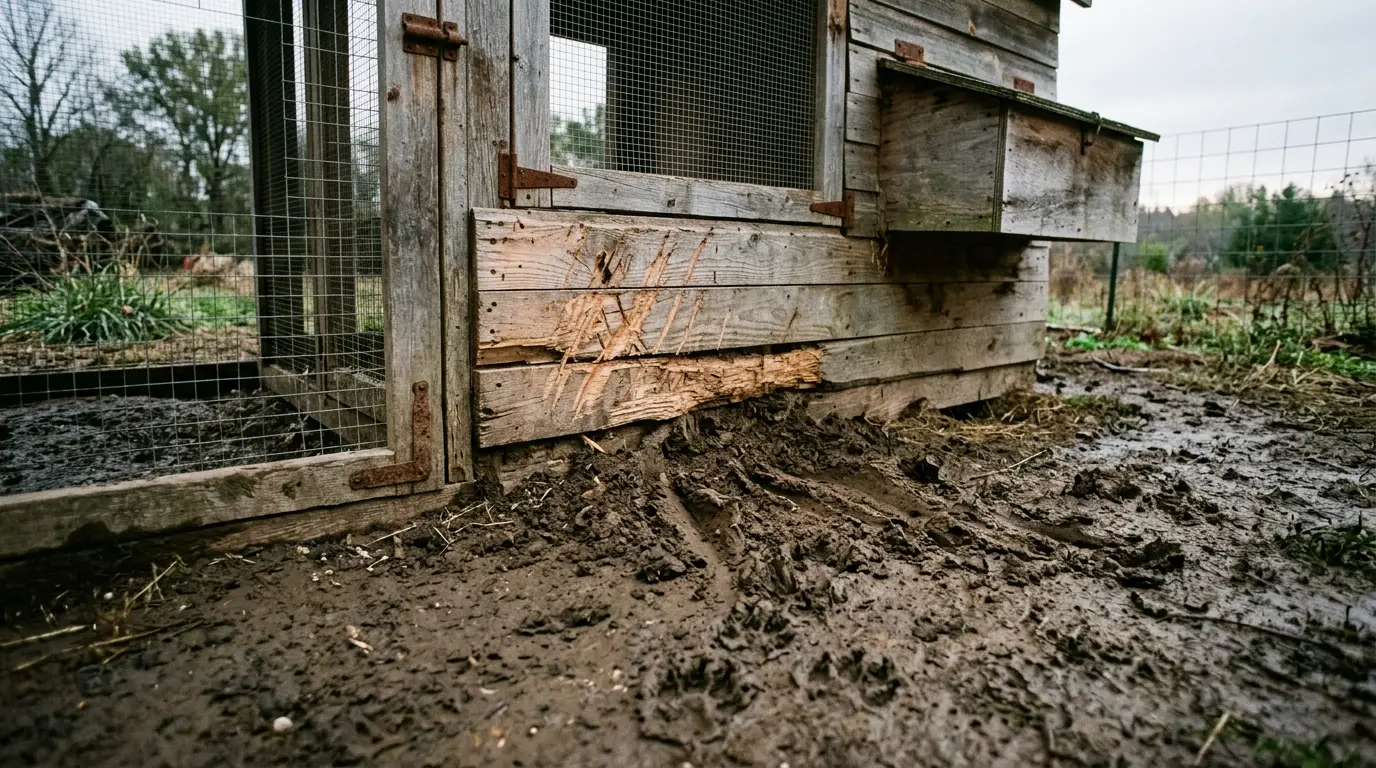
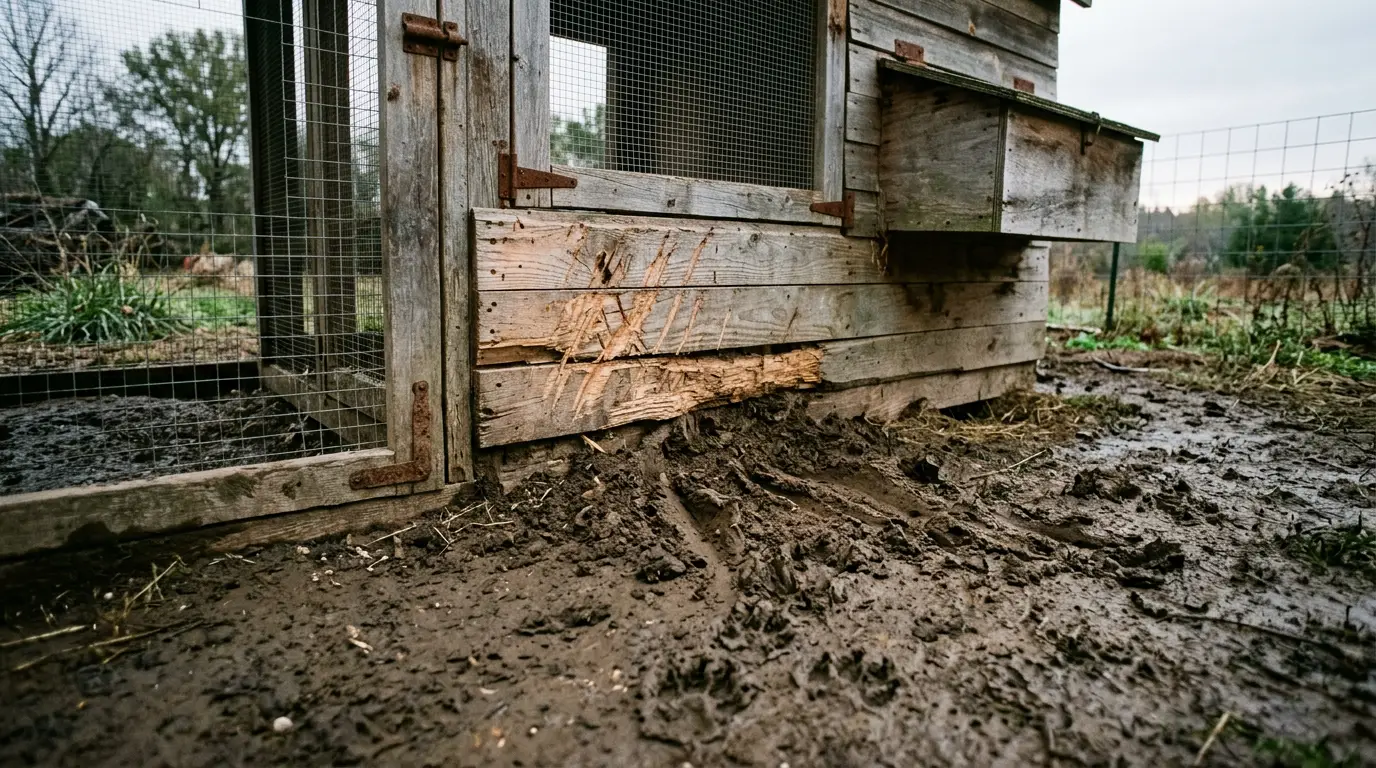
- Scratch marks on wood or wire: Raccoons and foxes test the structure by scratching at doors and mesh.
- Dig marks at wall bases: Shallow scratches in soil are test digs.
- Droppings near the coop: Predator scat within 20 feet means the animal is spending time nearby.
- Bent or pulled wire: Check hardware cloth for areas pushed or bent away from the frame.
- Missing eggs: Snakes and rats take eggs without disturbing birds.
Changes in Flock Behavior
- Refusing to leave the coop: Something scared them overnight.
- Alarm calls: Frequent alarms without visible cause suggest a lurking predator.
- Clustering together: Chickens spread out when relaxed but bunch up when threatened.
- Roosting higher than usual: Birds seek height when ground predators are near.
- Reduced egg production: Stress from predator presence drops laying.
Identifying the Predator
Raccoon
Five-toed tracks with finger-like prints. Scratch marks on latches. Reaches through wire or opens latches.
Fox
Dog-like tracks in a straight line. Dig marks at wall bases. Strong musky odor. Grabs a bird and carries it away.
Hawk or Owl
No ground tracks. Feather piles with a plucked appearance. Whitewash on fence posts. Hawks attack by day, owls by night.
Weasel or Mink
Tiny tracks about 1 inch wide. Fits through 1-inch gaps. Multiple birds killed with neck bites. Kills more than it eats.
Snake
No tracks or noise. Eggs disappear. Small chicks vanish. Check for gaps under doors.
Dog
Large messy tracks. Multiple birds killed and scattered but not eaten. Dogs kill for sport, not food.
What to Do When You Find Signs
- Document everything: Photos of tracks with a coin for scale helps identify the species.
- Inspect the full coop: Check where signs are concentrated — those are the entry points being tested.
- Fix vulnerabilities immediately: The predator is coming back tonight.
- Add temporary deterrents: Motion lights and sprinklers buy time while you make permanent repairs.
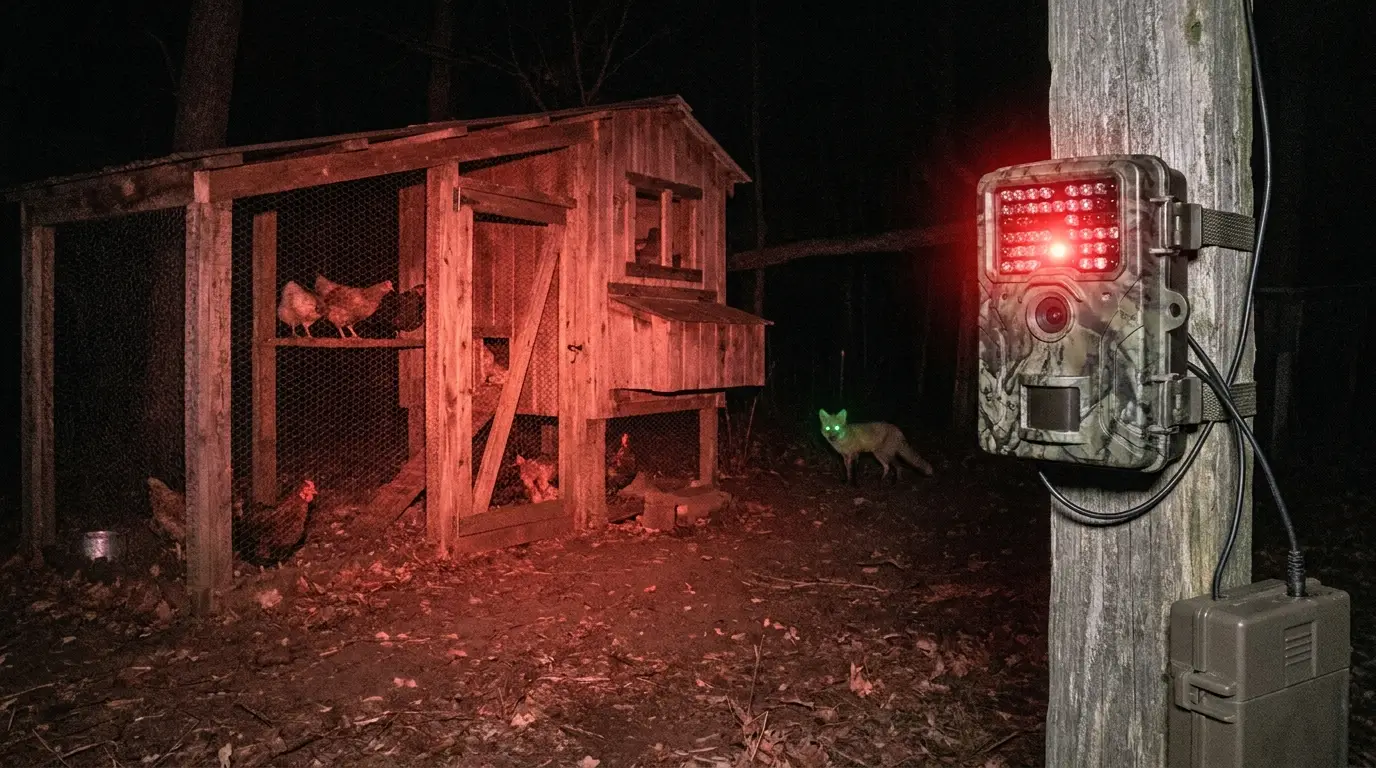
- Set up a trail camera: A $30-50 camera confirms the species and reveals its approach path.
Frequently Asked Questions
How often should I check?
Every morning during your 2-minute walk around the coop. Thorough inspection monthly.
Can I use a trail camera?
Yes. Mount one facing the coop door and another along the approach path. Review weekly.
Should I worry about daytime signs?
Yes. A hawk perching nearby or a stray dog circling are equally important. Address them the same day.
If you spot any of these signs, upgrade your hardware immediately. Start with the best chicken coop locks and latches — a two-step lock on every access point is your first line of defense.
n
Predator-proof your coop before the signs turn into an attack. Our coop plans are designed with all five layers of protection.
Written by The CoopCrafts Team
Our team of DIY coop builders and backyard chicken keepers. We design, build, and field-test predator-proof coop plans so you can protect your flock with confidence.