How Big Should a Chicken Coop Be? Real Numbers, Not Catalog Claims
Last updated: August 2, 2026 · CoopCraftsPro
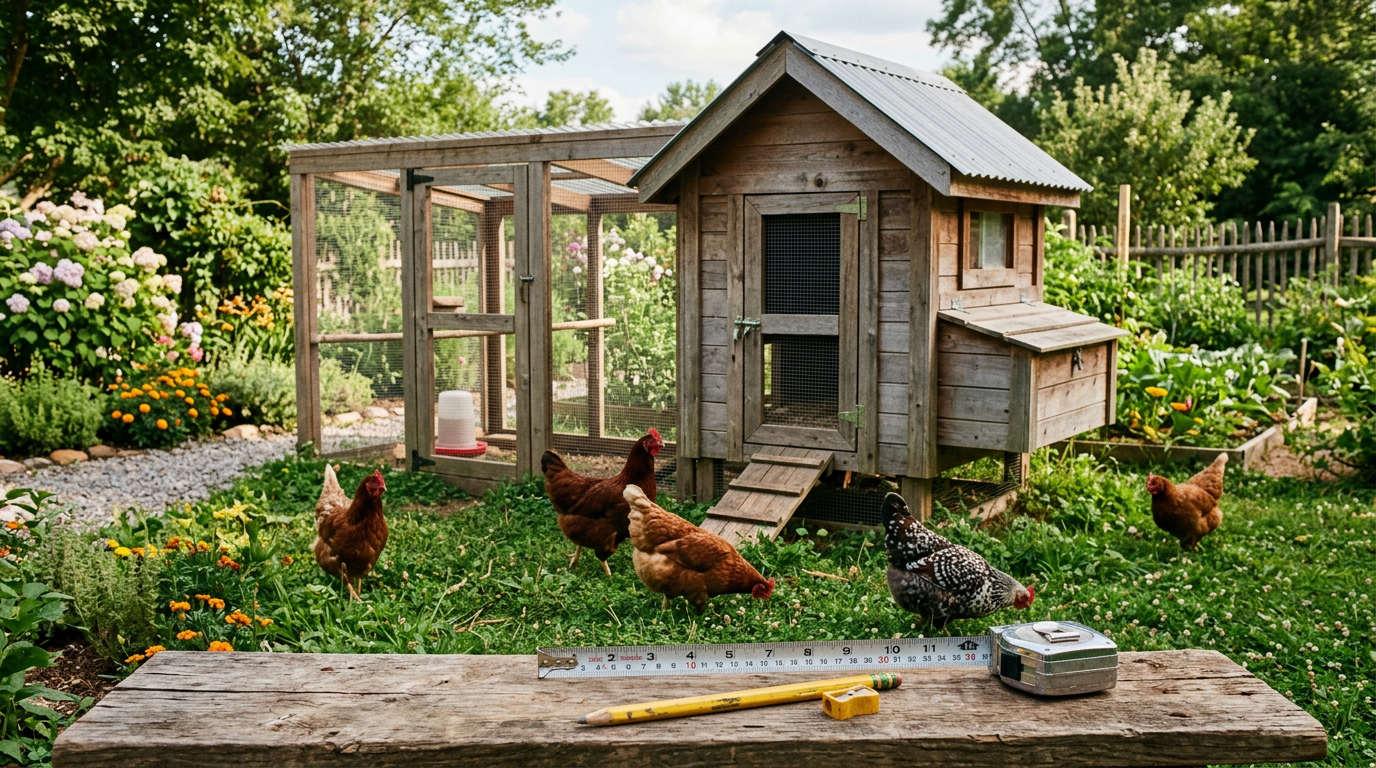
Short answer: Standard hens need 4 square feet of interior coop floor and 10 square feet of outdoor run each. These are two separate measurements and do not combine. A six-hen flock therefore needs a 24 sq ft coop plus a 60 sq ft run – commonly built as a 4×6 coop with a 6×10 run.
If you build your coop too small, nothing else you do will fix it. Not better bedding, not more treats, not a bigger run added later. Undersizing is the single most common and most expensive mistake in backyard chicken keeping, and it is usually made before a single board is cut.
The good news is that correct sizing comes down to two numbers and one rule about how to use them.
The Two Numbers That Matter
For standard-size hens – Orpingtons, Rhode Island Reds, Barred Rocks, Australorps, and most other common backyard breeds:
- 4 square feet of interior coop floor per hen
- 10 square feet of outdoor run per hen
And here is the rule that trips up almost every beginner:
These are two separate measurements. They do not combine, and they do not substitute for each other.
This is not just folk wisdom. The extension guidance on space allowances lists indoor coop space and outdoor access as two separate requirements rather than one combined figure, and sets the indoor minimum at 3 to 4 square feet per hen.
The 4 square foot figure used throughout this guide sits at the top of that published range. Building to the upper end costs very little at the framing stage and leaves room for the stretches of weather that keep the whole flock indoors.
A great many people read “4 square feet per chicken” and assume that includes the run, or that a generous run offsets a cramped coop. It does not. The coop is where birds spend long winter nights and rainy days, sometimes for many hours at a stretch. The run is where they spend active daylight hours. Each has to be sized on its own.
What That Looks Like in Real Coops
| Flock size | Coop floor (4 sq ft/hen) | Run (10 sq ft/hen) | Common build |
|---|---|---|---|
| 3 hens | 12 sq ft | 30 sq ft | 3×4 coop + 5×6 run |
| 4 hens | 16 sq ft | 40 sq ft | 4×4 coop + 5×8 run |
| 6 hens | 24 sq ft | 60 sq ft | 4×6 coop + 6×10 run |
| 8 hens | 32 sq ft | 80 sq ft | 4×8 coop + 8×10 run |
| 12 hens | 48 sq ft | 120 sq ft | 6×8 coop + 10×12 run |
| 20 hens | 80 sq ft | 200 sq ft | 8×10 coop + 10×20 run |
Why Catalog Capacity Claims Are Not Reliable
A recurring complaint among experienced keepers is that manufactured coops advertise capacities their floor space cannot support. A coop marketed as holding six to eight birds frequently offers barely enough floor area for three or four by the 4-square-foot standard.
Do not buy or build to an advertised bird count. Measure the interior floor, divide by four, and that is your real capacity. If a listing does not publish interior dimensions, treat that as an answer in itself.
The same caution applies to plans you find online. Check the stated dimensions against the stated bird count before you buy lumber.
When Birds Do Not Have Enough Room
Overcrowding does not show up as a dramatic event. It shows up as a slow accumulation of problems that owners often blame on other causes:
- Feather picking and bullying. Crowded hens establish pecking order through constant physical pressure. Bare backs and bloody vents follow.
- Ammonia buildup. More droppings in less space, and the fumes irritate respiratory tissue.
- Reduced laying. Stress suppresses production, and crowding is chronic stress.
- Faster disease spread. Close contact moves mites, lice, and illness through a flock quickly.
- Eggs laid on the floor. Hens denied a calm, private nest will find somewhere else.
Adjusting the Numbers for Your Situation
Bantams
Small breeds need roughly 2 square feet of coop and 5 square feet of run per bird. Note that bantams often fly better than standard hens, so plan for a covered run.
Large and heavy breeds
Jersey Giants, Brahmas, and similar heavy breeds want 5 to 6 square feet of coop floor each, plus wider, lower roosts.
Cold climates and long winters
If deep snow keeps birds inside for weeks at a time, build closer to 5 to 6 square feet per hen. The coop becomes their entire world for long stretches, and cabin fever produces the same picking behavior as crowding.
All-in-one tractors with no separate coop
If the shelter and the run are one enclosure, combine the requirements: plan on about 14 square feet per bird total.
Oregon State University Extension’s backyard chicken coop design guide is a useful companion read when you are turning these numbers into an actual footprint.
The Measurements People Forget
Floor area is the headline number, but three others decide whether a coop actually works day to day.
Roost space
Extension guidance suggests roughly 5 to 10 inches of roost per bird; most keepers plan 8 to 12 inches of roost bar per hen so nobody gets crowded off the end. Use a flat 2×4 with the wide side up so hens can settle their feet fully under their bodies – important protection against frostbitten toes in winter. Place roosts higher than the nesting boxes, or hens will sleep in the boxes and foul the eggs.
Nesting boxes
One box per three to four hens, about 12x12x12 inches each – the same dimensions extension services recommend. Adding more boxes rarely helps; hens famously queue for the same favorite box regardless.
Height and access
This is the detail most first-time builders regret. A coop you cannot get inside is a coop that does not get cleaned properly. Keepers who rebuild almost always rebuild taller. If you can manage a walk-in height of 6 feet or more, you will thank yourself every week for years.
Build Once, Not Twice
The most common piece of advice from people on their second coop is simple: build bigger than you think you need. Flocks grow. Chicken math is real, and the coop that fits perfectly today is crowded the spring you bring home three more chicks.
Adding 2 feet of length at the framing stage costs a few boards. Rebuilding costs an entire second coop.
Frequently Asked Questions
How much space does one chicken need?
A standard-size hen needs 4 square feet of interior coop floor plus 10 square feet of outdoor run. Bantams need about 2 square feet of coop and 5 square feet of run.
Does the run count toward the 4 square feet per chicken?
No. Coop floor area and run area are measured separately. A large run does not offset a cramped coop, because birds spend long winter nights and rainy days inside the coop.
How big should a coop be for 6 chickens?
A six-hen flock needs 24 square feet of coop floor and 60 square feet of run. In practice that is typically a 4×6 coop with a 6×10 attached run.
Why do manufactured coops overstate how many chickens they hold?
Advertised capacities are frequently based on how many birds physically fit rather than the 4 square feet per bird standard. Measure the interior floor and divide by four to get real capacity.
How many nesting boxes do I need?
One box per three to four hens, each about 12x12x12 inches. Adding extra boxes rarely helps, because hens tend to queue for the same preferred box regardless of how many you provide.
For larger flocks of 15-20 birds, you need significantly more space. Check our chicken coop plans for 20 chickens for exact dimensions, ventilation requirements, and nesting box counts.
Ready to build? Our chicken coop and run plans include exact dimensions for the coop and attached run, sized from 4 hens to 20.
n
Get the size right and almost every other problem in chicken keeping gets easier. Get it wrong, and you will spend years managing symptoms of a decision you made in an afternoon.