Chicken Egg Color Chart: What Breed Lays What Color? (2026 Guide)
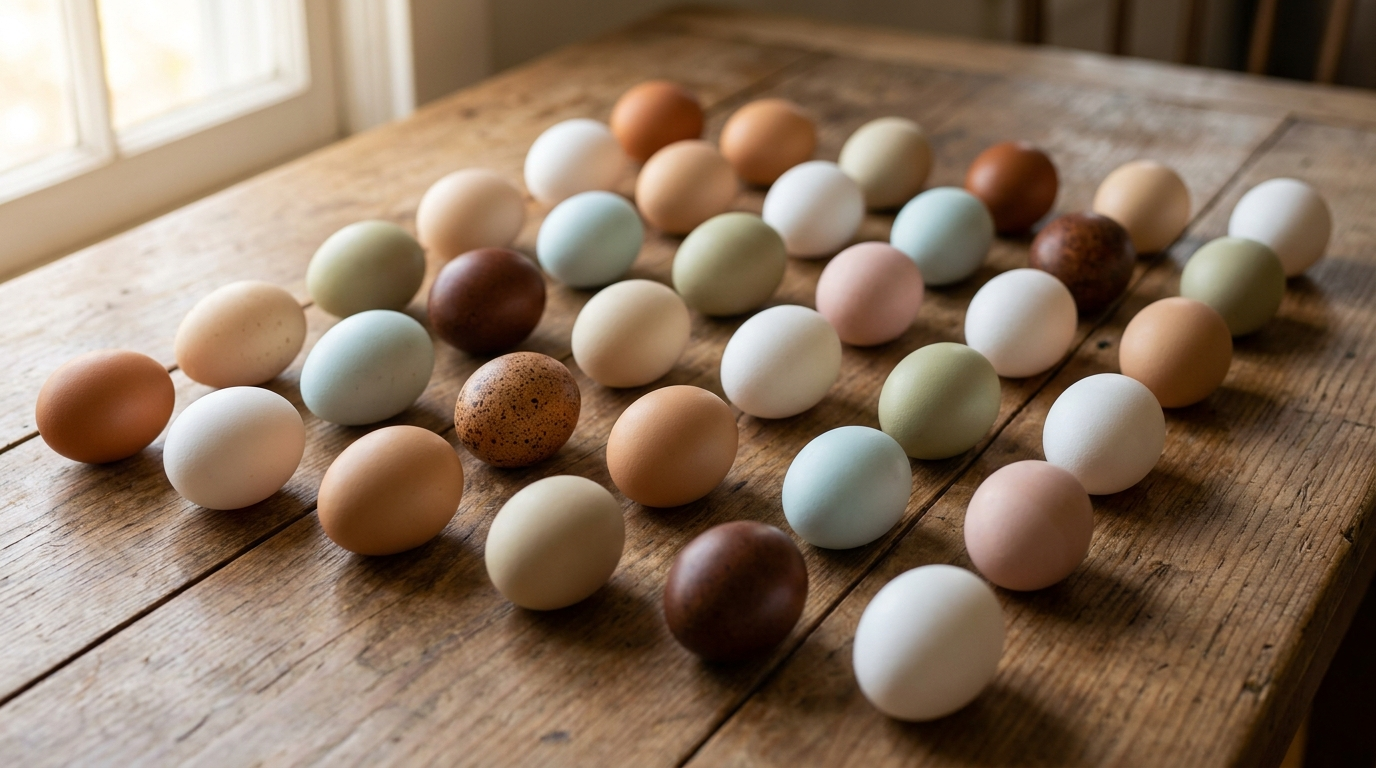
If you’ve ever cracked open a carton of farm-fresh eggs and wondered why one is pale blue, one is speckled brown, and one is nearly white, you’re not imagining things. Chicken eggs come in a wider range of colors than most beginners realize — and the color is determined entirely by the breed.
This guide covers every egg color a hen can lay, which breeds produce them, and how many eggs per year to expect from each.
Why chicken eggs come in different colors
All eggs start out white inside the hen. The color you see on the outside comes from two pigments deposited on the shell as the egg forms:
- Protoporphyrin — produces brown tones (light to dark chocolate).
- Oocyanin — produces blue tones and is laid down early, so it colors both the inside and outside of the shell.
When both pigments are present, you get green or olive eggs. When neither is deposited, you get white.
White egg layers
| Breed | Eggs / year | Temperament | Beginner? |
|---|---|---|---|
| Leghorn | 280–320 | Active, flighty | Yes — top producer |
| Ancona | 220–280 | Alert, hardy | Yes |
| Minorca | 200–220 | Calm | Yes |
| Polish | 150–200 | Docile, comical | Yes |
Cream and light-brown egg layers
| Breed | Eggs / year | Temperament | Beginner? |
|---|---|---|---|
| Buff Orpington | 200–280 | Calm, affectionate | Yes — excellent starter |
| Australorp | 250–300 | Gentle, quiet | Yes |
| Sussex | 250–280 | Curious, friendly | Yes |
| Faverolles | 180–240 | Sweet, docile | Yes |
| Brahma | 150–200 | Gentle giant | Yes |
Brown egg layers
| Breed | Eggs / year | Temperament | Beginner? |
|---|---|---|---|
| Rhode Island Red | 250–300 | Assertive, hardy | Yes — the classic |
| Barred Plymouth Rock | 200–280 | Friendly, calm | Yes |
| Wyandotte | 200–240 | Confident, cold-hardy | Yes |
| ISA Brown | 300–350 | Docile, prolific | Yes — top producer |
Dark chocolate brown egg layers
| Breed | Eggs / year | Temperament | Beginner? |
|---|---|---|---|
| Marans (Black Copper) | 150–200 | Calm, quiet | Yes — gorgeous eggs |
| Welsummer | 160–200 | Friendly, hardy | Yes — speckled eggs |
| Barnevelder | 180–200 | Calm, cold-hardy | Yes |
| Penedesenca | 160–200 | Skittish | Moderate |
Blue egg layers
| Breed | Eggs / year | Temperament | Beginner? |
|---|---|---|---|
| Ameraucana | 200–250 | Docile, alert | Yes — true blue eggs |
| Cream Legbar | 180–220 | Active, auto-sexing | Yes |
| Araucana | 150–200 | Friendly, rumpless | Moderate |
Green and olive egg layers
| Breed | Eggs / year | Temperament | Beginner? |
|---|---|---|---|
| Easter Egger | 200–280 | Docile, variable | Yes — cheapest blue-green eggs |
| Olive Egger | 180–220 | Friendly | Yes — deep olive shells |
| Isbar | 150–200 | Calm, cold-hardy | Moderate |
Common egg-color myths, debunked
Myth 1: Brown eggs are more nutritious than white. False. Nutrition depends on the hen’s diet, not shell color.
Myth 2: Blue eggs are dyed. False. The blue pigment is deposited throughout the shell during formation — crack a blue egg and the inside of the shell is blue too.
Myth 3: Diet changes shell color. False. Diet affects yolk color, but shell color is genetic and fixed at hatching.
Building a rainbow carton: recommended flock combos
The Starter Rainbow (6 hens)
2 ISA Browns (brown) + 1 Ameraucana (blue) + 1 Marans (dark brown) + 1 Buff Orpington (cream) + 1 Easter Egger (green). ~1,500–1,700 eggs/year across 5 colors.
The Cold-Climate Rainbow (6 hens)
2 Barnevelders + 2 Wyandottes + 1 Ameraucana + 1 Olive Egger. All winter-hardy, all handle a well-ventilated coop in freezing weather.
The Show-Off Rainbow (8 hens)
1 Marans + 1 Welsummer + 1 Ameraucana + 1 Cream Legbar + 1 Olive Egger + 1 Buff Orpington + 1 Leghorn + 1 ISA Brown. Eight different shades, ~1,800 eggs/year.
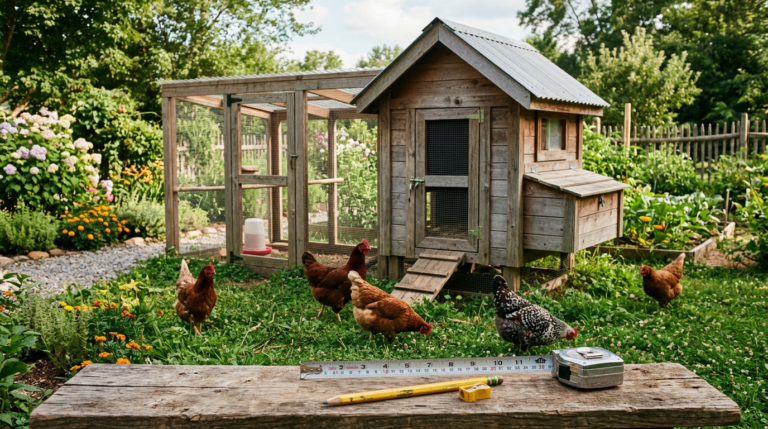
How coop design affects your flock choice
- Space per bird: Larger breeds (Brahmas) need 5+ sq ft; lighter breeds do fine with 3–4 sq ft.
- Perch height: Heavy breeds benefit from lower perches to prevent leg injuries.
- Climate: Mediterranean breeds have large single combs prone to frostbite. In cold climates, choose rose-comb or pea-comb breeds — or build a coop with excellent ventilation.
Every CoopCraftsPro plan lists the flock size and breed types it’s optimized for.
Frequently asked questions
Do egg colors taste different?
No. Flavor comes from diet and freshness, not shell color.
Will my hen always lay the same color?
Yes. Once a hen’s first egg comes in, that’s her color for life.
Which breed lays the most eggs?
Commercial hybrids like ISA Brown lead at 300–350/year. Heritage top is the Leghorn at 280–320.
Can two different-colored parents produce a mystery color?
Yes — that’s how Olive Eggers happen. Blue-egg breed crossed with dark-brown-egg breed = olive-green eggs.
Do Silkies lay colored eggs?
Silkies lay small cream eggs, ~100–150 per year.