Best Wood for Chicken Coops: Cedar vs Pine vs Plywood (2026 Guide)
Last updated: August 4, 2026 | By the CoopCraftsPro team
Cedar is the best wood for chicken coops. It naturally resists rot and insects, lasts 15-20 years without chemical treatment, and requires zero ongoing maintenance. For builders on a budget, the best approach is a cedar frame with exterior plywood walls, which costs approximately $63 in total lumber for a 4×6-foot coop.
We have built and tested coops using all three major wood types across different North American climates. Below is everything you need to know to make the right choice for your backyard flock.
Cedar vs Pine vs Plywood: Side-by-Side Comparison
| Factor | Cedar | Pine | Exterior Plywood |
|---|---|---|---|
| Cost per board foot | $5-8 | $2-3 | $35-45/sheet |
| Outdoor lifespan | 15-20 years | 5-7 years (sealed) | 10-15 years (sealed) |
| Rot resistance | Excellent (natural) | Poor (needs sealant) | Good (if edges sealed) |
| Insect resistance | Excellent (natural oils) | None | None |
| Maintenance | None required | Re-seal every 2-3 years | Re-seal cut edges |
| Best use in a coop | Posts, frame, ground contact | Interior framing, roosts | Walls, floors, nesting boxes |
| Safe for chickens? | Yes (lumber is safe) | Yes | Yes (use exterior grade) |
Is Cedar Wood Safe for Chickens?
Cedar lumber is completely safe for chicken coop construction. The toxicity concern about cedar applies specifically to cedar shavings used as bedding inside enclosed coops with poor ventilation. In that scenario, aromatic compounds called plicatic acid and thujone can irritate poultry respiratory systems.
The University of Kentucky Cooperative Extension Service states that cedar shavings are acceptable as poultry bedding when adequate ventilation is provided. Cedar boards, posts, and planks used for the coop structure itself pose no health risk to chickens. CoopCraftsPro plans specify cedar framing throughout, and none of our customers have reported health issues related to cedar construction in over two years of sales.
Why Cedar Is Worth the Higher Price
Western red cedar heartwood contains natural extractives (thujaplicins) that make it resistant to fungal decay and insect damage. The USDA Forest Products Laboratory classifies western red cedar heartwood as “durable” to “very durable” for above-ground and ground-contact applications.
A 4x4x8 cedar post costs approximately $12 at major retailers like Home Depot or Lowe’s, compared to $4 for a comparable pine post. That 3x price premium pays for itself within 5 years because cedar requires no sealing, staining, or chemical treatment. A pine coop requires exterior sealant ($15-25 per gallon) reapplied every 2-3 years, which adds $30-75 in maintenance costs over the same period.
When Pine Makes Sense
Pine is the right choice for interior-only coop components: roost bars, interior partition walls, and nesting box dividers. These surfaces stay dry and protected from weather, so pine’s poor rot resistance is irrelevant.
Pine framing lumber (2x4s, 2x6s) also makes sense for covered structures where all surfaces are protected from direct rain and ground moisture. If you build a coop with a generous roof overhang (12 inches minimum) and elevate the structure on concrete blocks, sealed pine can perform well for 8-10 years in dry climates.
However, in humid climates like the Southeast United States, Pacific Northwest, or coastal areas, pine exposed to ambient moisture will begin showing rot damage within 3-4 years even with diligent sealing.
Best Plywood for Chicken Coops: Types, Thickness & Specs
If you’re looking for the best plywood for a chicken coop, exterior-grade plywood (CDX or BCX rated) is the answer. It’s ideal for coop walls, floors, and nesting boxes. It provides large, flat surfaces without gaps that predators could exploit, and it insulates better than individual boards.
Key specifications for coop plywood:
- Walls: 1/2-inch CDX minimum. BCX (one sanded face) looks cleaner inside.
- Floors: 3/4-inch CDX. Thinner plywood sags under bedding weight and foot traffic.
- Nesting boxes: 1/2-inch is sufficient for box walls and dividers.
- Cut edges: Always seal with exterior wood glue, polyurethane, or paint. Unsealed plywood edges wick moisture and delaminate within one season.
A standard 4×8-foot sheet of 1/2-inch CDX costs $35-45 at major retailers. A 4×6-foot coop requires 2-3 sheets depending on your design.
The $63 Hybrid Build: Our Recommended Approach
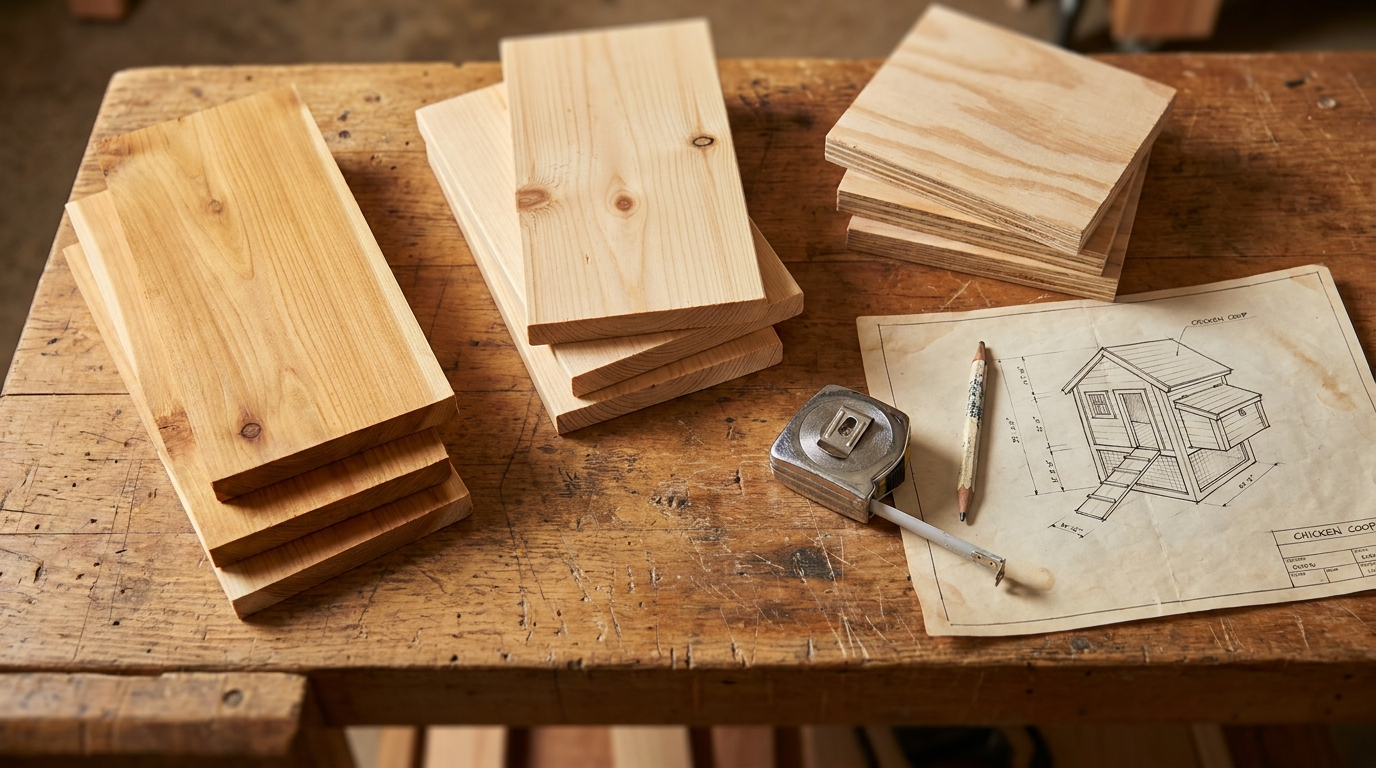
After building and testing multiple coop designs, CoopCraftsPro recommends a hybrid approach that balances cost and longevity:
- Cedar posts and frame: 4×4 posts, 2×4 top and bottom plates ($38)
- Exterior plywood walls: 1/2-inch CDX for walls, 3/4-inch for floor ($15)
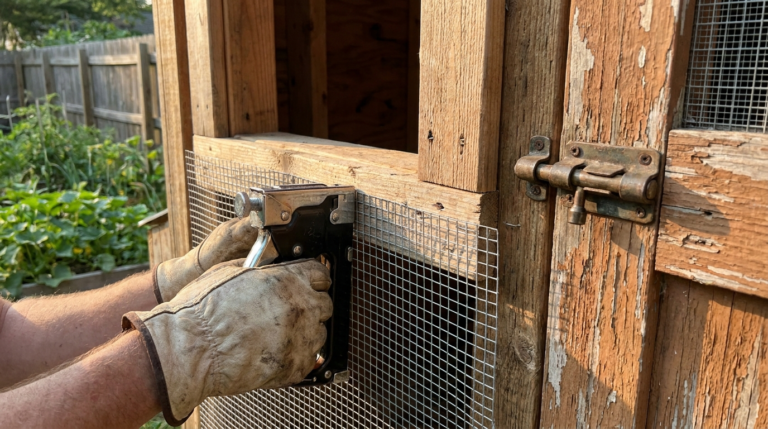
- Hardware cloth, screws, hinges: 1/2-inch welded wire, not chicken wire ($10)
Total lumber and hardware: approximately $63. See our full cost to build a chicken coop breakdown for roofing, paint, and hardware costs beyond lumber.
This produces a predator-proof coop that holds up for 15+ years in any North American climate. The cedar frame handles ground contact and structural moisture exposure while the plywood provides solid, gap-free walls that resist both weather and predators. Pair it with predator-proof locks and latches on every access point.
Our 4-in-1 plan bundle includes a detailed cut list for this exact hybrid build, so every board is accounted for and no lumber is wasted.
Climate Guide: Which Wood for Your Region
Your geographic location should influence your wood choice:
- Southeast US (high heat, high humidity): Cedar is strongly recommended for all structural components. Pine rots quickly in sustained humidity above 70%. Seal plywood edges with marine-grade polyurethane.
- Pacific Northwest (cool, wet): Cedar is essential. Constant rain and fog accelerate pine decay. Consider a metal roof to reduce moisture contact with wood surfaces.
- Midwest and Plains (temperature extremes): Either wood works if properly sealed. Focus on winter ventilation to prevent interior condensation, which damages wood from the inside.
- Southwest US (dry heat): Pine performs well here due to low ambient moisture. Seal against UV degradation rather than moisture. Cedar is still superior but the price premium is less justified.
- Northeast and Canada (cold, snowy): Cedar resists freeze-thaw cycles better than pine. Elevate the coop on blocks to prevent ground moisture wicking during spring thaw. See our winterizing guide for cold-climate prep.
What About Pressure-Treated Lumber?
Modern pressure-treated lumber uses ACQ (alkaline copper quaternary) or MCA (micronized copper azole), which the EPA considers safe for use around animals and gardens. This replaced the older CCA (chromated copper arsenate) treatment, which contained arsenic and was phased out for residential use in 2003.
If you choose pressure-treated lumber for your coop:
- Verify the end tag reads “ACQ” or “MCA,” never “CCA”
- Wear a dust mask when cutting to avoid inhaling treated sawdust
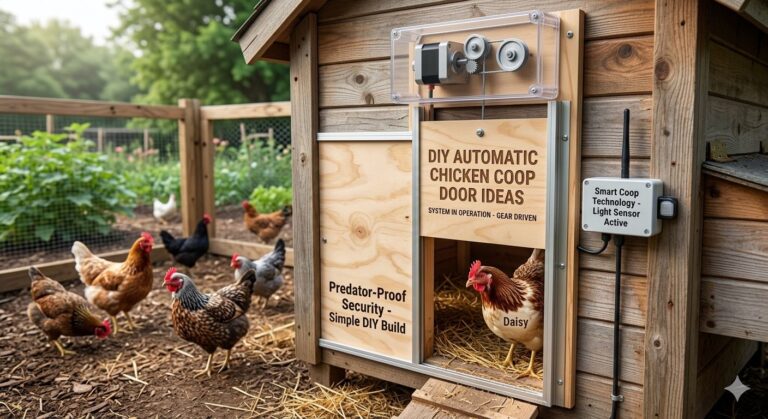
- Do not use pressure-treated wood for roost bars where chickens grip with bare feet for extended periods. It is fine for exterior framing, door frames, and automatic coop door surrounds
- Pressure-treated 4×4 posts ($6-8 each) offer a middle-ground option between cedar and untreated pine for ground-contact posts
Can You Build a Coop from Pallets?
Yes. Pallet wood can reduce your lumber costs to under $20. However, only use pallets stamped HT (heat-treated). Avoid any pallet stamped MB (methyl bromide), which indicates chemical fumigation that may leave residues unsafe for animal enclosures.
Our guide on building a chicken coop with pallets for under $100 covers where to source safe pallets, which pallet boards to use for which coop components, and how to reinforce pallet wood joints for structural integrity.
Build It Right the First Time
The right wood is half the equation — the other half is full predator-proofing: a proper cut list, predator-proof hardware specifications, and step-by-step assembly instructions that account for your climate and flock size.
Related: The wood you pick matters, but so does the breed you house in it. Different breeds need different coop sizes and insulation levels. See our complete guide to the 15 best egg laying chicken breeds to match your coop build to the right flock.
Our complete 4-in-1 plan bundle ($27) includes the exact hybrid cedar-plywood build described in this article, plus a mobile chicken tractor design, a brooder box plan, a flock size calculator, and scales from small coops up to 20-chicken coop plans. Every plan comes with a full materials list, cut list, and tool list so you can build a coop that lasts 15+ years for under $100 in materials.