HOA Chicken Rules: How to Get Approval for Backyard Chickens
You want backyard chickens. Your city allows them. Your HOA says nothing at first glance — but a closer look at the CC&Rs reveals a "no livestock" clause that might include hens. What now?
This guide walks through exactly how to read your HOA rules, petition your board for approval, and design a coop that won’t trigger complaints. Based on real approval templates that have worked in HOAs across the U.S.
The three ways HOAs handle chickens
| HOA position | What it means | Your move |
|---|---|---|
| Silent (no mention) | CC&Rs don’t address chickens or poultry at all. | You can usually keep them. Notify the board as a courtesy. |
| "No livestock" clause | Ambiguous — chickens may or may not count as livestock in your state. | Request a written clarification from the board. Do this before you buy chicks. |
| Explicit ban on poultry/chickens | Direct prohibition. | Petition to amend the CC&Rs. Requires supermajority (usually 2/3 of homeowners). |
Step 1: Read your CC&Rs carefully
Your Covenants, Conditions & Restrictions (CC&Rs) are the master rulebook. Look for these specific terms:
- "livestock"
- "poultry"
- "farm animals"
- "domestic animals"
- "pets" (with size or count limits)
- "outbuildings" (which usually covers coop structures)
- "architectural review" (for coop approval)
Also check the bylaws and rules and regulations — these are separate documents from the CC&Rs and can contain their own restrictions.
Step 2: Understand the concerns you’re addressing
HOA boards don’t say no to chickens because they hate chickens. They say no because they’re protecting the following:
- Property values. The #1 fear. Address it with data (see below).
- Noise. Roosters are loud. Hens are quieter than a small dog.
- Odor. A poorly-maintained coop stinks. A well-designed one doesn’t.
- Predators / pests. Fear that chickens attract raccoons, rats, or hawks.
- Aesthetics. The coop looking like a rundown shack.
- Precedent. "If we allow chickens, we’ll have to allow goats next."
Your job is to preemptively neutralize every one of these before you walk into the meeting.
Step 3: Build your case
Property value data to bring
- A 2014 University of Vermont study of 400+ homes with backyard chickens found no measurable negative impact on property values.
- Realtor.com and Zillow both report that "chicken-friendly" is now a positive listing feature in urban markets.
- Homes with productive gardens (which chickens support) sell for 4–6% more, per National Association of Home Builders data.
Noise data
- Hens: 60–70 decibels while clucking (roughly the volume of normal conversation).
- Barking dog: 90–110 decibels.
- Lawn mower: 90–100 decibels.
- The "egg song" (loudest hen sound, lasts ~30 seconds after laying): 70 decibels max, usually 8–10 AM only.
Odor management
A properly managed coop with deep litter (see our deep litter guide) has essentially no odor. Weekly poop-board cleaning and quarterly deep-litter refreshes eliminate the issue.
Predator/pest prevention
A predator-proof coop (see our predator-proofing guide) with hardware cloth, a locked run, and daily feed cleanup does not attract pests. In fact, chickens reduce pest populations by eating ticks, mosquitoes, and rodents.
Step 4: The board meeting template letter
Here’s a template that has worked in HOAs from Colorado to Virginia:
Dear [HOA Board],
I am writing to formally request approval to keep [3–6] laying hens on my property at [address]. No roosters will be kept. My proposal is designed to fully comply with our community’s existing standards for aesthetics, noise, and property maintenance.
What I am proposing:
- [3–6] hens only, no rooster.
- An attractive cedar coop with a matching stain, placed at least 25 feet from any property line, screened by [existing hedge/fence/proposed plantings].
- Weekly cleaning schedule with monthly deep clean, and quarterly deep-litter refresh.
- All feed stored in a locked steel container to prevent attracting pests.
- Coop and run designed and constructed to prevent any noise, odor, or pest issue affecting neighbors.
Precedent: Backyard chickens are legal under [city] municipal code [reference]. Studies from the University of Vermont (2014) show no measurable impact on property values in HOA communities that permit hens.
I have spoken with my immediate neighbors ([names]) and they support this request in writing (attached).
I would welcome the opportunity to present this proposal at the next board meeting, and to walk any board member through my proposed coop location.
Sincerely,
[Your name]
The two things this letter does right: it names the concerns before the board can, and it includes neighbor support. Neighbor letters are the single biggest factor in HOA approval.
Step 5: Build a coop the HOA will approve of
A well-built, attractive coop is your strongest argument. Design principles:
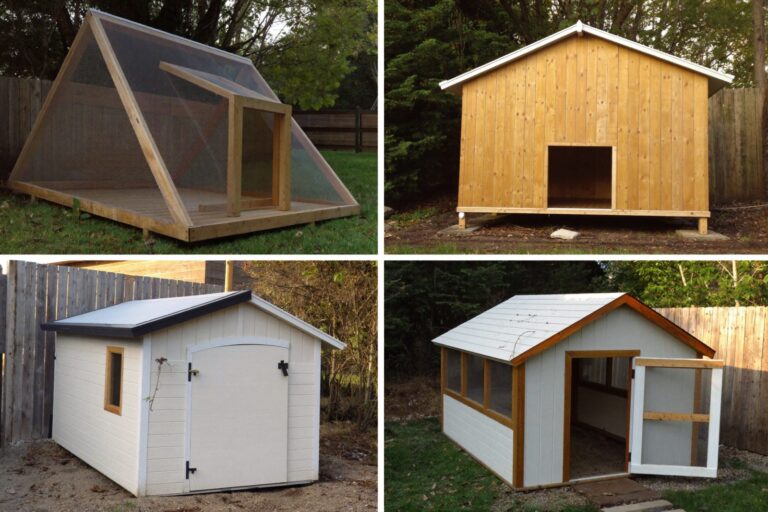
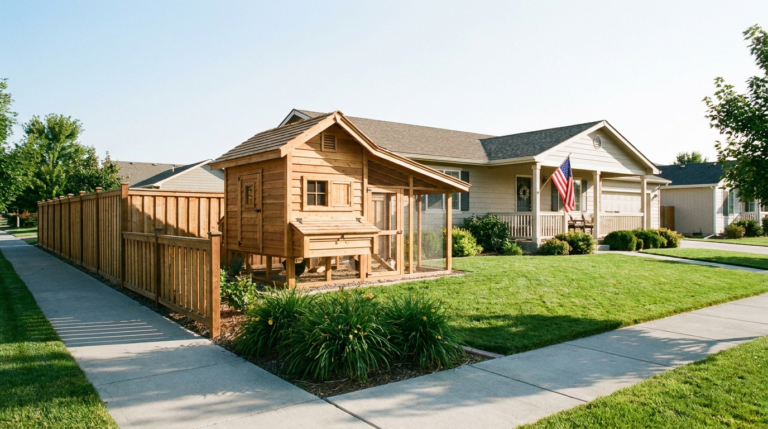
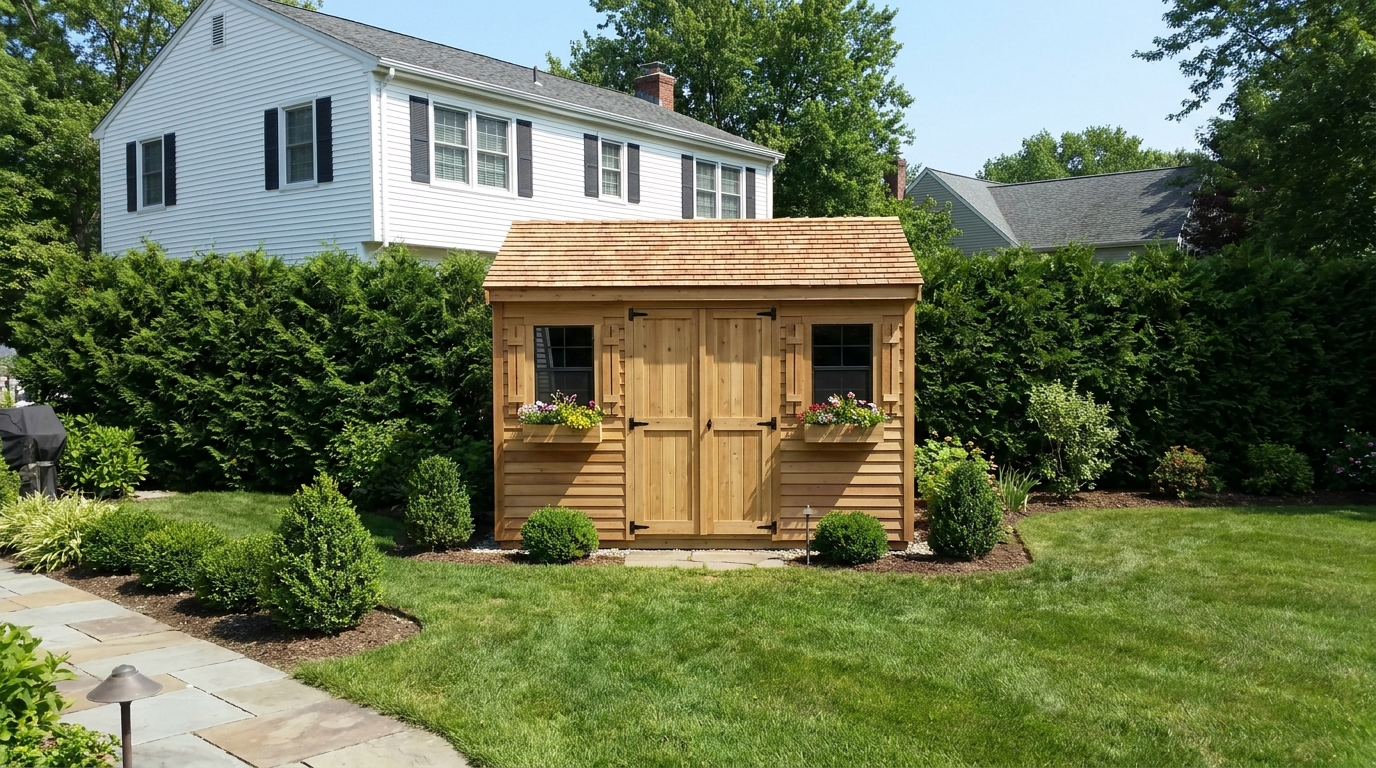
- Match the house. Same paint color or complementary stain.
- Hidden or screened. Behind a fence, hedge, or shed line — not visible from the street.
- Small footprint. Under 40 sq ft total; keeps it out of the "outbuilding permit" category in most zones.
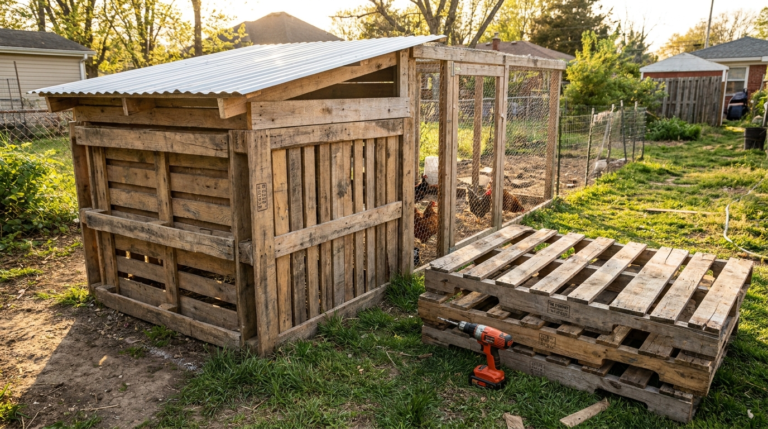
- No barn look. A modern shed-style or garden-style coop reads as landscaping. A red barn reads as agriculture.
- Landscaping around it. Planters and shrubs make it feel like part of the garden.
All CoopCraftsPro plans include an "HOA-friendly" variant with cedar cladding, small footprint, and paint recommendations that blend into typical suburban aesthetics.
What to do if you’re denied
- Request written reasons. Boards must justify denials in most states.
- Petition for a CC&R amendment. Usually needs 2/3 of homeowners. Start a Facebook group; find allies.
- Check state law. A few states (Colorado, Texas) have "right to farm" provisions that limit HOA authority over food-producing animals.
- Consult an HOA attorney. $200–$500 for a consultation, well spent if the CC&R language is ambiguous.
- Comply, then appeal. Don’t keep chickens against an active ban. Fines compound daily in most HOAs and you can lose your case even if you would have won on the merits.
Success stories
Highlands Ranch, Colorado (2019)
A resident petitioned their HOA (2,200 homes) with a 30-signature neighbor letter and University of Vermont property value data. Board approved a "3 hens, no rooster, 20-ft setback" amendment. Now 40+ households have backyard flocks.
Round Rock, Texas (2021)
Petition passed unanimously after a resident presented an attractive coop rendering that matched the neighborhood’s craftsman aesthetic. Board added a "coop design must be pre-approved by architectural committee" clause and now approves 6–10 per year.
Frequently asked questions
Can my HOA ban chickens even if my city allows them?
Yes. HOA covenants are contractual agreements between homeowners and can be stricter than city ordinances. Your CC&Rs override city law on your private lot.
Do chickens count as livestock or pets?
Legally, it depends on the state and the specific HOA document. Some CC&Rs explicitly classify them, most don’t. When ambiguous, request a written interpretation from your board.
How long does the approval process usually take?
1–3 months from initial request to board vote is typical. CC&R amendments take longer (6–12 months) because they require supermajority homeowner approval.
Can I keep chickens secretly and hope no one notices?
Strongly not recommended. HOAs can fine you daily, force removal, and in some cases place a lien on your property. Any complaint from a neighbor will trigger enforcement.What if my HOA changes the rules to ban chickens after I already have them?
You typically get grandfathered in — but not always. This depends on state law and the specific amendment language. Consult a local HOA attorney.