Deep Litter Method vs Sand: Which Coop Bedding Is Best?
Choosing the right bedding for your chicken coop is one of the most impactful decisions you will make as a backyard flock owner. It affects everything from daily chore time and ammonia levels to composting potential and your birds’ respiratory health. Two methods dominate the conversation: the deep litter method and sand bedding. Each has loyal advocates, and each works brilliantly — in the right situation.
This guide breaks down both systems side by side so you can match the method to your climate, flock size, and management style.
What Is the Deep Litter Method?
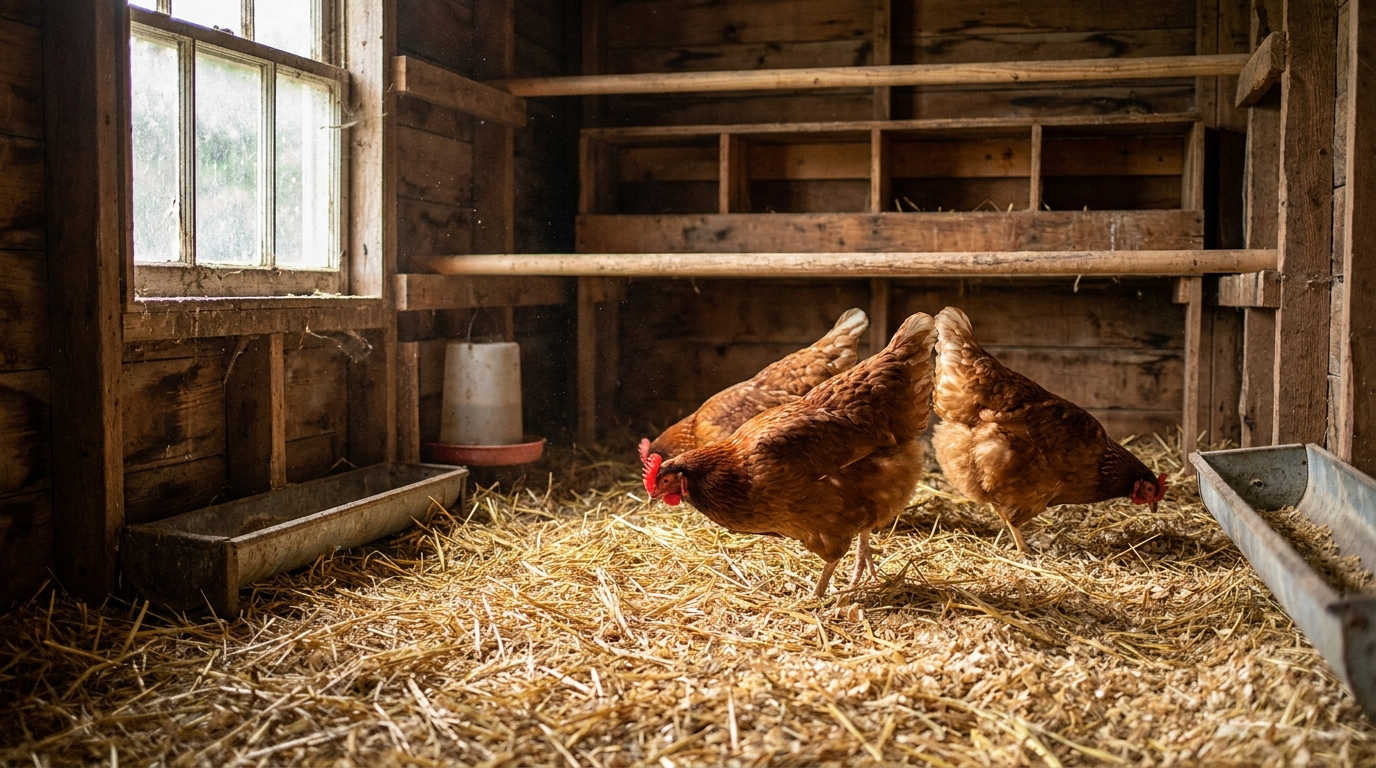
The deep litter method is a managed composting system that happens right on the floor of your coop. Instead of cleaning out soiled bedding every week, you add fresh carbon-rich material on top and let beneficial microbes break down the manure underneath. The result is a self-heating, biologically active floor that can reach 8 to 12 inches deep over the course of a season.
How Deep Litter Works: The Carbon-Nitrogen Cycle
Chicken manure is high in nitrogen. Bedding materials like pine shavings, chopped straw, or dried leaves are high in carbon. When you layer carbon over nitrogen in the right ratio (roughly 25:1 to 30:1 C:N), aerobic bacteria and fungi colonize the litter and begin composting it in place. Your chickens help by scratching and turning the material, introducing oxygen that keeps the process aerobic rather than anaerobic.
A healthy deep litter floor smells earthy, like forest soil. If you detect ammonia, the system is too wet or too nitrogen-heavy and needs more dry carbon material immediately.
Step-by-Step: Setting Up Deep Litter
- Start with a clean, dry floor. Scrub the coop floor and let it dry completely. A dirt or concrete floor works best; avoid plywood without a protective sealant.
- Lay an initial 4 to 6 inch base. Use coarse pine shavings (never cedar, which contains toxic phenols). Large-flake shavings are better than fine dust.
- Let the flock work. Within days, manure will begin mixing into the top layer as your hens scratch for grain.
- Add fresh material regularly. Every 1 to 2 weeks, scatter 1 to 2 inches of fresh shavings, chopped straw, or dried leaves on top. If you see manure accumulating on the surface, it is time to add more.
- Turn lightly if needed. Most flocks do enough scratching on their own, especially if you toss scratch grain into the litter. If your flock is small or less active, rake the top few inches once a week.
- Monitor moisture. Squeeze a handful of litter. It should feel slightly damp but not release water. If it is too wet, add extra dry shavings and check your waterer placement.
- Full cleanout once or twice per year. In late spring and/or early fall, shovel out the composted litter and start fresh. The removed material is garden-ready compost with excellent nutrient content.
Common Deep Litter Mistakes
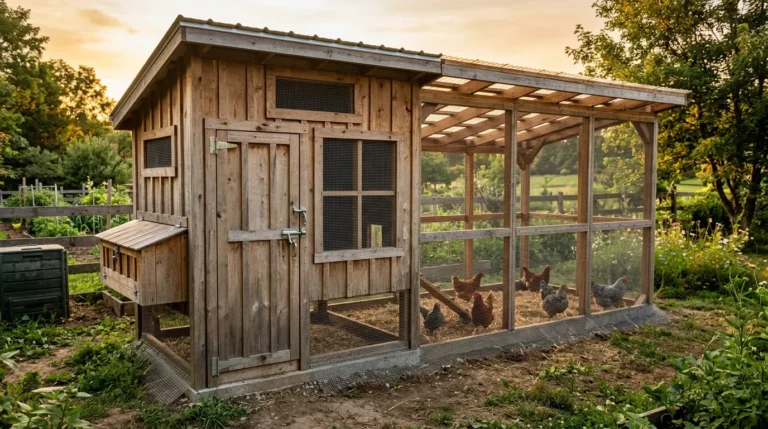
- Skipping ventilation. Deep litter generates moisture as part of the composting process. Without adequate airflow, humidity climbs, ammonia builds, and respiratory disease follows. Your coop needs ventilation openings near the roofline equal to at least 1 square foot per bird in warm climates. If you are building a new coop, plan for generous ridge vents or gable vents from the start.
- Using the wrong bedding. Newspaper, sawdust, and hay are poor choices. Newspaper mats, sawdust compacts and goes anaerobic, and hay molds rapidly.
- Letting water spill into the litter. Place waterers on a raised platform or outside the coop entirely. A single overturned waterer can ruin weeks of established litter.
- Starting mid-winter. The microbial colony needs warm temperatures to establish. Start in spring or early fall so the biology is active before cold weather arrives.
What Is Sand Bedding?
Sand bedding takes the opposite approach: rather than composting waste in place, you remove droppings regularly and rely on an inorganic substrate that drains moisture, dries quickly, and does not decompose. Think of it as a giant litter box for chickens.
How Sand Bedding Works
You fill the coop floor with 3 to 4 inches of coarse construction sand (also called concrete sand or river sand). Droppings sit on the surface where they dry rapidly thanks to the sand’s wicking action. You scoop them out every 1 to 3 days using a cat-litter scoop, kitty-litter sifter, or a modified garden rake with a mesh backing.
The key is choosing the right sand. Play sand is too fine — it creates dust, compacts into a hard surface, and can cause crop impaction in young birds. Look for coarse, angular construction sand with particle sizes between 0.5 mm and 2 mm.
Step-by-Step: Setting Up Sand Bedding
- Ensure proper drainage. Sand works best over a dirt floor or gravel base. On a solid wood floor, you need drainage holes or a slight slope so moisture does not pool underneath.
- Fill with 3 to 4 inches of coarse construction sand. Budget roughly 1 cubic yard per 30 square feet of coop floor.
- Scoop daily or every other day. Use a long-handled litter scoop. This takes 5 to 10 minutes for a typical backyard coop.
- Top off monthly. Add a thin layer of fresh sand to replace what leaves with the droppings. Expect to add about half an inch per month.
- Deep refresh annually. Once a year, remove all the sand, wash the floor, and refill. Used sand makes excellent fill material for garden paths.
Deep Litter vs Sand: Head-to-Head Comparison
| Factor | Deep Litter Method | Sand Bedding |
|---|---|---|
| Upfront cost | Low ($10-$20 for initial shavings) | Moderate ($40-$80 for bulk sand delivery) |
| Ongoing cost | Low (bag of shavings every 2-4 weeks) | Very low (minimal top-off sand) |
| Daily maintenance | Near zero (add shavings weekly) | 5-10 minutes daily scooping |
| Deep clean frequency | 1-2 times per year | 1 time per year |
| Odor control | Excellent when managed (earthy smell) | Excellent (droppings dry quickly) |
| Ammonia risk | Moderate (requires ventilation and correct C:N ratio) | Low (droppings removed before breakdown) |
| Composting value | High — produces garden-ready compost | None — sand is inorganic |
| Dust level | Low to moderate | Low (with coarse sand) |
| Insect and pest control | Moderate (fly larvae can breed if too wet) | Excellent (sand does not harbor pests) |
| Cold climate suitability | Excellent — composting generates heat (up to 10 degrees F warmer) | Poor to fair — sand retains cold and can freeze |
| Hot climate suitability | Fair (can overheat in summer) | Excellent — sand stays cool |
| Best floor type | Dirt, concrete, sealed wood | Dirt with gravel base, or drilled wood |
| Dust bathing | No (chickens need a separate dust bath) | Yes (chickens will dust bathe in sand) |
Seasonal Considerations
Winter
Deep litter is the clear winner in cold climates. The composting action generates measurable heat, raising the floor temperature by as much as 10 degrees Fahrenheit compared to the ambient air. This biological warmth helps keep your flock comfortable without supplemental heating. Sand, by contrast, conducts cold. In regions where temperatures regularly drop below 20 degrees F, sand bedding can actually make the coop colder, and frozen sand is nearly impossible to scoop.
If you plan to build or upgrade your coop for cold-weather performance, ventilation design is critical for making deep litter work safely through winter.
Summer
In hot, humid climates, sand has the advantage. It does not retain heat the way a thick bed of decomposing organic matter does. Sand also dries rapidly after rain or waterer spills, reducing the fly and bacteria problems that plague deep litter in sticky summer months.
Transitional Seasons
Spring and fall are ideal times to start (or restart) deep litter because moderate temperatures support rapid microbial colonization. If you want to switch from one system to the other, do it during a seasonal cleanout in April or October.
Which Method Should You Choose?
Choose deep litter if:
- You live in a cold or temperate climate
- You garden and want free compost
- You prefer less frequent but larger cleaning sessions
- Your coop has good ventilation (at least 1 sq ft of vent space per bird)
- You have 6 or more birds generating enough nitrogen to sustain the composting cycle
Choose sand if:
- You live in a hot, dry, or humid climate
- You prefer a quick daily routine over periodic deep cleans
- You have fewer than 6 birds
- You want a built-in dust bath area
- Your coop has drainage limitations on a solid floor
Consider a hybrid approach: Some experienced keepers use sand in the run and deep litter inside the coop. This gives you the composting warmth where your birds roost at night and the drainage and dust-bathing benefits in the outdoor area.
Frequently Asked Questions
Can you use the deep litter method with a wooden floor?
Yes, but the wood must be sealed with a waterproof sealant or lined with vinyl flooring first. Unsealed wood will absorb moisture from the composting litter and rot within one to two years. A dirt or concrete floor is ideal because it allows beneficial soil organisms to seed the litter naturally.
How often do you scoop sand bedding?
Most flock owners scoop every 1 to 3 days, depending on flock size. A coop with 4 to 6 hens typically needs scooping every other day. Larger flocks of 10 or more birds may require daily scooping to keep odor and flies under control.
Does the deep litter method attract flies?
A properly managed deep litter system should not attract more flies than any other bedding method. Fly problems usually indicate the litter is too wet or lacks enough carbon material. Add dry shavings, improve ventilation, and consider placing waterers outside the coop.
Is sand safe for baby chicks?
Sand is generally not recommended for chicks under 4 weeks old. Young chicks may eat the sand particles, leading to crop impaction. Use paper towels for the first week, then transition to fine pine shavings until the chicks are old enough to distinguish food from substrate.
Can you compost used sand bedding?
Sand itself does not compost, but the droppings you scoop out of it can go directly into a compost pile. The sand acts as a collection medium, not a composting medium. This is a key difference from the deep litter method, which produces finished compost on its own.
No matter which bedding system you choose, proper coop design makes the difference between a system that works and one that creates problems. Ventilation, drainage, and floor construction all matter. Browse our collection of DIY coop plans designed with airflow, drainage, and easy-clean access built into every design.