Chicken Tractor Plans: The Mobile Coop That Moves With Your Flock
Last updated: August 2, 2026 · CoopCraftsPro
Short answer: A chicken tractor is a floorless, portable coop and run combined in one frame, moved to fresh ground every one to three days. Because shelter and run are combined, allow about 14 square feet per bird. Tractors suit flocks of 3 to 8 birds; beyond that they become too heavy to move.
A fixed run turns to bare dirt within a few months. The grass goes first, then the soil compacts, then it turns to mud in the rain and dust in the heat, and parasite load climbs because the birds are living on the same ground they foul every day.
A chicken tractor solves that by moving. Same flock, fresh grass every few days, and the manure spreads itself across your yard instead of concentrating in one dead patch.
What a Chicken Tractor Is
A chicken tractor is a floorless, portable coop-and-run combined into one frame that you move to fresh ground on a regular schedule – usually daily or every few days. The open bottom is the entire point: the birds get direct access to grass, bugs, and soil, and when the ground is worked over, the whole structure moves.
Building your own typically saves a substantial amount over a comparable ready-made unit, and gives you a sturdier frame than most of what ships flat-packed.
Who It Suits
A tractor is a good fit if you:
- Keep a small flock of 3 to 8 birds
- Have lawn or pasture to rotate across
- Want the fertilizing and pest-control benefits spread around the yard
- Rent, or need a structure that is not a permanent outbuilding
- Raise meat birds in batches
It is the wrong choice if you:
- Keep a large flock – past 8 to 10 birds, tractors get too heavy to move
- Face harsh winters, since a floorless coop is hard to insulate and cannot be moved over frozen or snow-covered ground
- Have heavy ground predators and cannot supervise, as there is no buried apron on a structure that moves
- Have rough or steep terrain where the frame will not sit flush
Many keepers run both: a tractor through the growing season, a fixed coop for winter.
Sizing: The Rule Changes for Tractors
In a standard setup you size the coop and run separately – about 4 square feet of coop plus 10 square feet of run per hen. In a tractor, where shelter and run are one enclosure, you combine them:
Roughly 14 square feet per bird total.
| Birds | Total footprint | Practical size |
|---|---|---|
| 3 | 42 sq ft | 6 x 7 ft |
| 4 | 56 sq ft | 7 x 8 ft |
| 6 | 84 sq ft | 8 x 10 ft |
| 8 | 112 sq ft | 8 x 14 ft |
Beyond about 8 birds you are building something one person cannot move alone, which defeats the purpose.
The Three Common Designs
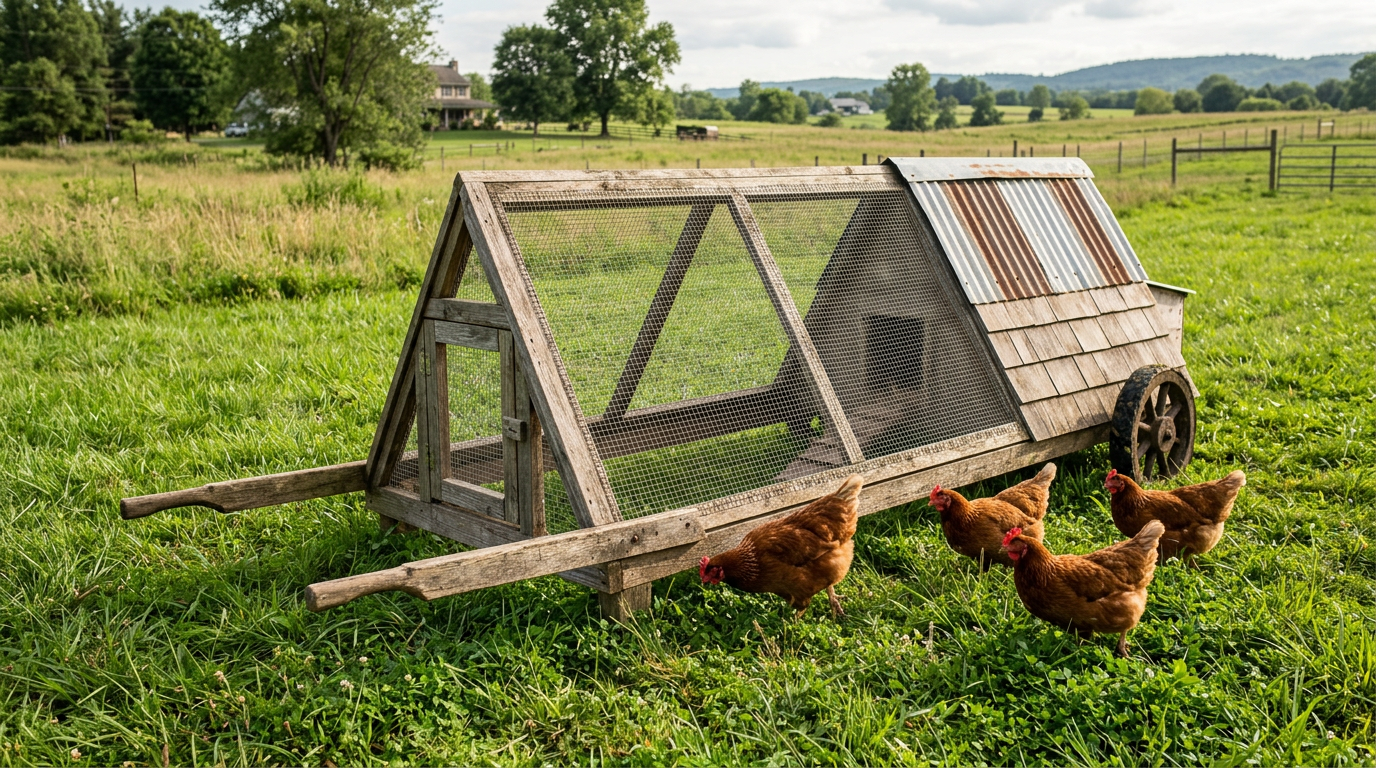
A-frame
Two sloped sides meeting at a ridge. Light, rigid, sheds rain and snow well, and uses little material. The trade-off is reduced usable floor area at the edges and awkward access. Best for 3 to 5 birds.
Hoop tractor
Cattle panel or PVC arches bent over a rectangular base frame, covered in wire and a tarp or roofing panel. Cheapest per square foot, very fast to build, surprisingly strong, and light for its size. Ideal on flat ground.
Rectangular box with a raised coop
An enclosed sleeping box at one end, open run beneath and beside it. Heaviest and most involved, but the most comfortable to use – proper nest access, real roost space, best weather protection. Best for a permanent-ish setup that still moves.
Keeping the Weight Down
A tractor you dread moving is a tractor that stops moving, and then it is just a run sitting on dead grass. Weight discipline is a design requirement, not a nicety.
- Frame in 2x2s rather than 2x4s wherever the load allows
- Use a tarp or single metal panel for roofing instead of plywood and shingles
- Enclose only the sleeping area solidly; leave the rest wire
- Fit two wheels at one end so the other end lifts like a wheelbarrow
- Add handles at the lifting end at a comfortable height
- Cedar or pine over pressure-treated for weight, and avoid treated lumber where birds peck
Target something one adult can move without help. If it takes two people, it will get moved half as often.
Predator Protection Without a Buried Apron
Extension predator management guidance leans on two measures a mobile coop cannot easily use: wire buried a foot into the ground, and a fixed, lockable structure at night. A tractor has to earn that protection a different way.
This is the real weakness of a mobile coop: you cannot bury wire under something that moves. Compensate with these:
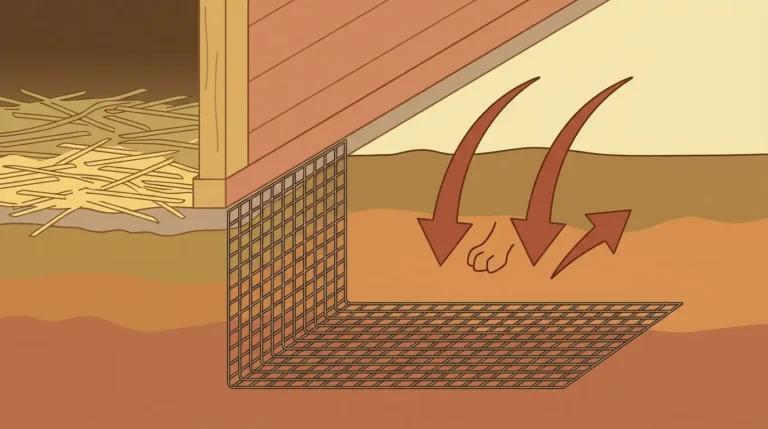
- A skirt apron. Attach hardware cloth flat around the base, extending 12 to 18 inches outward, hinged so it lies on the ground and drags along when you move. A digger hits wire before it hits soil.
- 1/2-inch hardware cloth throughout, screwed with fender washers – the same standard as a fixed coop.
- A fully covered top against hawks and climbers.
- A frame that sits flush. Move it onto level ground; gaps under the rail are open doors. A length of chain or a board along the base closes small dips.
- Two-step latches on every access point.
- Shut them in the sleeping box at night if the design allows.
A Working Move Routine
Penn State Extension’s guide to raising pastured broilers gives a useful threshold: “in order to maintain a healthy pasture, you do not want to remove more than 50% of the forage above ground.” Past that point you start damaging root structure and the pasture takes far longer to recover.
Move the tractor when the grass is grazed but not scalped – usually daily for meat birds, every two to three days for a small laying flock. Signs you waited too long: bare patches, visible manure buildup, birds pacing the wire.
Move in the morning, when birds are up and will follow the fresh grass rather than getting caught under a rail. Walk the footprint first for holes and rocks. Rotate in a pattern so no strip is grazed twice before it recovers – most pasture wants three to four weeks between passes.
Winter
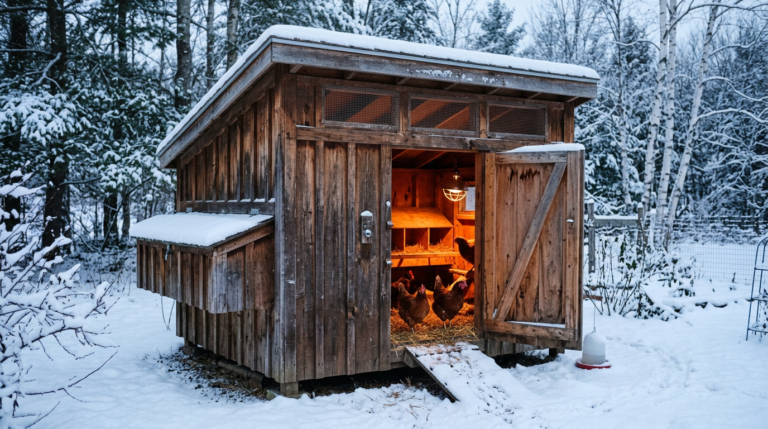
In a mild climate, keep moving as long as the ground allows. Where the ground freezes hard or snow accumulates, most keepers park the tractor in a sheltered spot, bank straw around the base to block wind, or move the flock to a fixed winter coop. Plan for that before autumn, not during the first freeze.
Frequently Asked Questions
What is a chicken tractor?
A chicken tractor is a floorless, portable structure combining coop and run in one frame. The open bottom gives birds direct access to grass and insects, and the whole unit is moved to fresh ground regularly.
How often should you move a chicken tractor?
Move it when the grass is grazed but not scalped – typically daily for meat birds and every two to three days for a small laying flock. Bare patches or manure buildup mean you waited too long.
How big should a chicken tractor be for 6 chickens?
About 84 square feet, commonly built as 8×10 feet. Because a tractor combines shelter and run in one enclosure, you allow roughly 14 square feet per bird rather than sizing coop and run separately.
Are chicken tractors safe from predators?
They need compensating measures, since you cannot bury wire under a structure that moves. Use a hinged skirt apron of hardware cloth extending 12 to 18 inches outward, a fully covered top, and two-step latches.
Can you use a chicken tractor in winter?
In mild climates yes, as long as the ground allows moving. Where ground freezes hard or snow accumulates, most keepers park the tractor in a sheltered spot with straw banked around the base, or move the flock to a fixed coop.
Prefer a stationary setup? Our chicken coop and run plans give your flock a permanent protected space with an attached run.
n
A tractor is the simplest way to give a small flock fresh ground every week without turning your yard into a mud pit. Build it light, wire it properly, and move it often.