How to Store Fresh Eggs: Collecting, Cleaning & Storage Guide
Fresh eggs from your own backyard flock taste noticeably better than anything from the grocery store, but that quality only holds up if you handle them correctly from nest box to fridge. Get it wrong, and you shorten shelf life or introduce bacteria you were trying to avoid by raising your own chickens in the first place. Here’s the complete rundown.
Collection: Frequency Matters More Than You’d Think
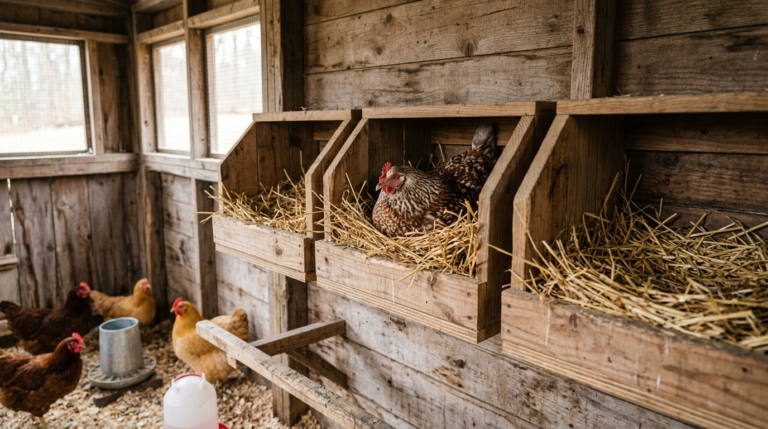
Collect eggs at least once a day, and ideally twice during hot weather or if you have hens prone to broodiness. Here’s why timing matters:
- Eggs left in the nest box accumulate dirt, bacteria, and moisture over time
- In hot weather, eggs left out longer are more likely to spoil or develop bacterial contamination
- Broody hens may sit on eggs, which starts the incubation process — not something you want if you’re not planning to hatch chicks
- Eggs sitting out are more likely to get cracked, stepped on, or pecked at (sometimes triggering egg-eating habits)
If your hens have started laying inconsistently or you’re seeing fewer eggs than expected, that’s a separate issue worth troubleshooting — see our guide on why chickens stop laying eggs.
Understanding the Bloom (Cuticle)
This is the single most important concept in egg storage, and it’s the reason backyard egg handling differs from what you might assume based on store-bought eggs. When a hen lays an egg, it’s coated in a natural, invisible protective layer called the bloom or cuticle. This coating seals the eggshell’s thousands of microscopic pores, blocking bacteria and moisture from passing through the shell while helping the egg retain freshness.
Commercial eggs in the U.S. are industrially washed, which strips the bloom — that’s why store eggs are federally required to be refrigerated. Unwashed, bloom-intact eggs from your own flock don’t have that requirement and can safely sit at room temperature for a couple of weeks, provided they were clean to begin with.
To Wash or Not to Wash: The Real Answer
This is one of the most debated topics among backyard chicken keepers, but the practical answer is simple: don’t wash eggs until you’re ready to use them, unless they’re visibly too dirty to store as-is.
Washing removes the bloom, which means a washed egg needs refrigeration and generally has a shorter overall shelf life than an unwashed one, even though refrigeration slows spoilage in other ways. The smartest approach is to sort eggs at collection time: clean, bloom-intact eggs go straight to room-temperature storage, while visibly dirty eggs get washed immediately and moved directly to the fridge.
The Dry Cleaning Method
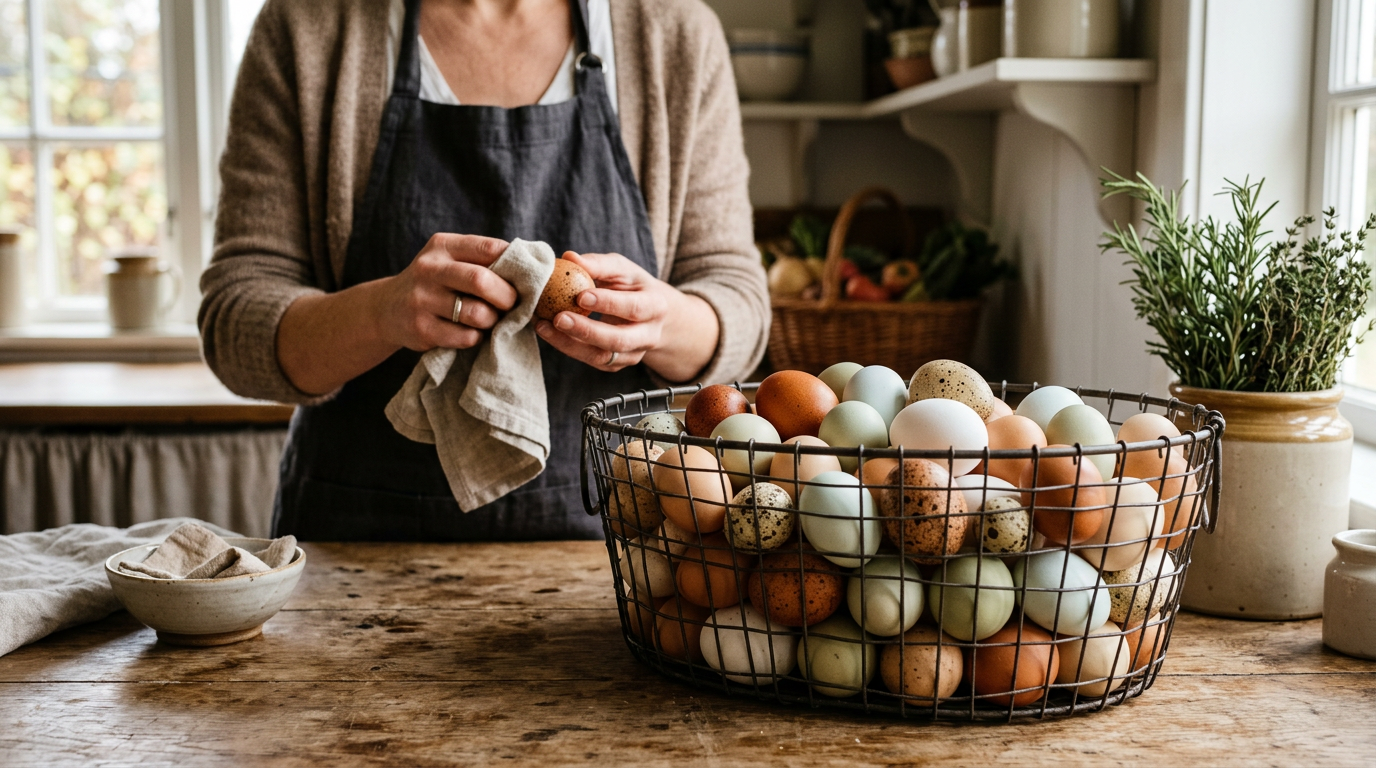
For eggs with light dirt, dust, or a few stray bits of bedding, dry cleaning preserves the bloom entirely:
- Gently rub off debris with a dry cloth, soft brush, or fine sandpaper
- Avoid excessive rubbing, which can still thin the bloom even without water
- Leave eggs with only minor surface dust completely untouched if possible
This is the preferred method whenever the egg is clean enough that dry cleaning gets the job done — it keeps your room-temperature storage option intact.
The Wet Cleaning Method
For eggs with caked-on mud, droppings, or anything dry cleaning won’t remove, wet washing is necessary — but do it correctly:
- Use water that is warmer than the egg itself (ideally 90–100°F). This is critical: if the water is colder than the egg, the contents contract and can pull bacteria through the shell’s pores into the egg.
- Wash under running water rather than soaking, since soaking gives bacteria more time and opportunity to be drawn inward
- Use a dedicated egg-washing soap or a mild dish soap in small amounts — avoid bleach or harsh chemicals
- Dry thoroughly with a clean towel or air-dry immediately
- Refrigerate washed eggs right away, since the bloom is gone and the clock on bacterial exposure has started
Refrigeration vs. Countertop Storage
Once you understand the bloom, the storage decision is straightforward:
- Unwashed, bloom-intact eggs: Safe at room temperature (below 68°F ideally) for about 2 weeks, or in the refrigerator for several months. Refrigerating unwashed eggs actually extends shelf life significantly even though it isn’t required.
- Washed eggs: Must be refrigerated, and should be used within about 3-5 weeks for best quality.
Store eggs pointed end down in a carton, which keeps the air cell properly positioned and helps maintain quality longer, whether on the counter or in the fridge. Avoid storing eggs in the refrigerator door — temperature fluctuations there from opening and closing are worse for shelf life than the more stable temperature inside the fridge.
How Long Do Fresh Eggs Actually Last?
- Unwashed, room temperature: about 2 weeks
- Unwashed, refrigerated: 4-6 months (quality slowly declines but eggs remain safe)
- Washed, refrigerated: 3-5 weeks
- Washed, room temperature: not recommended — use within a day or two at most
These are general guidelines; always trust your senses and the float test below over a strict calendar count.
The Float Test for Freshness
Not sure how old an egg is? Submerge it in a bowl of water:
- Sinks and lies flat on its side: Very fresh, use anytime
- Sinks but stands upright on the bottom: Still good, a few weeks old
- Floats to the surface: Old and likely spoiled — discard it
This works because eggshells are porous, and as an egg ages, air gradually enters through the shell, enlarging the internal air cell. More air means more buoyancy, which is why old eggs float. It’s a simple, reliable check before cracking an egg of uncertain age into a recipe.
Other Freshness Checks
When you crack the egg, a fresh egg has a tight, rounded yolk and a thick white that holds close to the yolk rather than spreading thin across the pan. A strong sulfur smell upon cracking is an unmistakable sign of spoilage — when in doubt, throw it out.
Selling Eggs Legally
If your flock produces more eggs than your household can use, selling the surplus is a popular next step — but regulations vary significantly by state and even by county. Generally, most states allow small-scale sales of ungraded eggs directly from the farm without a license, provided you stay under a certain number of dozens sold per week, but many require:
- A specific label with your farm name, address, and a “sell by” date
- Proper refrigeration if eggs are washed (which is often required or strongly recommended for eggs intended for sale)
- A disclaimer that eggs are ungraded
- Registration or a permit once you exceed a certain sales volume
Check your state’s department of agriculture website before selling, since penalties for unlicensed sales above the small-farm threshold can be significant.
Packaging for Sale
Presentation matters even for a small roadside stand or neighborhood sales. Use clean, undamaged cartons (recycled store cartons are fine in most states as long as original labeling is blacked out or covered), sort eggs by size for consistency, and always include a label with your farm name, the pack date, and washing status. A simple stamped or handwritten date on the carton builds trust and helps repeat customers track freshness themselves.
Final Thoughts
Good egg handling isn’t complicated once you understand the bloom — the rest is just consistent habits. Collect daily, keep dirty eggs separate from clean ones, wash only what needs washing, and store accordingly. Follow these steps and you’ll get months of shelf life out of eggs that taste dramatically better than anything shipped and stored in a warehouse.