Hardware Cloth vs Chicken Wire: Which One Actually Stops Predators?
If you are building or upgrading a chicken coop, you have probably seen both hardware cloth and chicken wire at the hardware store. They look similar, cost differently, and most product labels do not tell you which one actually protects your flock. The short answer: hardware cloth stops predators, chicken wire does not.
This guide breaks down the real differences between hardware cloth and chicken wire, shows you exactly why chicken wire fails, and walks you through how to install hardware cloth the right way.
What Is Chicken Wire?
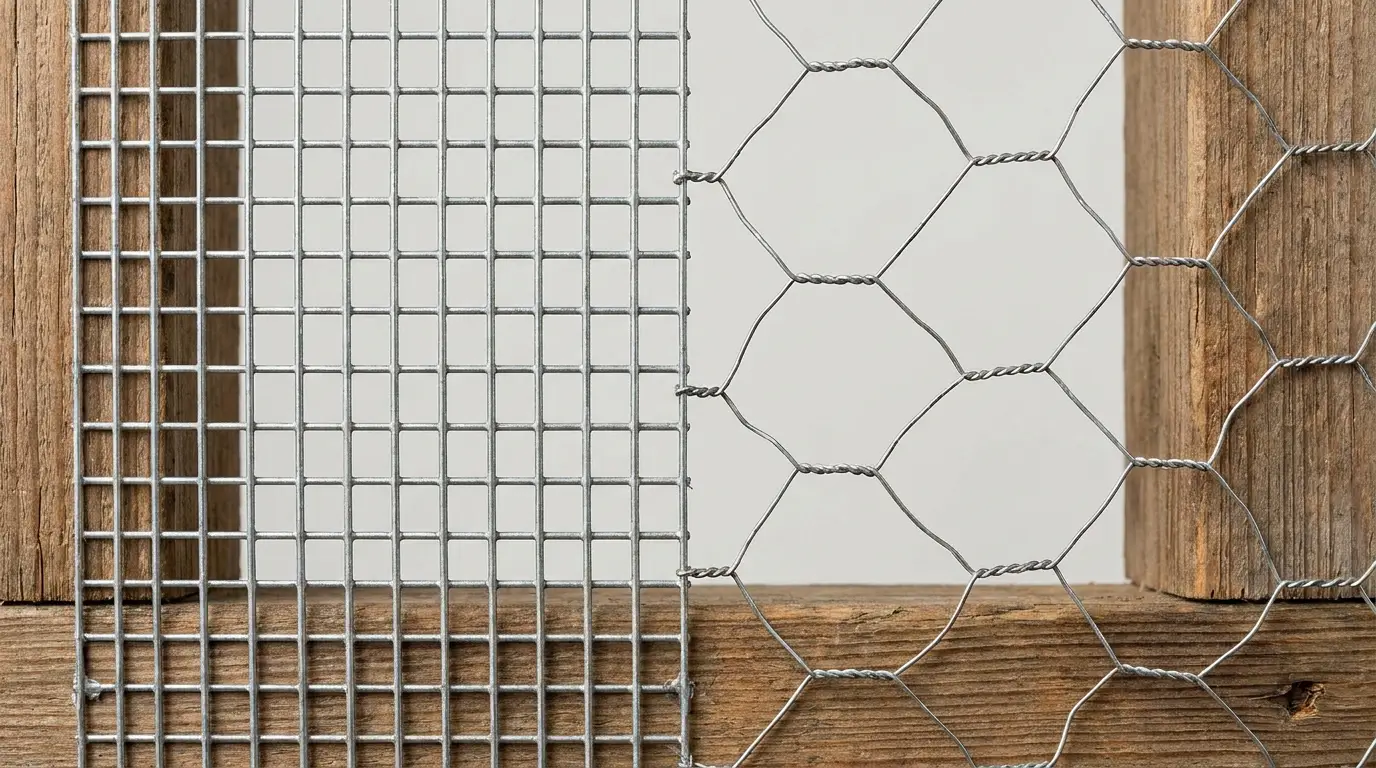
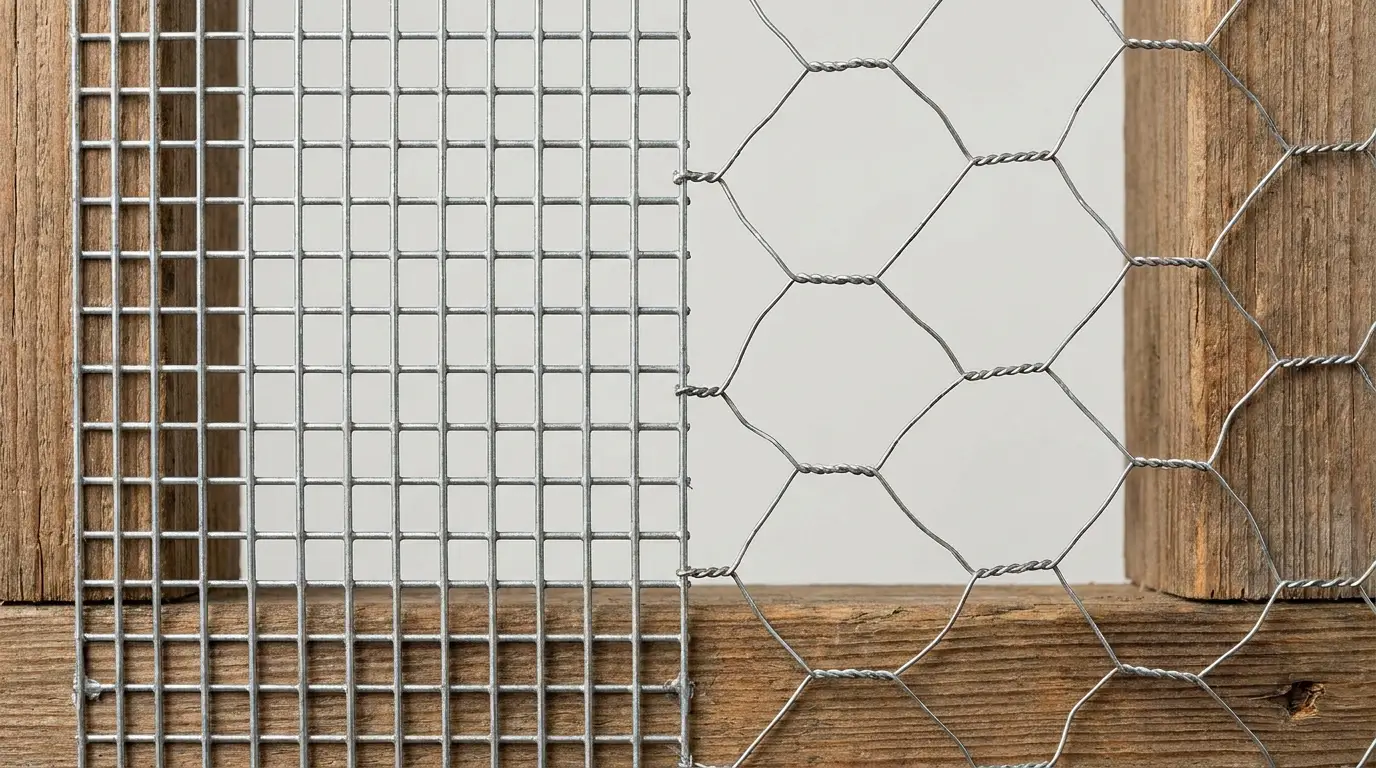
Chicken wire (also called poultry netting or hex netting) is a lightweight, hexagonal wire mesh. It is made from thin galvanized wire twisted into a honeycomb pattern, usually with 1-inch openings. It has been used on farms for over a century.
Chicken wire is designed for one purpose: keeping chickens contained. It works as a lightweight fence to stop birds from wandering into gardens or off your property. It was never engineered to keep predators out.
What Is Hardware Cloth?
Hardware cloth is a welded wire mesh made from heavier gauge steel wire in a square grid pattern. The most common sizes for chicken coops are 1/2-inch and 1/4-inch openings. The wire is thicker, the welds are strong, and the grid pattern resists bending and tearing.
Hardware cloth is the standard recommendation from experienced chicken keepers, poultry security experts, and coop builders for predator protection.
Side-by-Side Comparison
| Feature | Chicken Wire | Hardware Cloth (1/2″) |
|---|---|---|
| Wire gauge | 20-22 (thin) | 19-23 depending on brand |
| Opening size | 1 inch hexagonal | 1/2 inch square |
| Pattern | Twisted hexagonal | Welded grid |
| Stops raccoons | No | Yes |
| Stops weasels | No | Yes |
| Stops snakes | No | Most species |
| Stops hawks | Yes (overhead only) | Yes |
| Cost per 10 ft | $8-15 | $15-35 |
| Lifespan | 2-5 years | 10-20 years |
| Installation difficulty | Easy | Moderate |
Why Chicken Wire Fails Against Predators
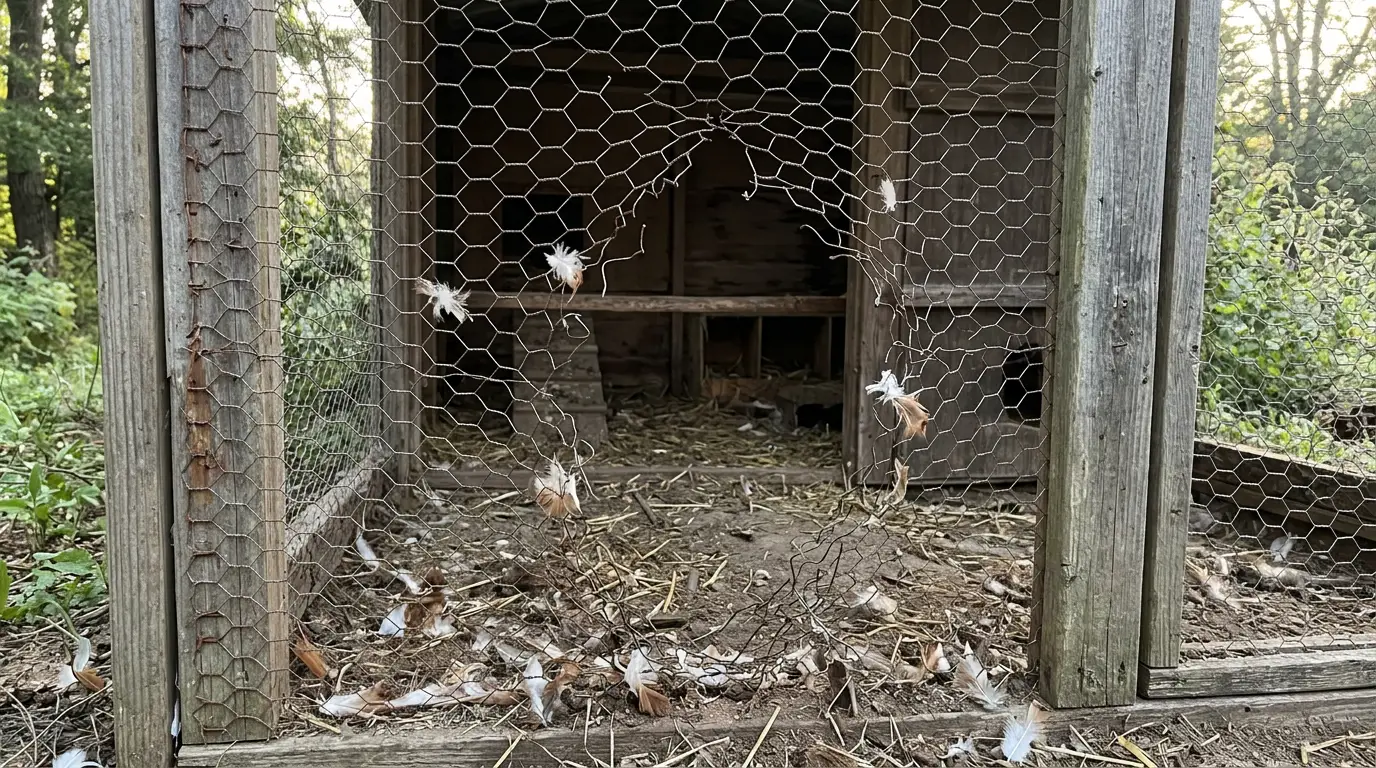
The biggest problem with chicken wire is how thin the wire is. At 20-22 gauge, it bends and tears with hand pressure. A raccoon — which has strong, dexterous hands — can rip through chicken wire in seconds. They grab the mesh, pull it apart, and reach inside to grab birds.
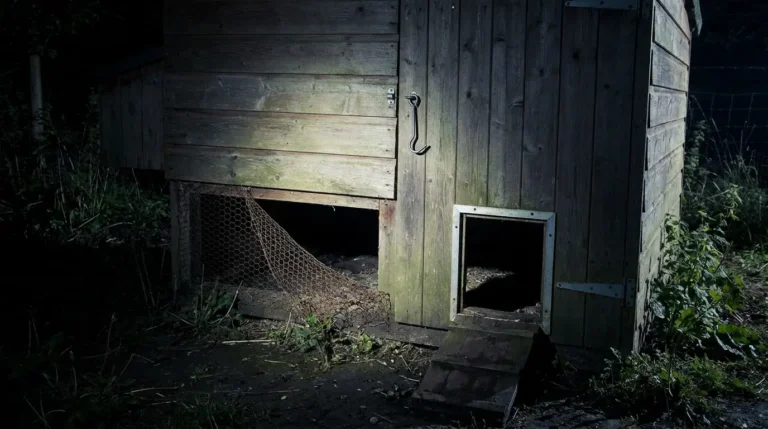
The 1-inch hexagonal openings are also too large. Weasels and mink can fit their entire body through a 1-inch gap. Baby rats slip through easily. Raccoons can reach a hand through and grab a sleeping chicken by the leg or wing.
Chicken wire also degrades faster than hardware cloth. The thin wire rusts through in a few years, especially at ground level where moisture collects. Once rust weakens the wire, even smaller predators can push through.
When Chicken Wire Is Acceptable
Chicken wire still has valid uses in a coop setup:
- Temporary daytime fencing to keep free-range birds out of garden beds
- Interior coop dividers to separate broody hens or new flock members
- Overhead hawk deterrent on large runs where cost makes full hardware cloth impractical (use heavy-duty poultry netting for this instead)
If predators are not a concern in your specific area — which is rare — chicken wire may work for daytime containment. But for nighttime protection and any opening a predator could reach, hardware cloth is the only responsible choice.
How to Install Hardware Cloth (5 Steps)
Step 1: Measure and Cut
Measure every opening on your coop: windows, vents, doors, the run perimeter, and the run roof. Add 2 inches of overlap on each side. Cut hardware cloth with tin snips or aviation snips — wear heavy gloves because cut edges are sharp.
Step 2: Secure With Screws and Washers
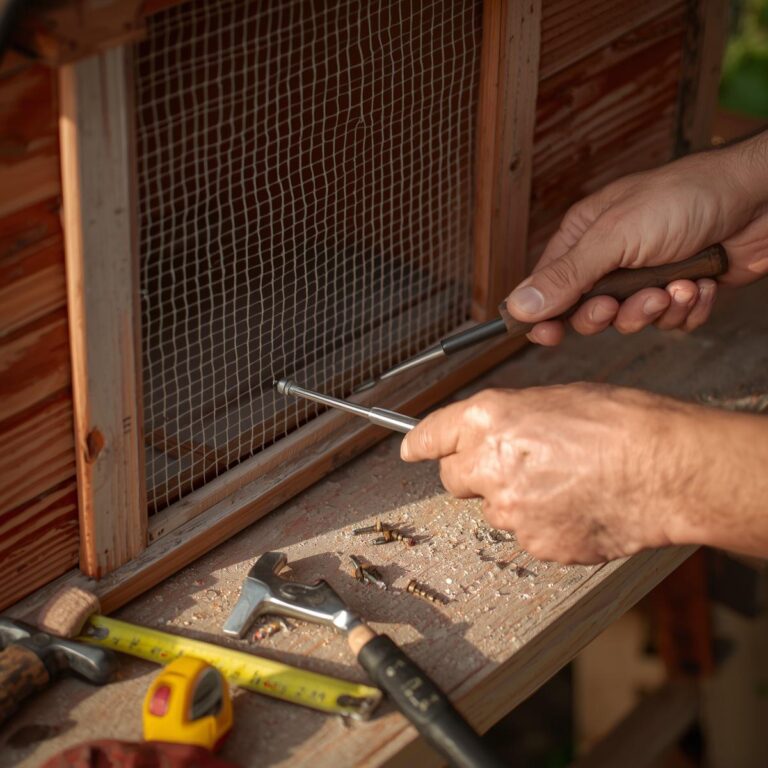
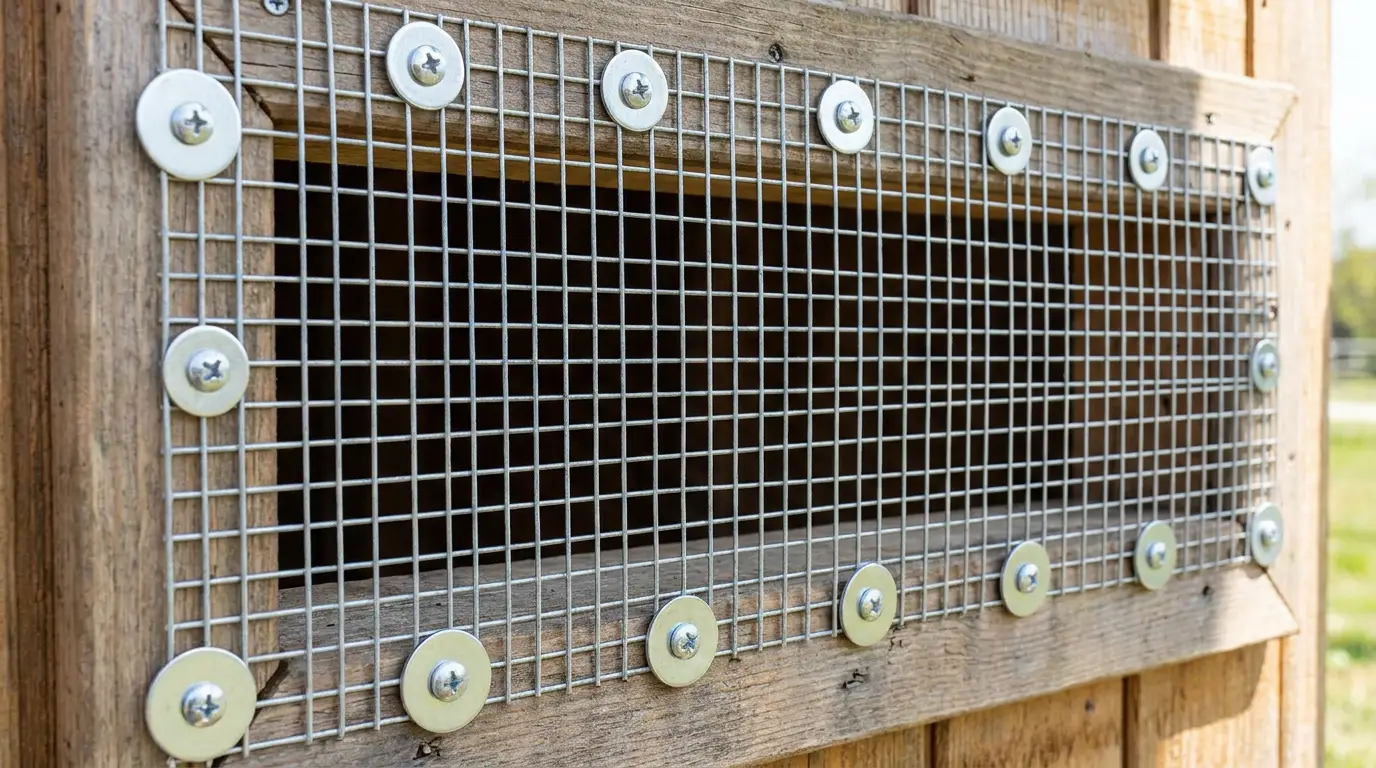
Do not use staples. They pull out under pressure from pushing predators. Use #8 or #10 screws with fender washers spaced every 4 to 6 inches around the perimeter of each piece. The washer clamps the wire flat against the frame.
n
Step 3: Overlap All Seams
Where two pieces of hardware cloth meet, overlap them by at least 2 inches and secure through both layers. Gaps at seams are the most common failure point. Some builders also use hog rings or J-clips to join pieces between attachment points.
Step 4: Seal the Bottom Edge
The bottom of every wall panel should connect to a dig apron or be buried at least 4 inches into the ground. A predator’s first instinct is to dig at the base of a wall. If the hardware cloth stops 6 inches above ground level, the coop is not protected.
Step 5: Inspect Quarterly
Walk the perimeter of your coop every few months. Look for loose screws, rust spots, bent sections, or gaps forming at corners. Fix any issues immediately — predators find weaknesses faster than you do.
Frequently Asked Questions
Is 1/4-inch hardware cloth better than 1/2-inch?
For most backyard coops, 1/2-inch is sufficient. It stops raccoons, weasels, and most snakes. Use 1/4-inch if you have a serious mouse or small snake problem, but it costs more and is harder to work with.
Can I put hardware cloth over existing chicken wire?
Yes, but it is better to remove the chicken wire first. Layering creates gaps between the two meshes where debris and moisture collect, accelerating rust on both layers.
How long does hardware cloth last?
Galvanized hardware cloth lasts 10 to 20 years depending on your climate and soil conditions. Coastal areas with salt air may see faster corrosion. PVC-coated hardware cloth lasts even longer but costs more.
Building a new coop? Our predator-proof coop plans spec hardware cloth on every opening and include a full materials list so you know exactly what to buy.