10 Chicken Coop Security Mistakes That Get Chickens Killed
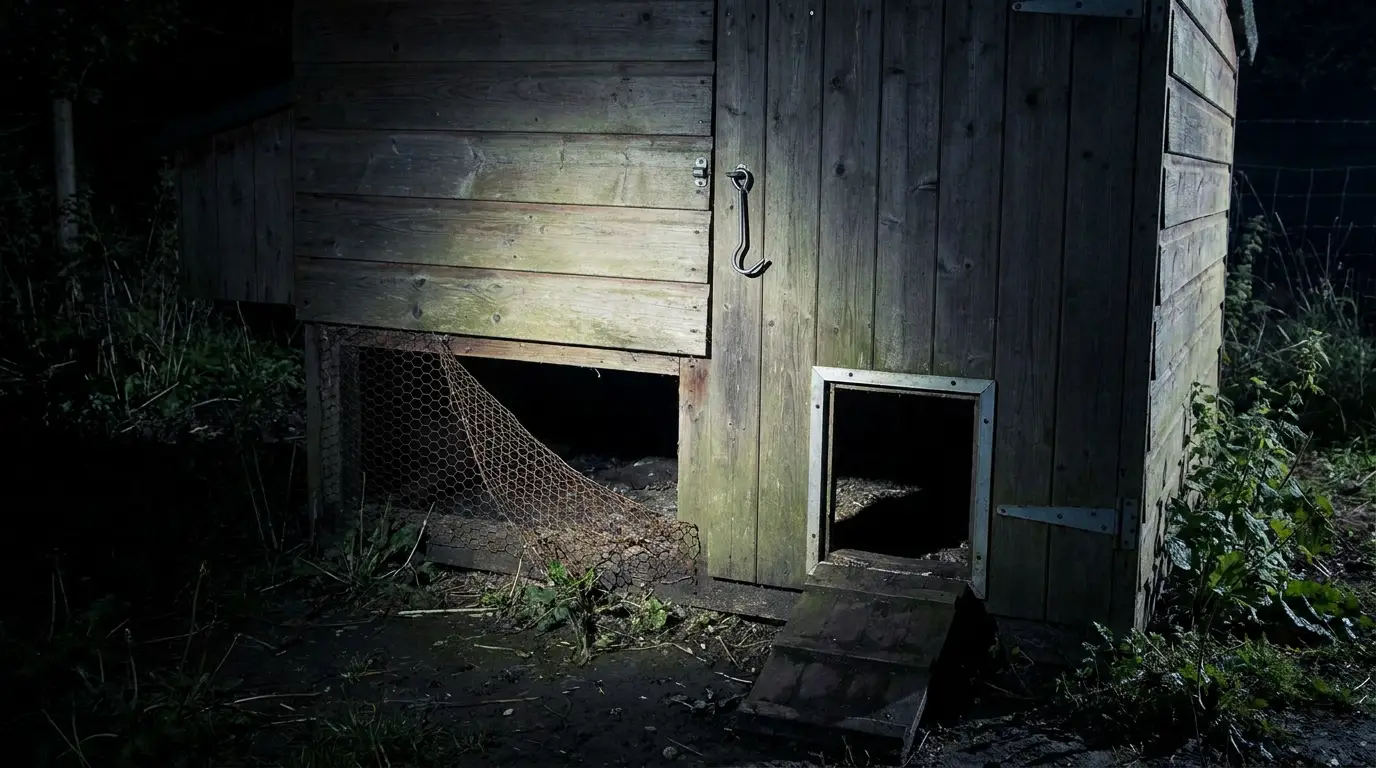
Most chicken losses to predators are not random bad luck. They happen because of specific, fixable mistakes in coop design and management. Every experienced chicken keeper has learned at least one of these lessons the hard way.
Here are the 10 most common chicken coop security mistakes and how to fix each one before you lose a bird.
Mistake 1: Using Chicken Wire Instead of Hardware Cloth
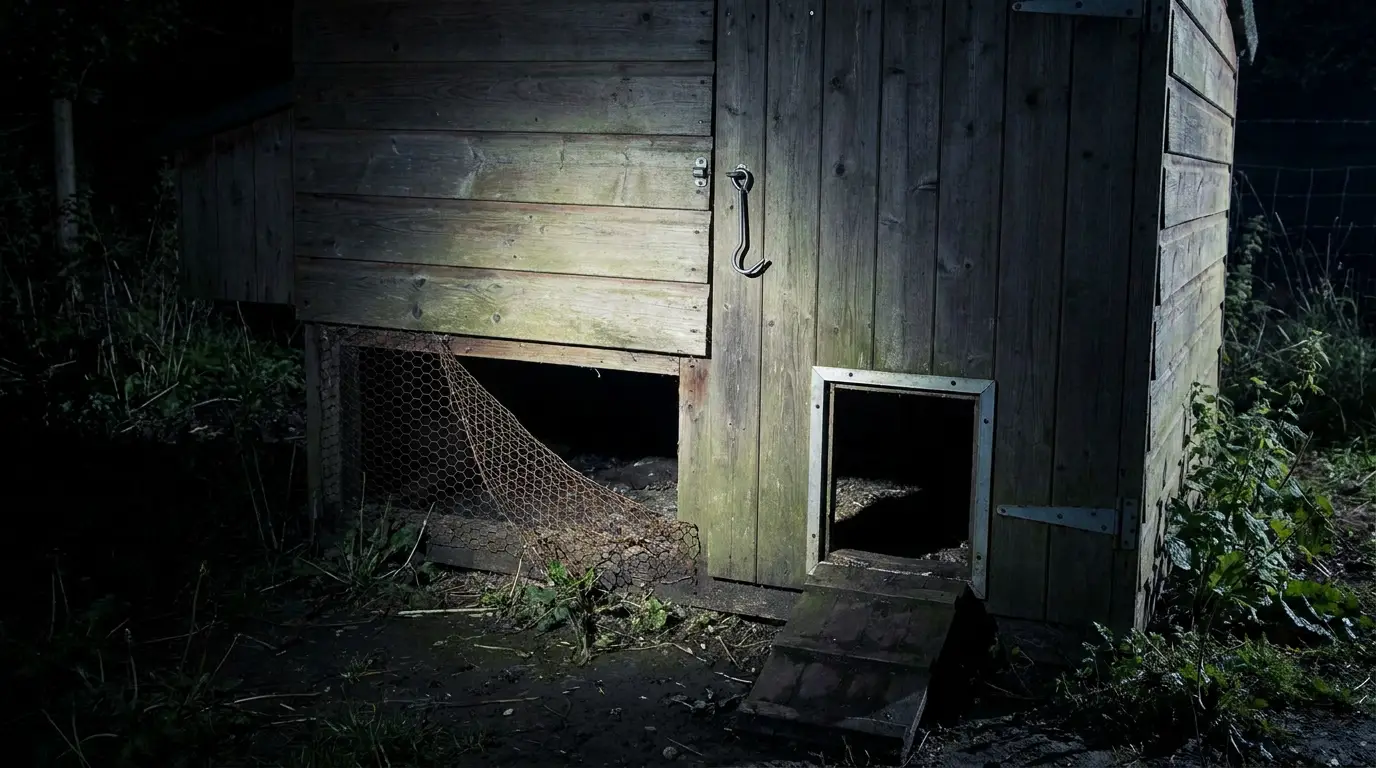
This is the most common and most deadly mistake. Chicken wire does not stop predators. Raccoons tear through it, weasels slip through the gaps, and it rusts through in a few years. Replace all chicken wire with 1/2-inch galvanized hardware cloth.
Mistake 2: Forgetting the Dig Apron
A coop with no floor and no dig apron is an open invitation for foxes, raccoons, and dogs. These predators dig under walls in minutes. Install a 12 to 24 inch hardware cloth apron extending outward from the base of every wall.
Mistake 3: Using Simple Latches
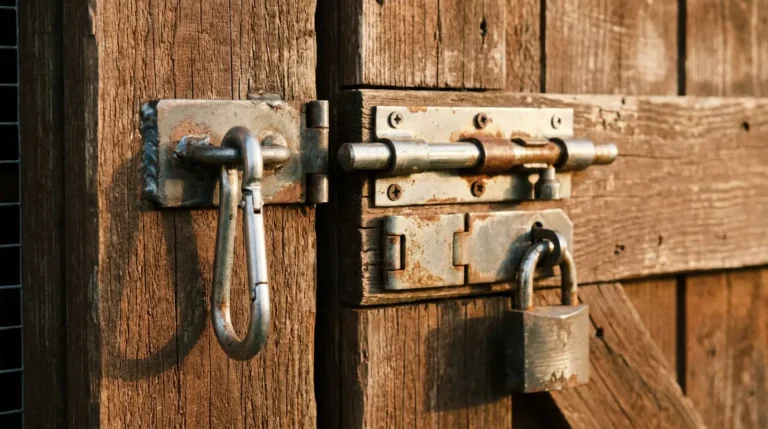
Hook-and-eye latches, slide bolts, and twist latches are toys for raccoons. Use two-step locks on every door, nest box lid, and access panel. If a toddler could open it, a raccoon already has.
Mistake 4: Leaving the Coop Door Open at Night
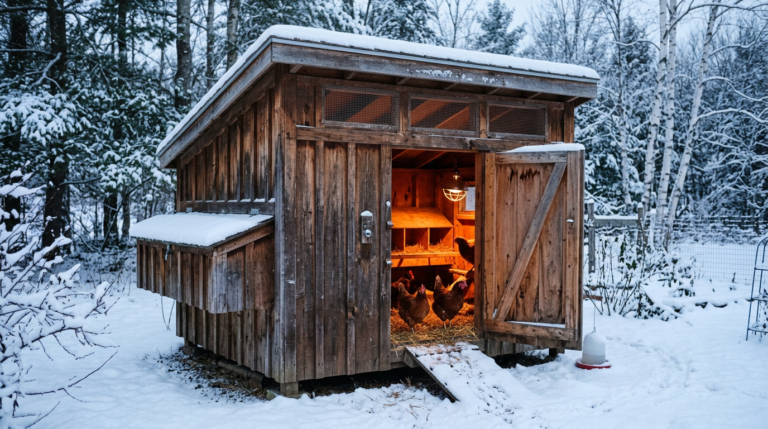
The majority of predator attacks happen between dusk and dawn. An open coop door after sunset is the single biggest risk factor. Close the door every night without exception, or install an automatic door with a light sensor.
Mistake 5: No Roof on the Run
An open-top run protects against ground predators but leaves your flock completely exposed to hawks, owls, and eagles. Cover the run with hardware cloth, welded wire, or heavy-duty predator netting.
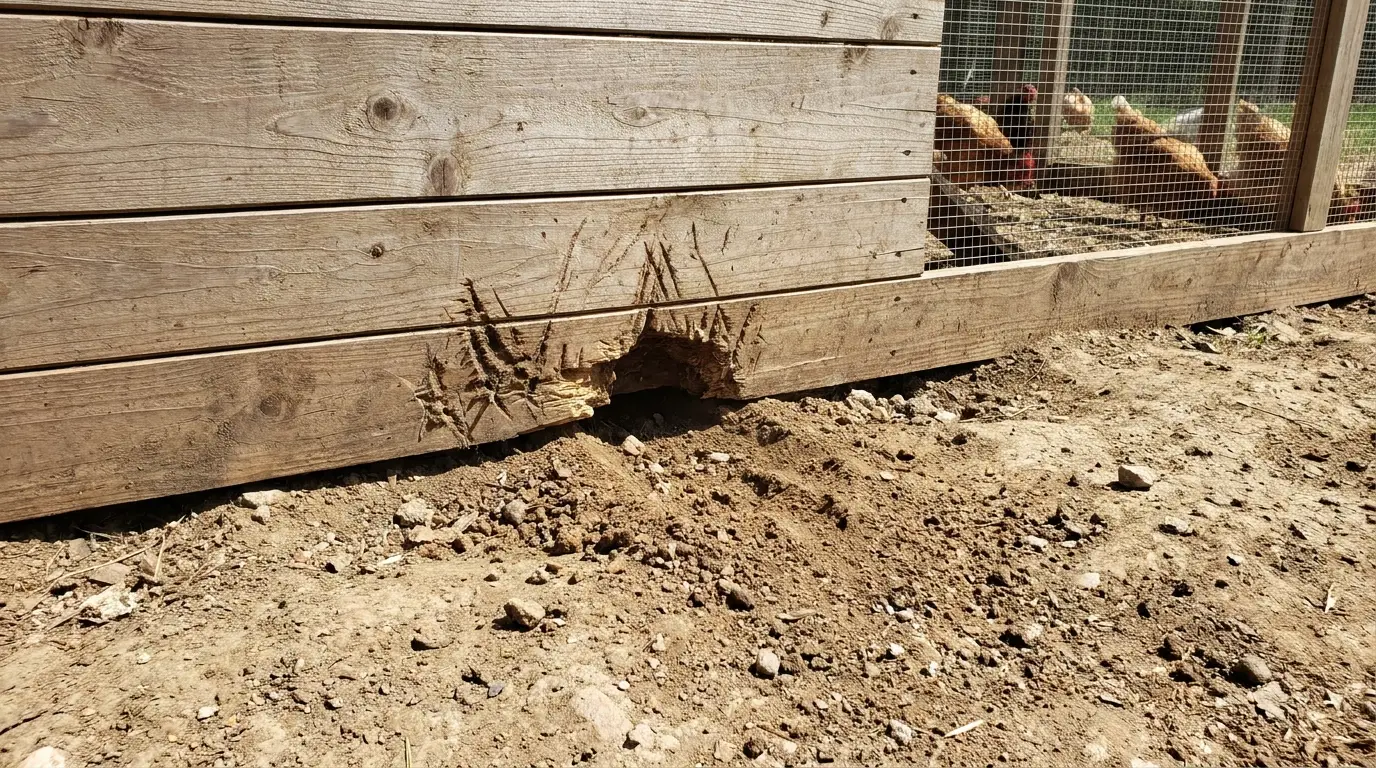
Mistake 6: Gaps Around Doors and Frames
A gap as small as 1 inch is enough for a weasel or mink to enter. As wood ages, it warps and shrinks, creating gaps around doors, nest box lids, and where walls meet the roof. Inspect every seam and seal gaps with hardware cloth or wood strips.
Mistake 7: Attaching Hardware Cloth with Staples
Staples pull out under pressure. A raccoon pushing against hardware cloth held by staples can pop them out one by one. Always use screws with fender washers to secure hardware cloth. Space them every 4 to 6 inches.
Mistake 8: Leaving Feed Out Overnight
Open feeders attract raccoons, rats, opossums, and skunks to your coop area. These animals come for the feed and discover the chickens. Bring feeders inside at night or use treadle feeders that close automatically. Remove fallen fruit and compost near the coop.
Mistake 9: Skipping Monthly Inspections
A coop that was secure six months ago may not be secure today. Wood rots, screws loosen, wire rusts, and new gaps appear. Walk the full perimeter monthly and check every attachment point, seam, and latch. Fix problems immediately — predators find weaknesses faster than you do.
Mistake 10: Relying on Deterrents Instead of Barriers
Motion lights, predator urine, ultrasonic devices, and fake owls may buy a few days at best. Predators habituate to all of them. Physical barriers — hardware cloth, dig aprons, and two-step locks — are the only reliable protection. Use deterrents as supplements, never as your primary defense.
The Security Audit Checklist
Use this list to audit your coop right now:
- All openings covered with 1/2-inch hardware cloth (not chicken wire)
- Hardware cloth secured with screws and washers (not staples)
- Dig apron installed around the full perimeter
- Two-step locks on every door, lid, and access panel
- Run covered with wire or predator netting
- No gaps larger than 1/2 inch anywhere on the structure
- Coop door closes every night (manually or automatically)
- No feed left accessible overnight
- All wood solid with no rot or warping
- Monthly inspection schedule in place
If any item is unchecked, fix it this weekend. Every open vulnerability is a predator’s invitation.
Frequently Asked Questions
Which mistake is the most dangerous?
Leaving the coop door open at night causes the most losses because it gives predators unrestricted access to sleeping, defenseless birds. Close the door every night.
How much does it cost to fix all these mistakes?
For a standard 4×8 coop with a run, upgrading hardware cloth, locks, and adding a dig apron typically costs $100 to $250 in materials. An automatic coop door adds $100 to $200. This is a fraction of the cost of replacing lost birds and the emotional toll of a predator attack.
Can I predator-proof a cheap prefab coop?
Yes, but it takes work. Most prefab coops need chicken wire replaced with hardware cloth, latches upgraded, and a dig apron added. Some have wood too thin to hold screws, which may require reinforcing the frame. Start with the 5 layers of predator protection and work through each one.
Skip the mistakes entirely. Our predator-proof coop plans are designed with all 10 security points built in from the start.
Written by The CoopCrafts Team
Our team of DIY coop builders and backyard chicken keepers. We design, build, and field-test predator-proof coop plans so you can protect your flock with confidence.