Predator-Proof Chicken Coop Checklist: 12 Specs That Actually Work
Last updated: August 2, 2026 · CoopCraftsPro
Short answer: A predator-proof coop needs 1/2-inch hardware cloth on every opening, fastened with screws and fender washers every 6 to 8 inches, a dig barrier buried 12 inches or an 18 to 24 inch ground apron, a fully covered run, and two-step latches on every door.
Most predator advice stops at the level of “use hardware cloth” and “lock the door at night.” That is correct, and it is not enough to build from. When a raccoon is working on your run at two in the morning, the thing that stops it is a specific mesh gauge, a specific fastener, a specific latch – not general advice.
What follows is a checklist of measurable specifications. Print it, walk out to your coop, and check each line. Anything you cannot tick is an open door.
These specifications line up with published guidance from extension predator management for backyard flocks, which advises burying hardware cloth at least 12 inches into the ground to deter diggers and having the flock roost inside a secured, locked structure at night. It also notes that weasels can squeeze through openings as small as a quarter inch and typically get straight through chicken wire.
Barrier Specifications
1. Half-inch hardware cloth on every opening
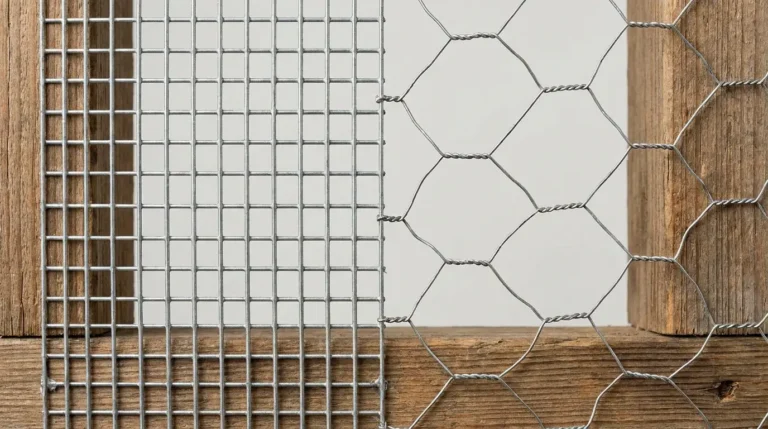
Not chicken wire. Chicken wire is designed to keep chickens in, not predators out – a raccoon can tear it, and it can reach through 1-inch mesh, grab a bird against the wire, and pull it through in pieces. Use 1/2-inch galvanized hardware cloth, 19 gauge or heavier, on windows, vents, run walls, and any gap wider than half an inch.
Our full comparison is here: Hardware Cloth vs Chicken Wire.
2. Screws and washers, never staples alone
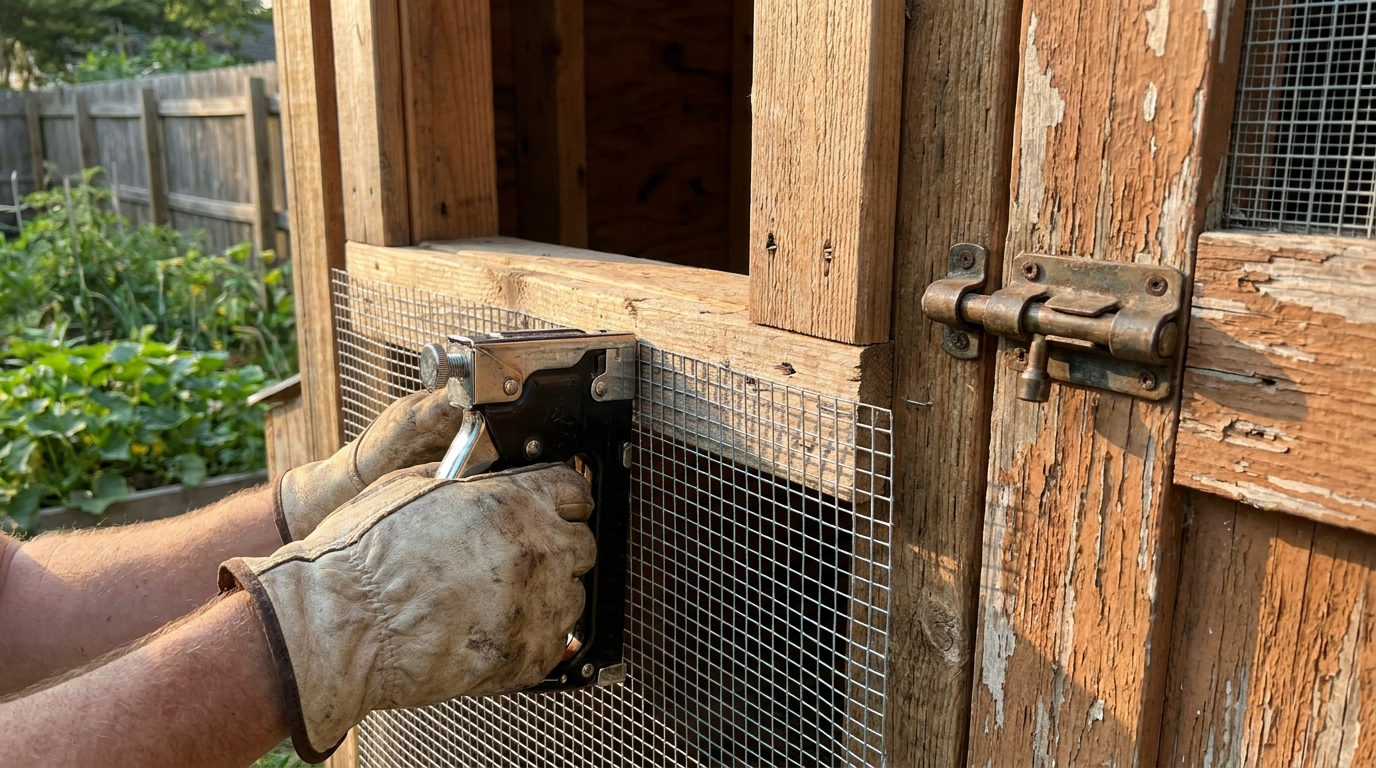
This is the specification people skip, and it is the one that fails. A raccoon does not need to break the mesh if it can peel the mesh off the frame. Fasten hardware cloth with exterior screws and fender washers every 6 to 8 inches around the entire perimeter. Poultry staples on their own pull out under sustained pulling.
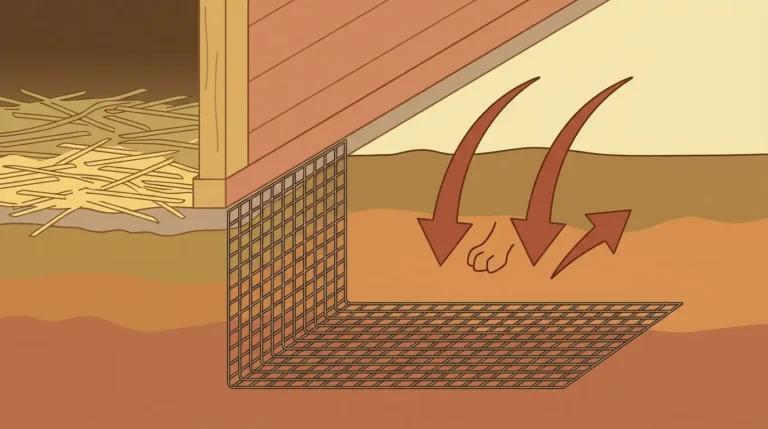
3. A dig barrier on the full perimeter
Foxes, coyotes, dogs, and raccoons all dig. Two accepted methods:
- Buried: hardware cloth down 12 inches, bent outward in an L at the bottom.
- Apron: hardware cloth laid flat on the ground, extending 18 to 24 inches out from the wall, staked and covered with soil or gravel.
The apron is easier and works just as well – diggers start at the base of the wall, hit wire, and give up. Details here: What Is a Chicken Coop Dig Apron.
4. A covered run
Hawks and owls attack from above. Cover the run with hardware cloth, welded wire, or aviary netting. Netting stops raptors but not climbing predators, so if raccoons are active locally, use wire over the roof. See protecting chickens from hawks.
5. No gap wider than half an inch
Weasels and mink pass through openings around one inch across, and rats need very little. Walk the coop at dusk with a flashlight held inside; anywhere light escapes is a gap to close.
Hardware Specifications
6. Two-step latches on every door
Raccoons have hands and patience. The University of New Hampshire Extension notes that raccoons commonly pull a bird’s head or legs through wire and are among the most persistent coop raiders. They routinely defeat hook-and-eye latches, simple slide bolts, and spring hooks. Every door – main door, nest box lid, clean-out hatch, run gate – needs a latch that requires two distinct motions, such as a barrel bolt with a carabiner through the loop, or a lockable hasp.
More on this: best predator-proof locks and latches.
7. Nest box lids latched
External nest boxes are a frequently overlooked entry point. That lid needs the same two-step latch as the main door.
8. Hinges on the inside or with security screws
A door with exposed removable hinge pins can be opened from the hinge side. Use non-removable pin hinges or mount hinges internally.
Structural Specifications
9. A solid floor, or wire beneath
A coop sitting directly on soil invites digging from underneath. Either build a solid raised floor, or lay hardware cloth under the entire footprint before the coop goes down.
10. Elevated or sealed at the base
Raise the coop 12 or more inches so predators cannot nest underneath and you can see beneath it, or seal the base to the ground completely. The in-between – a few inches of dark crawl space – is the worst option.
11. Roosts away from walls
A hen roosting against a wire wall can be grabbed through it. Keep roost bars at least 12 inches away from any mesh surface.
Routine Specifications
12. Locked at dusk, every night, without exception
Every layer above buys you time. This is the one that ends the conversation. Most losses happen because a door was left open on a night that felt like an exception.
If you are not reliably home at dusk, an automatic door is worth it. Our honest assessment: do you need an automatic coop door?
Quick Audit Table
| Spec | Requirement | Common failure |
|---|---|---|
| Mesh | 1/2″ hardware cloth, 19ga+ | Chicken wire |
| Fasteners | Screws + washers, 6-8″ apart | Staples only |
| Dig barrier | 12″ buried or 18-24″ apron | None at all |
| Run roof | Fully covered | Open top |
| Gaps | None over 1/2″ | Vent and eave gaps |
| Latches | Two-step, every door | Hook and eye |
| Floor | Solid or wire underneath | Bare soil |
| Roosts | 12″+ from mesh | Against the wall |
| Routine | Locked at dusk daily | “Just this once” |
Where to Start if You Cannot Do It All
If your coop fails several of these and you have one weekend, the highest-value order is:
- Two-step latches on every door – cheapest fix, stops the most common intruder.
- Replace chicken wire with hardware cloth, screwed and washered.
- Lay a dig apron around the perimeter.
- Cover the run.
Also worth reading before you start: 10 coop security mistakes and signs a predator is stalking your coop.
Frequently Asked Questions
Does chicken wire stop raccoons?
No. Chicken wire is designed to contain chickens, not exclude predators. A raccoon can tear it and can reach through 1-inch mesh to pull a bird against the wire. Use 1/2-inch hardware cloth, 19 gauge or heavier.
How deep should hardware cloth be buried around a coop?
Bury it 12 inches deep and bend the bottom outward into an L shape. Alternatively, lay an apron of hardware cloth flat on the ground extending 18 to 24 inches out from the wall and stake it down.
What kind of latch keeps raccoons out?
Any latch requiring two distinct motions, such as a barrel bolt secured with a carabiner, or a lockable hasp. Raccoons routinely open hook-and-eye latches, spring hooks, and simple slide bolts.
Why should hardware cloth be screwed rather than stapled?
A raccoon does not need to break the mesh if it can peel the mesh off the frame. Poultry staples pull out under sustained pulling. Use exterior screws with fender washers every 6 to 8 inches.
What size gap can a weasel fit through?
Weasels and mink can pass through openings around one inch across, and rats need less. No gap wider than half an inch should remain anywhere on the coop.
Need help choosing the right hardware? Our chicken coop locks guide compares carabiners, barrel bolts, padlocks, and snap-lock hasps with pricing for each.
n
Predator-proofing is not one clever trick. It is a set of unglamorous specifications, each closing one route in. Work down the list and the night stops being a problem.