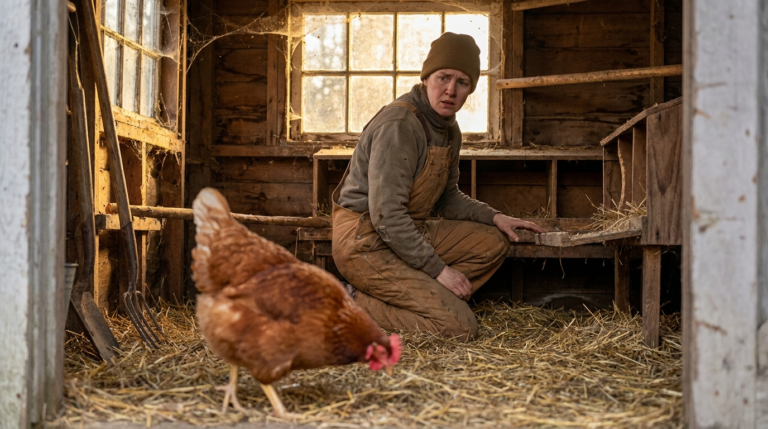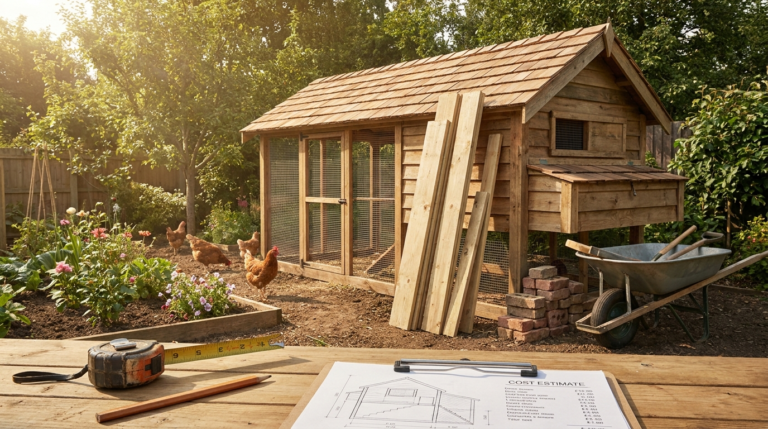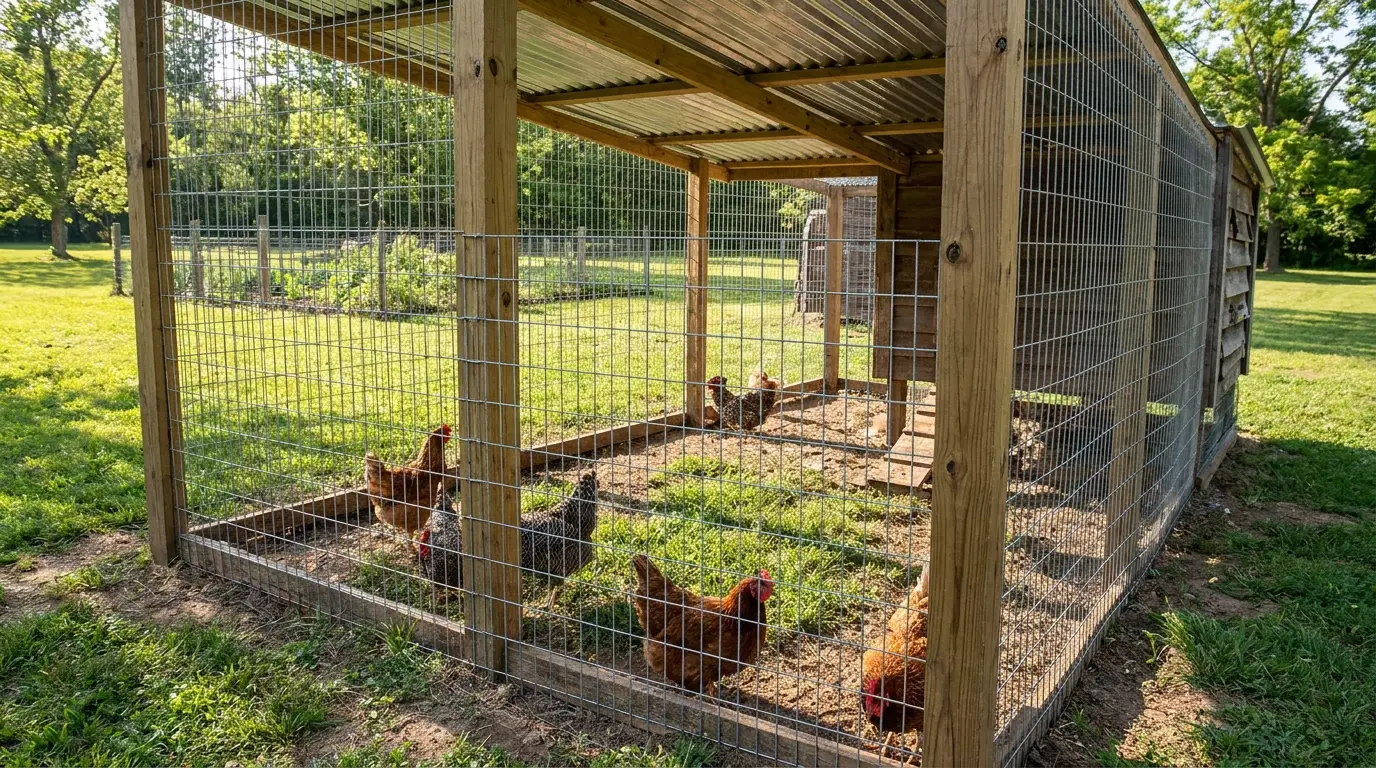
How to Build a Predator-Proof Chicken Run Step by Step
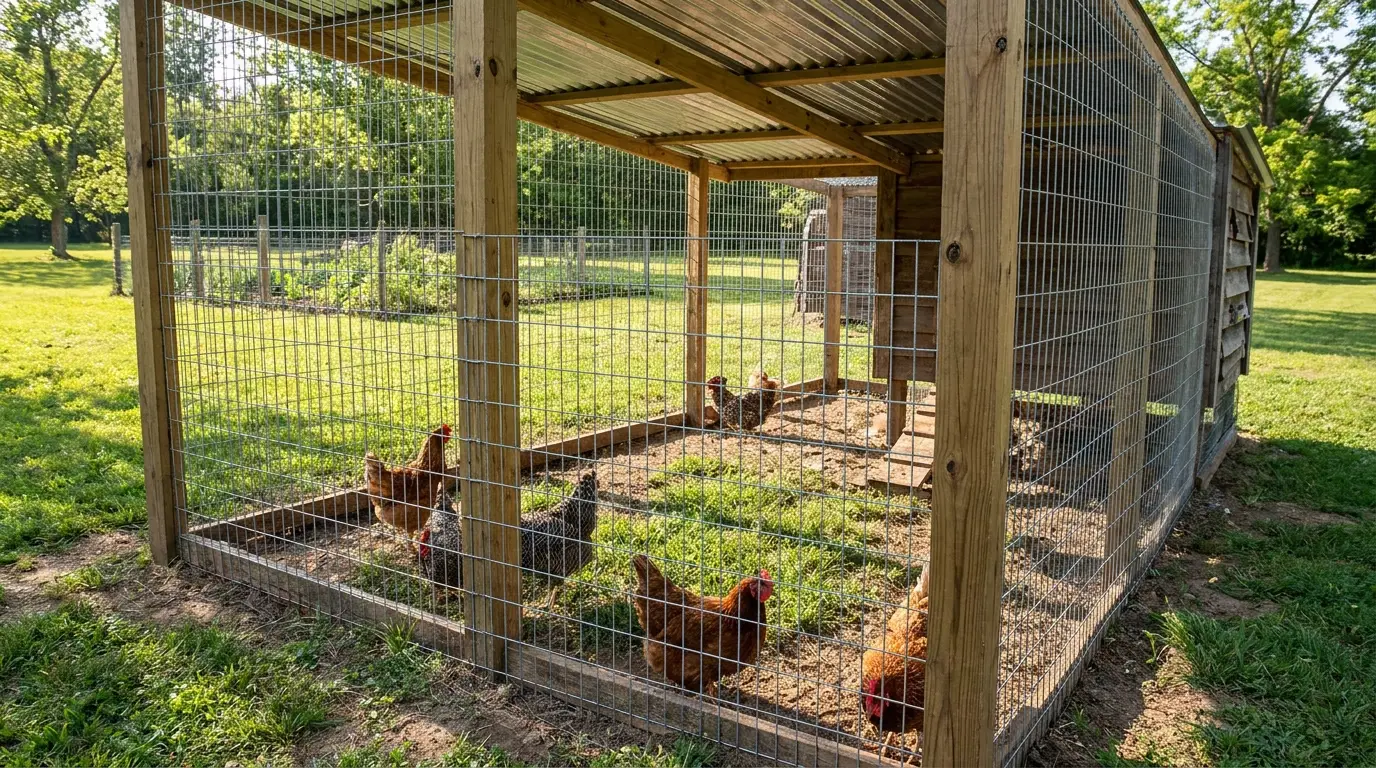
If your chickens free-range during the day, a predator-proof chicken run gives them outdoor space without the risk. Building one yourself costs less than you think — and it could save your flock from hawks, foxes, dogs, and raccoons.
This guide walks you through every step, from choosing the right spot to securing the roof and digging a predator apron.
Why You Need a Dedicated Chicken Run
Free-ranging is great for chickens, but it exposes them to aerial and ground predators. A run gives them sunlight, fresh air, and scratching space while keeping threats out. Even if you only confine them when you can’t supervise, a secure run is non-negotiable.
Step 1: Choose the Right Location
Pick a spot with partial shade and good drainage. Avoid low areas that puddle after rain. Place the run attached to your coop door so chickens can move freely between the two. A south-facing orientation gives the most natural light in winter.
Step 2: Build the Frame
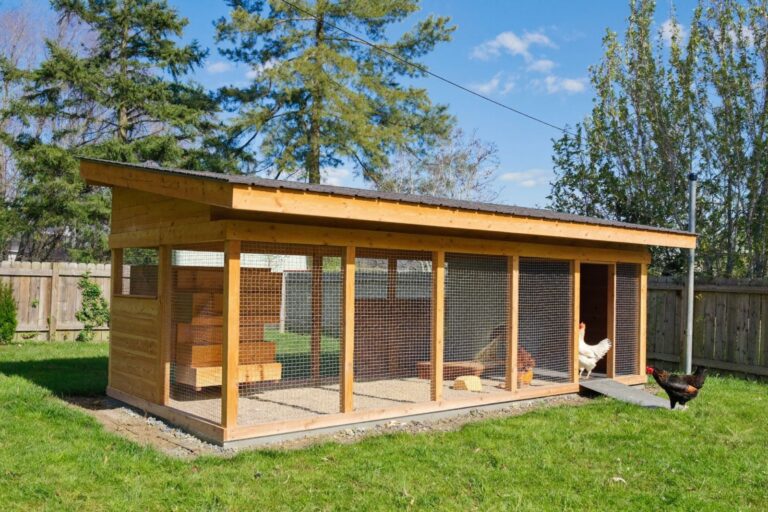
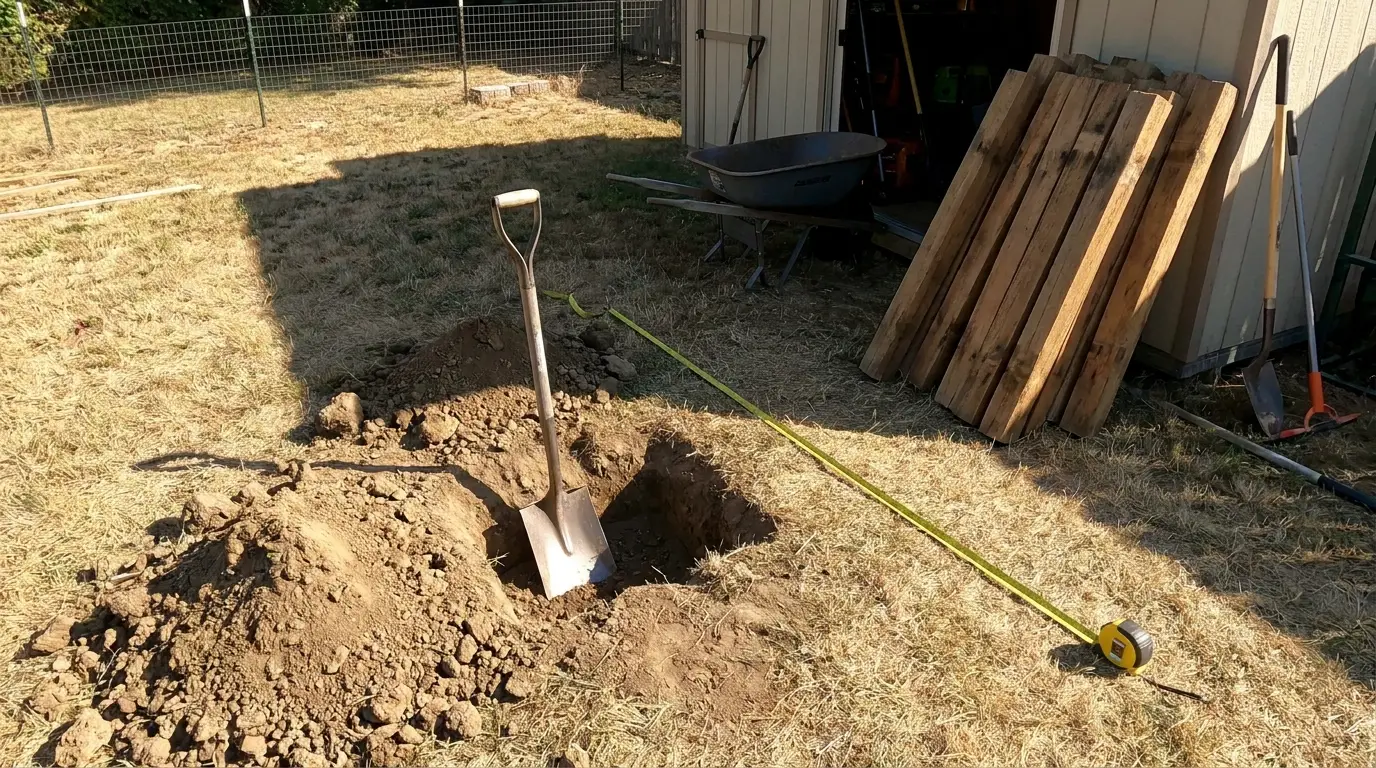
Use pressure-treated 4×4 posts for corners and 2×4 lumber for the top rails. Sink posts at least 24 inches deep — deeper if you live in an area with soft soil. Space your posts no more than 8 feet apart to keep the structure rigid. Bolt connections rather than nailing them for long-term strength.
Step 3: Attach Hardware Cloth on All Sides
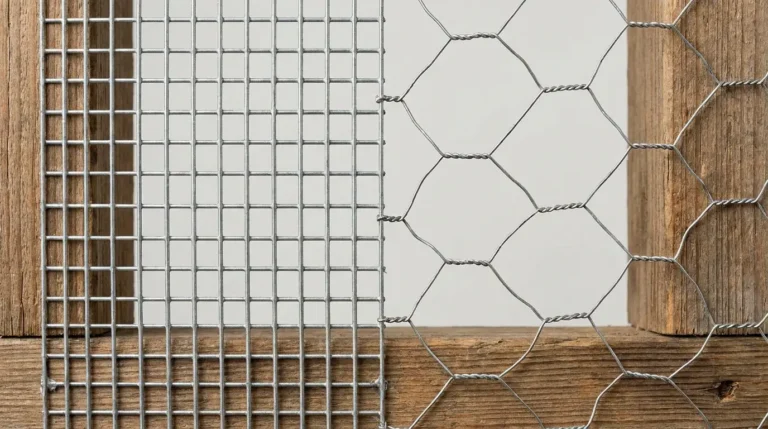
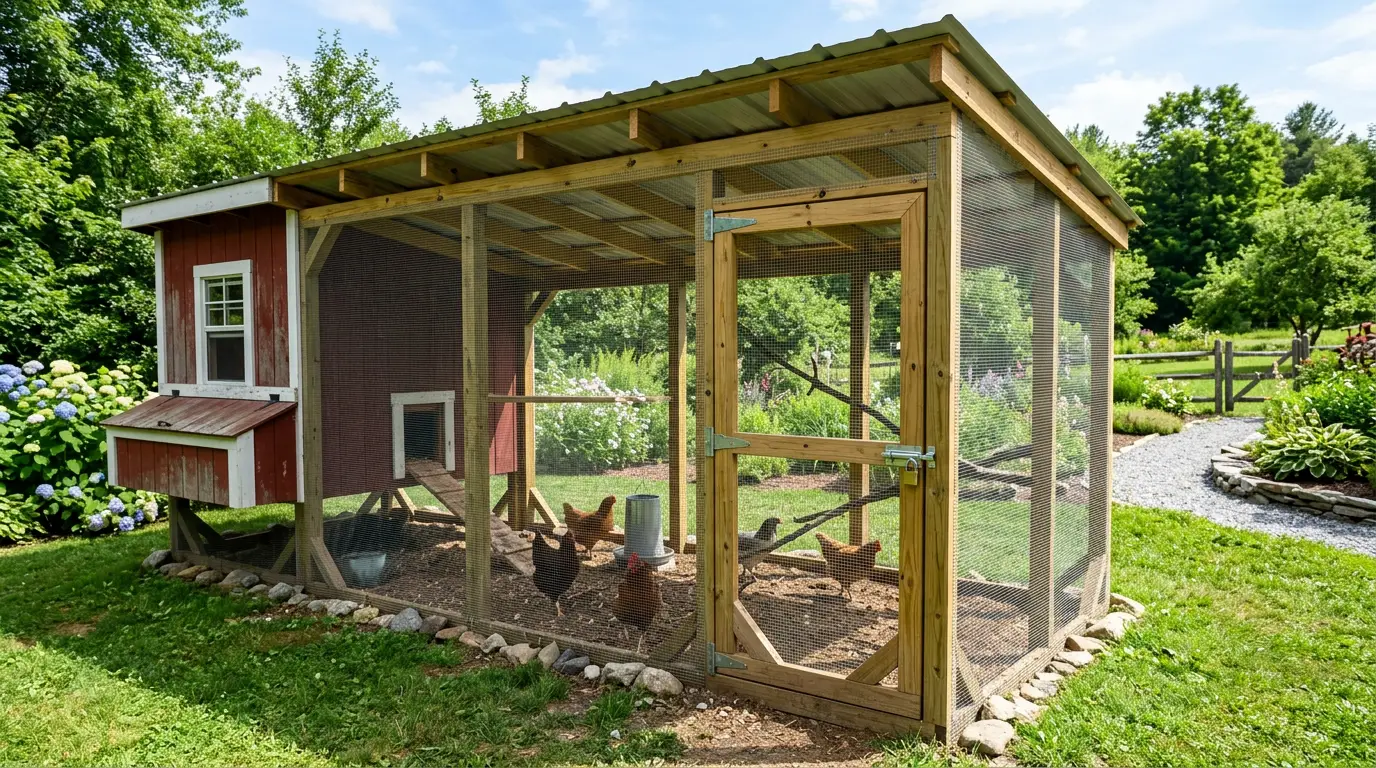
Use 1/2-inch hardware cloth — never chicken wire. Staple it to the inside of the frame with galvanized U-staples every 4 inches. Overlap panels by at least 2 inches and secure the overlap with hog rings or zip ties. Cover the top too — an open-top run is an invitation to hawks and owls.
Step 4: Install a Dig-Proof Apron
Foxes, coyotes, and dogs will dig under a run in minutes. Lay a 24-inch apron of hardware cloth flat on the ground around the perimeter and stake it down. Cover it with soil or gravel. Within a few months, grass grows through and hides it completely. This stops every digging predator.
Step 5: Secure the Door
Use a solid door with a two-step latch. Raccoons open simple latches, so use a carabiner or padlock on a barrel bolt. No gaps larger than 1 inch.
Step 6: Add a Roof
Cover the top with hardware cloth, welded wire, or UV-rated bird netting. Hawks and owls strike from above, so an open-top run is never safe.
Mistakes to Avoid
Using chicken wire instead of hardware cloth is the top mistake. Leaving ground gaps, weak latches, and skipping the roof are equally dangerous.
Maintenance
Inspect monthly for rust, loose staples, and holes. Check the apron for digging signs. Replace damaged hardware cloth immediately.
Written by The CoopCrafts Team
Our team of DIY coop builders and backyard chicken keepers. We design, build, and field-test predator-proof coop plans so you can protect your flock with confidence.