Chicken Nesting Boxes: How Many Do You Need + Setup Tips for More Eggs
Nesting boxes seem like a simple piece of coop furniture, but get the setup wrong and you’ll deal with floor eggs, broken eggs, egg eating, and hens squabbling over a single favorite box. Get it right, and your flock will lay consistently, cleanly, and with far less daily hassle for you. Here’s a complete breakdown of how to plan, build, and maintain nesting boxes that actually work.
The 1-Box-Per-4-Hens Rule
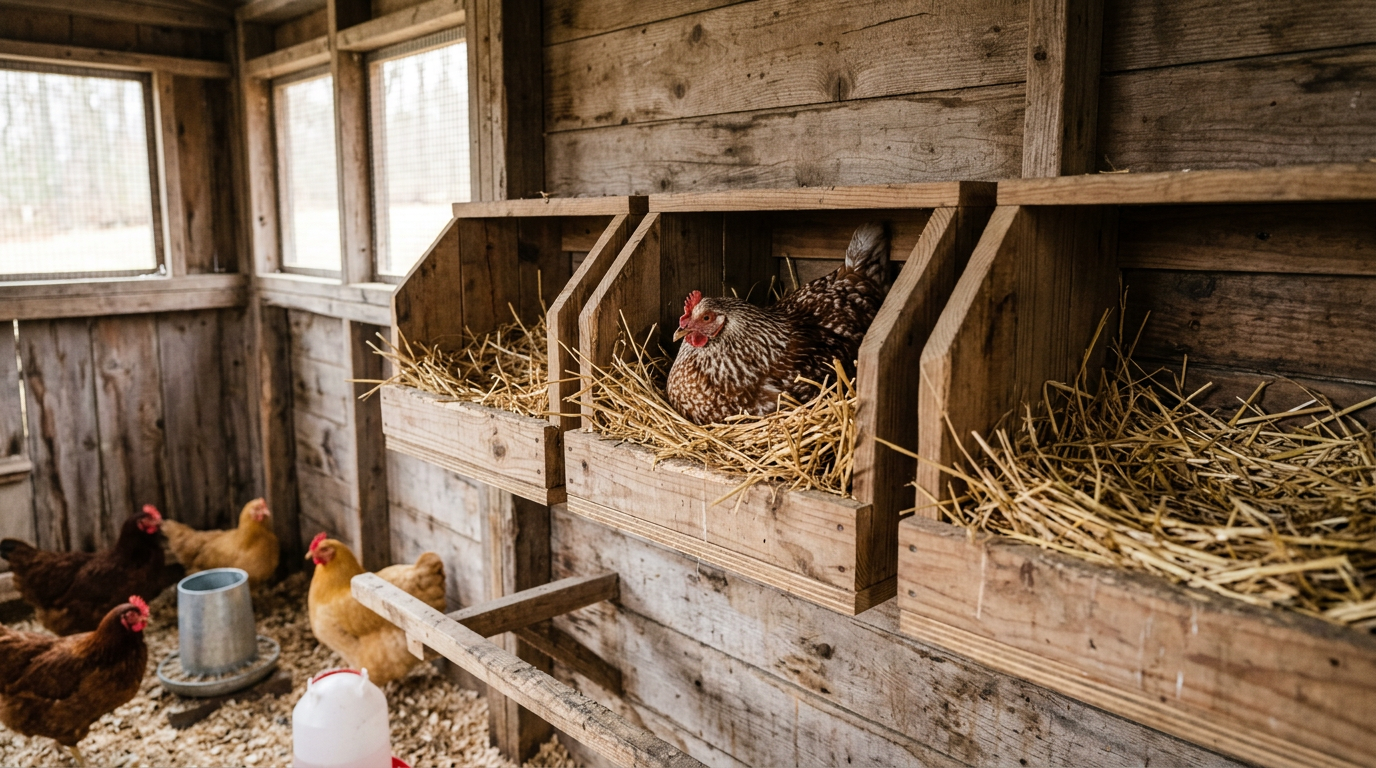
The standard rule of thumb is one nesting box for every four hens. This isn’t a strict requirement — chickens will often crowd into a single favorite box even when others are available — but it’s a reliable baseline that prevents long waits, floor egg-laying from impatient hens, and overcrowding-related stress.
A few practical notes on this rule:
- It’s fine to have slightly fewer boxes than the ratio suggests, since not all hens lay at the same time of day
- Bantam breeds can sometimes share boxes more comfortably, effectively stretching the ratio
- Larger flocks (15+) benefit from sticking closer to the exact ratio, since the odds of multiple hens wanting to lay simultaneously go up
If you’re still finalizing your coop’s overall footprint, pair this with our chicken coop size calculator to make sure nesting box space fits comfortably within your total design.
Ideal Nesting Box Dimensions
Size matters more than people expect. Too small, and hens avoid the box or break eggs trying to turn around; too large, and multiple hens may pile in together, increasing the odds of cracked eggs.
- Standard breeds: 12 x 12 x 12 inches (width x depth x height) is the standard target
- Bantam breeds: 10 x 10 x 10 inches works well
- Large or giant breeds (Jersey Giants, Brahmas): 14 x 14 x 14 inches or slightly larger
A slightly raised lip (2-4 inches) along the front edge of the box helps keep bedding — and eggs — from rolling or being scratched out onto the coop floor.
Ideal Height Off the Ground
Nesting boxes should sit 18-24 inches off the coop floor — high enough to feel safe and separate from the day-to-day traffic of the coop, but noticeably lower than the roosting bars. This height difference matters: chickens instinctively want to roost as high as possible at night, so if nesting boxes are placed higher than or equal to the roosts, hens will often try to sleep in the boxes instead, filling them with droppings overnight and creating dirty eggs the next morning.
Always position roosting bars higher than the nesting boxes to keep this hierarchy correct.
Bedding Materials: Straw vs. Shavings vs. Nesting Pads
What you line the box with affects both egg cleanliness and cushioning against breakage.
Straw
Traditional and widely used. Straw provides good cushioning and insulation, and hens seem to enjoy shaping it into a nest. Downside: it can harbor mites more easily than shavings and needs more frequent replacement since it compacts and holds moisture.
Pine Shavings
A popular, absorbent, relatively low-cost option that controls odor well. Avoid cedar shavings specifically — the aromatic oils in cedar can cause respiratory irritation in chickens over time. This same caution applies to your general coop flooring; see our comparison of deep litter vs. sand bedding for more on bedding choices throughout the coop.
Nesting Pads (Reusable Mats)
Washable synthetic nesting pads are a newer, low-maintenance option — they cushion eggs well, are easy to rinse clean, and cut down significantly on daily bedding refreshes. The upfront cost is higher, but many keepers find the time savings worth it long term.
Whatever material you choose, keep it 3-4 inches deep for adequate cushioning, and refresh or clean it at least weekly, more often if it becomes soiled.
Curtains for Privacy
Hanging a simple fabric curtain or flap over the front of each nesting box — or the whole bank of boxes — gives hens a sense of privacy and security while laying, which can reduce stress-related floor laying and egg eating. It also darkens the box slightly, which many hens find more comfortable for the exposed, vulnerable moments of laying an egg. Scrap fabric, an old towel, or a length of burlap all work fine; just make sure it can’t easily trap a hen or get pecked apart and swallowed.
Roll-Away Nesting Boxes
Roll-away boxes have a gently sloped floor that lets the newly laid egg roll forward into a separate collection tray or compartment, out of reach of the hens. This design directly solves two of the most frustrating nesting box problems: egg eating and broken eggs from being stepped on. They’re more expensive or more complex to DIY than a standard flat-bottom box, but for flocks with a persistent egg-eating problem, they’re often the most effective fix available.
Common Nesting Box Problems and Fixes
Problem: Hens Sleeping in the Boxes
Cause: roosts are lower than or equal in height to the nesting boxes, so hens default to the boxes for sleeping. Fix: raise the roosting bars well above the boxes, and consider temporarily blocking access to the boxes in the evening for a few nights (using a board or curtain) to break the habit, opening them back up each morning.
Problem: Hens Eating Their Own Eggs
Egg eating usually starts by accident — a cracked egg from rough handling or a fall — and becomes a learned habit once a hen discovers eggs are food. Fixes include:
- Switching to roll-away boxes so eggs are out of reach immediately after laying
- Collecting eggs more frequently throughout the day
- Adding more cushioning to reduce accidental cracks
- Checking calcium and protein levels in the diet, since deficiency can drive egg eating (our feeding guide covers proper nutrition)
- Using fake or ceramic eggs to discourage the habit, since hens quickly learn that pecking these “eggs” yields nothing
Problem: Hens Refusing to Use the Boxes
If hens are laying on the coop floor instead of in boxes, check for a few common causes: boxes placed in a high-traffic or overly bright area, boxes that are too new or don’t yet smell familiar (adding a golf ball or fake egg as a visual cue can help), insufficient bedding, or overcrowding with too few boxes for the flock size. Moving boxes to a quiet, dim corner and adding a curtain often resolves this quickly.
Problem: All Hens Want the Same Box
This is common even with plenty of boxes available — hens often develop a strong preference for one particular spot. Making all boxes equally dim, quiet, and appealing (consistent bedding, similar curtain setup, similar lighting) reduces this tendency, though some degree of favoritism is just normal flock behavior you’ll likely never fully eliminate.
DIY Nesting Box Ideas
You don’t need to buy pre-made boxes — plenty of low-cost materials work well:
- Repurposed plastic milk crates lined with bedding
- Wooden wine or produce crates mounted in a row
- Five-gallon buckets turned on their side and secured
- Simple plywood boxes built to the dimensions above, which integrate cleanly if you’re already following chicken coop and run plans for the rest of your build
Placement Within the Coop
Nesting boxes should go in the coop’s quietest, dimmest corner, away from the main door and high-traffic walkways. If possible, mount them against an exterior wall with external access via a hinged lid — this lets you collect eggs without stepping fully into the coop, keeping the process quick and reducing daily disturbance to the flock. Avoid placing boxes directly under roosts, where they’ll inevitably collect droppings overnight.
Final Thoughts
A well-designed nesting box setup is one of the highest-leverage upgrades you can make to a coop — it directly affects egg cleanliness, breakage rates, and how pleasant your daily collection routine is. Stick to the one-box-per-four-hens ratio, keep roosts higher than boxes, choose bedding that suits your climate and maintenance style, and address problems like egg eating or floor laying quickly before they become ingrained habits.