How to Keep Chickens Cool in Summer: 10 Heat-Beating Tips
Chickens handle cold far better than they handle heat. Unlike dogs, they can’t sweat, and their feathers — built to trap warmth — become a liability once temperatures climb past 85°F. If you’ve ever walked out to the coop on a July afternoon and found your flock panting with wings held away from their bodies, you already know how fast summer heat can turn dangerous. The good news: with a few adjustments, you can keep your flock comfortable and productive all season long.
Why Heat Is More Dangerous Than Cold for Chickens
A chicken’s normal body temperature runs around 105–107°F, which means they’re already operating close to their upper limit. When ambient temperatures rise above 90°F, especially with high humidity, chickens struggle to dump excess body heat. Left unmanaged, heat stress can progress to heat stroke within hours, and heat stroke is often fatal. Compare this to winter, where a well-designed coop with good ventilation and proper prep (see our guide on winterizing your coop) keeps birds safe down into the single digits. Heat management deserves just as much attention as cold-weather prep — arguably more, since heat stroke can kill a bird in a single afternoon.
1. Learn the Signs of Heat Stress Before It’s an Emergency
Catching heat stress early is the single best thing you can do for your flock. Watch for these warning signs:
- Panting with an open beak, sometimes with an audible “huffing” sound
- Wings held away from the body to expose skin to air
- Pale or purplish comb and wattles instead of bright red
- Lethargy, sitting rather than moving around
- Reduced appetite but increased water consumption
- Diarrhea or loose, watery droppings
- Laying in shallow depressions or spread flat on cool dirt
If you see multiple birds showing these signs simultaneously, treat it as an emergency, not a mild inconvenience.
Heat Stroke: When to Act Immediately
Full heat stroke looks like a bird that’s stumbling, unresponsive, having seizures, or collapsed. This is a five-alarm situation. Move the bird into shade immediately, and gently wet its legs, feet, and under the wings with cool (not ice-cold) water — cooling too fast can cause shock. Offer water with electrolytes via a dropper if the bird can swallow. A fan blowing over the wet bird speeds evaporative cooling. Do not submerge the whole bird in water. If the bird doesn’t respond within 15–20 minutes, contact an avian vet.
2. Maximize Shade Around the Coop and Run
Shade is your first line of defense. Natural shade from mature trees is ideal since it also allows airflow underneath, but if your run sits in full sun, add shade cloth (aim for 70–90% UV block) over at least half of the run. Leave part of the run uncovered so chickens can choose their preferred light level. Repositionable tarps, market umbrellas, and pallet lean-tos all work in a pinch. If you’re still finalizing your setup, review chicken coop and run plans with roof overhangs and orient the structure so the run gets afternoon shade, which is when heat peaks.
3. Upgrade Ventilation — Don’t Just Rely on What You Built for Winter
A coop sealed up tight for winter becomes an oven in summer. Open every vent, window, and screened opening you have. If your coop only has small winter vents, consider adding hardware-cloth-covered windows on opposite walls to create cross breezes, plus additional soffit or ridge vents near the roofline where hot air collects. Box fans or solar attic fans mounted high in the coop pull hot air out efficiently. For a deeper breakdown of airflow principles, our post on coop ventilation covers the same physics that applies in reverse during summer — the goal now is maximum airflow instead of controlled draft-free venting.
4. Set Up a Misting System
A simple misting line — inexpensive misting nozzles threaded onto a garden hose — creates a fine cooling fog around the run’s shaded area. The trick is fine droplets, not a soaking spray; chickens should walk through cooling mist, not get drenched, since wet feathers next to skin can actually trap heat and humidity. Run misters during the hottest 2–3 hours of the day, typically 1–5 p.m., and place them over dirt or gravel rather than the coop floor to avoid creating a muddy, bacteria-friendly mess.
5. Offer Electrolyte Water and Extra Water Stations
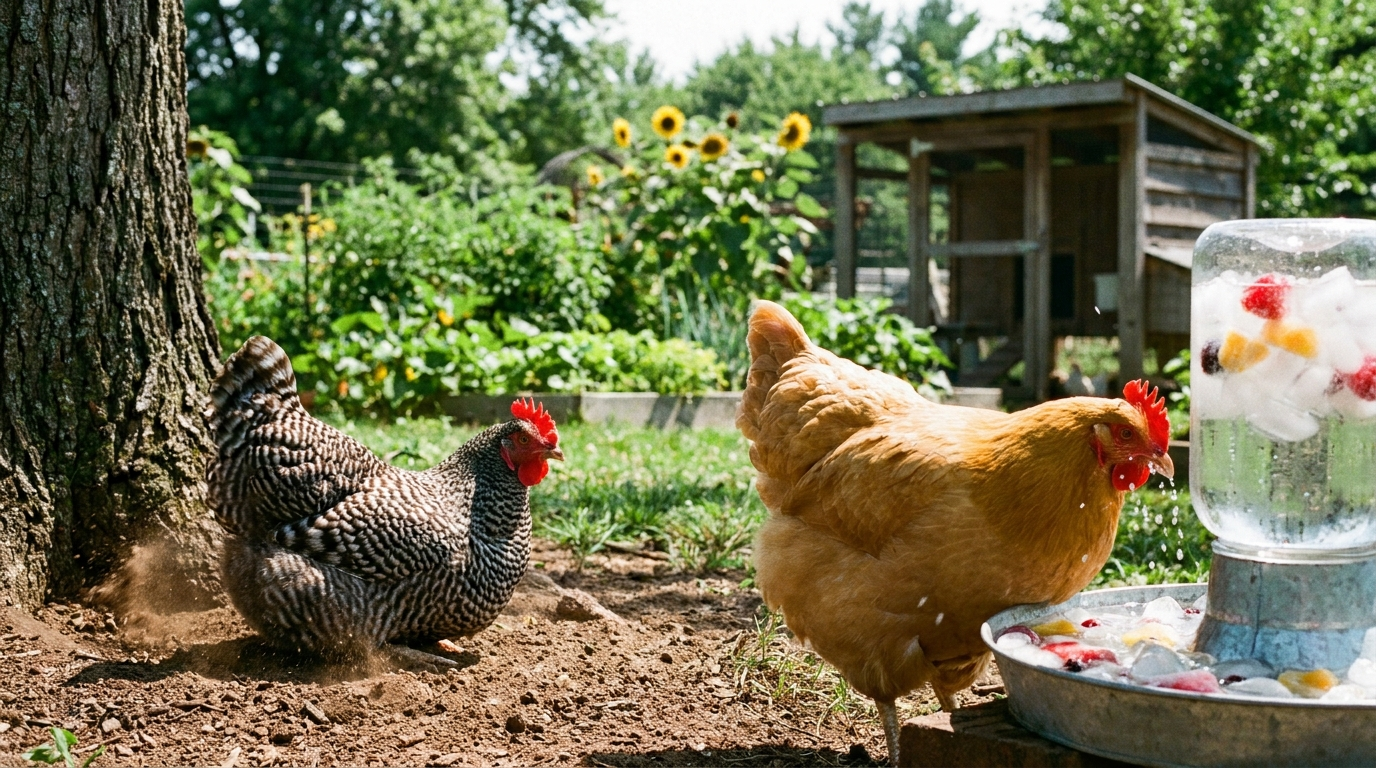
Water consumption roughly doubles in hot weather, and standard tap water sitting in a black waterer in direct sun can become uncomfortably warm within an hour. Add a packet of poultry electrolytes (or a homemade mix of water, a pinch of salt, and a splash of unflavored Pedialyte) during heat waves to replace minerals lost through panting. Keep waterers in shade, add extra stations around the run so no bird has to walk far or wait in line, and float ice cubes in the water during peak afternoon heat to keep it cool longer.
6. Serve Frozen Treats
Frozen treats double as hydration and entertainment. Try:
- Frozen watermelon or cantaloupe chunks
- Ice blocks with berries, corn, and peas frozen inside a muffin tin
- Frozen yogurt smeared on a paver stone
- Chilled, halved cucumbers
Chickens will happily peck at these for a solid chunk of the afternoon, which also keeps them occupied and less stressed. Skip sugary treats and anything heavy in fat during heat waves — digestion itself generates internal body heat, so lighter, water-rich foods are best. If you’re rethinking daily nutrition beyond treats, our guide on what to feed backyard chickens has season-by-season guidance.
7. Give Chickens Access to a Cool Dust Bath
Dust baths aren’t just for parasite control — chickens instinctively dig down to cooler soil layers and fluff dust through their feathers to help regulate temperature. Make sure at least one dust bath area sits in shade, and consider adding a shallow tray of dry sand under a shrub or shaded corner of the run so birds always have a cool spot to burrow into during peak heat.
8. Reduce Heat Sources Inside the Coop
Audit anything inside the coop that generates or traps heat:
- Remove supplemental heat lamps entirely — they should never run in summer
- Switch dark-colored roofing or siding to lighter, reflective colors if you’re building new, or add reflective roof coating to an existing coop
- Reduce deep litter bedding depth slightly in summer, since decomposing litter generates its own heat (more in our deep litter vs. sand bedding comparison)
- Clean the coop more frequently in summer — ammonia buildup is worse in heat and adds respiratory stress on top of thermal stress (see how to clean a chicken coop)
9. Choose Heat-Tolerant Breeds If You’re Expanding Your Flock
If you live somewhere with brutal summers and you’re adding to your flock, breed selection matters. Mediterranean breeds with large single combs (which radiate heat efficiently) and lighter body types tend to handle heat far better than cold-hardy, heavily feathered northern breeds. Leghorns, Andalusians, Minorcas, and Anconas are known heat-tolerant layers, while Orpingtons, Chanteclers, and other fluffy, small-combed breeds struggle in extreme heat. For a full rundown suited to different climates and experience levels, check best chicken breeds for beginners.
Comb Size Is a Heat Radiator
Large single combs and wattles aren’t just decorative — they’re the chicken equivalent of a car radiator, dissipating body heat through blood flow near the surface. Birds with small pea or rose combs lose this advantage and need extra help staying cool in extreme heat.
10. Adjust Coop Space and Flock Density for Summer
Overcrowding raises ambient temperature inside the coop simply from body heat. If you’re on the edge of recommended space guidelines, summer is when it shows. Revisit our chicken coop size calculator to confirm you have adequate square footage per bird, and consider letting chickens roost outside in a covered, predator-safe area on the hottest nights rather than forcing them into a stuffy coop. Just make sure any outdoor roosting spot is fully secured — see our predator-proof chicken coop guide before trying this.
Watch for the Ripple Effects of Heat Stress
Even chickens that never reach full heat stroke can show lingering effects: a drop in egg production, thinner shells, or a temporary pause in laying altogether. If your hens stop laying during a heat wave, it’s usually a temporary stress response rather than a health emergency — our article on why chickens stop laying eggs breaks down heat alongside the other common culprits, and production typically bounces back within one to two weeks once temperatures ease and the stress response resolves.
Final Thoughts
Beating the summer heat comes down to giving your chickens options: shade or sun, still air or breeze, dry ground or a cooling mist. Chickens are good at self-regulating when you give them the tools to do it. Stock up on electrolytes before the first heat wave hits, keep a fan and a spray bottle within reach for emergencies, and check on your flock at least twice during peak afternoon hours on the worst days. A little proactive prep turns a potentially dangerous season into just another part of the yearly rhythm.