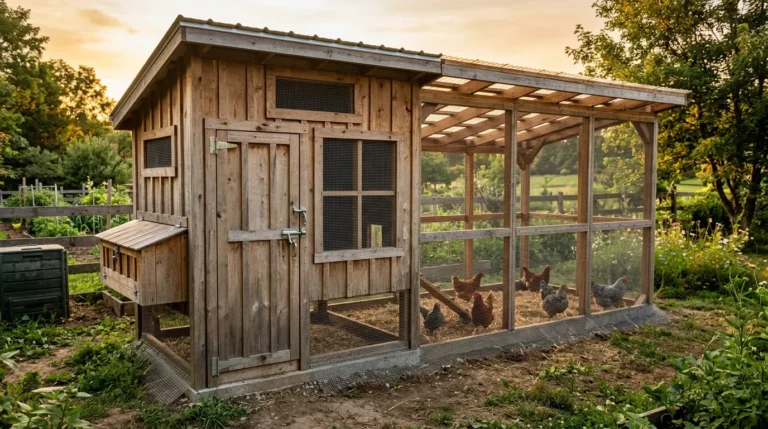
Best Chicken Coop Locks and Latches: Predator-Proof Hardware Guide
A strong coop with hardware cloth and a dig apron still fails if the door opens with a simple latch. Raccoons are the main reason chicken coop locks matter — they have dexterous hands and can open slide bolts, hook-and-eye latches, and basic twist locks in seconds.
This guide covers the best chicken coop locks and latches that actually stop predators, which ones raccoons can defeat, and how to secure every access point on your coop.
Why Standard Chicken Coop Latches Fail
Most coop kits ship with simple hook-and-eye latches or slide bolts. These require only one motion to open — lift, slide, or twist. Raccoons learn single-motion latches through trial and error, and they remember the solution permanently.
A raccoon that opens your latch once will open it every night. They also teach their young. If one raccoon figures out your coop, the whole family knows.
Even opossums and large rats can trip gravity latches and unsprung slide bolts. The only safe assumption is that any single-motion latch will eventually be opened by a predator.
The Two-Step Lock Rule
The most reliable approach is the two-step rule: every lock on your coop should require two different motions performed in sequence. A raccoon can master one motion but struggles with two sequential steps.
Examples of two-step mechanisms:
- Lift a lever AND slide a bolt
- Squeeze a spring AND pull a pin
- Turn a key AND pull a handle
- Unscrew a carabiner gate AND unhook it
This principle is the foundation of every lock recommendation below. If a lock requires only one motion, it does not belong on a chicken coop — no matter how heavy-duty it looks.
Best Chicken Coop Locks and Latches (Ranked)
1. Carabiner Clips — Best Overall
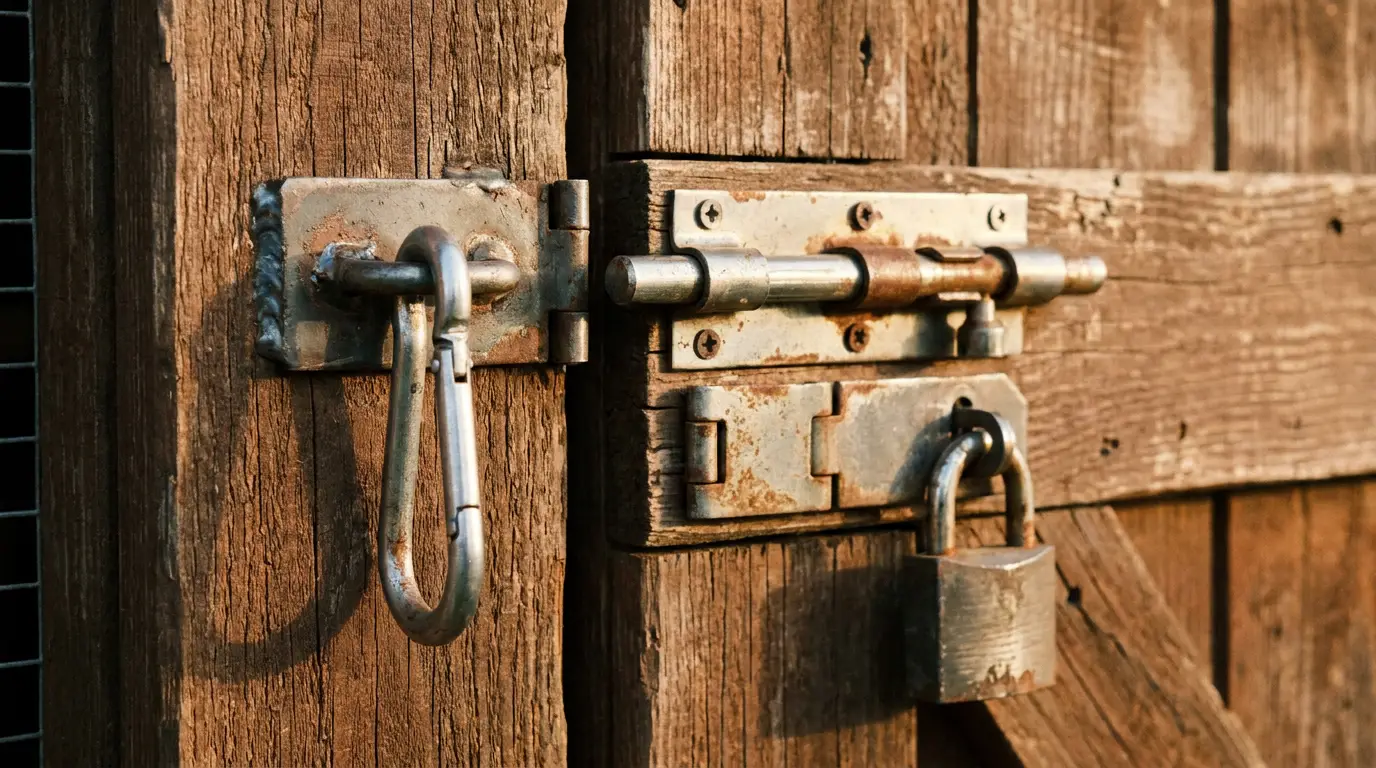
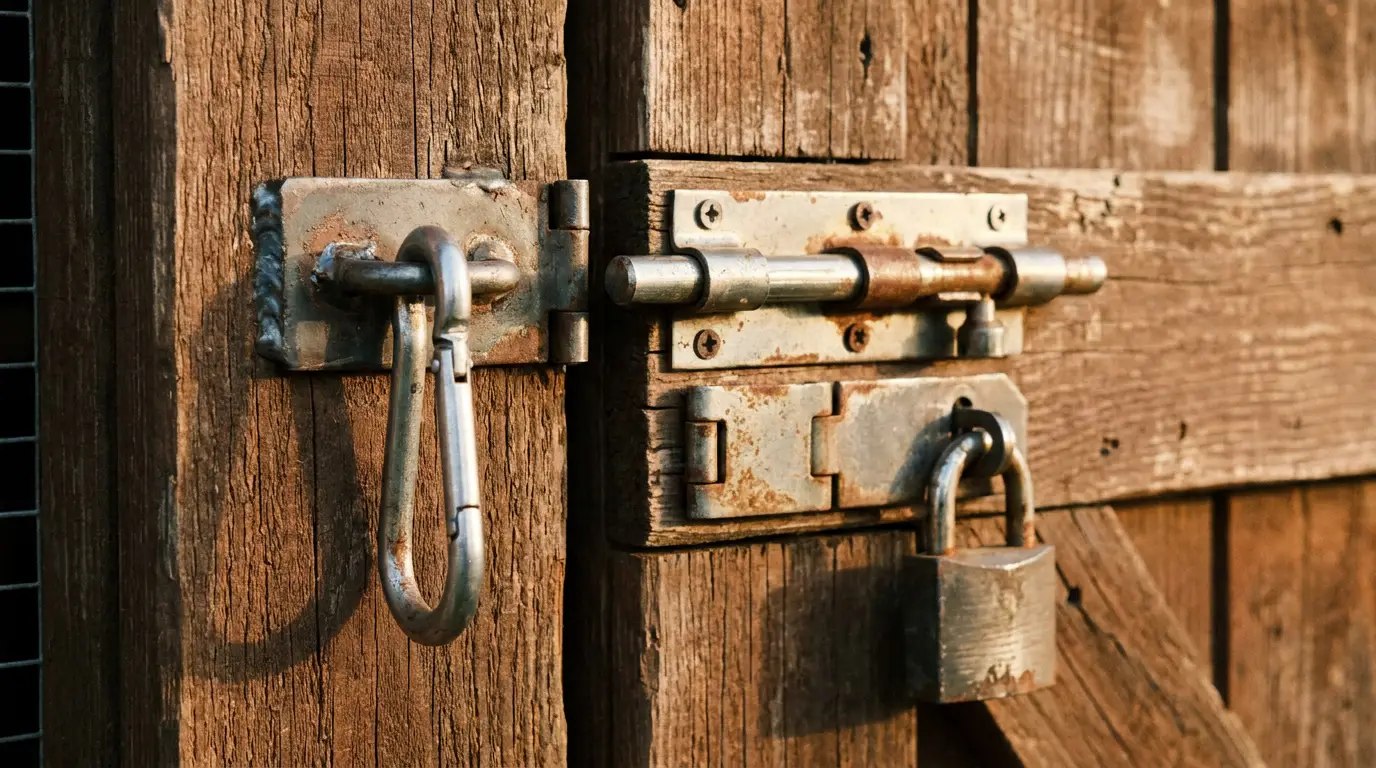
A spring-loaded carabiner clipped through a hasp or eyebolt is one of the simplest and most effective coop locks. The raccoon would need to squeeze the spring gate and rotate the clip simultaneously — a motion their paws cannot replicate.
Best for: Main coop doors, run gates, nest box lids. Building from scratch? Our coop and run plans spec the right lock on every access point.
Cost: $2 to $5 each.
Tip: Use stainless steel or zinc-plated carabiners. Cheap aluminum ones corrode after one winter. A 3-inch carabiner fits most coop hardware.
2. Spring-Loaded Barrel Bolts
A barrel bolt with a spring that holds it in the locked position requires pushing the bolt handle in (against the spring) before sliding it. This two-step motion defeats raccoons reliably.
Best for: Pop doors, clean-out panels, secondary doors.
Cost: $5 to $10 each.
Tip: Mount the bolt handle pointing up on vertical doors so gravity works in your favor — even if the spring weakens, the bolt stays seated.
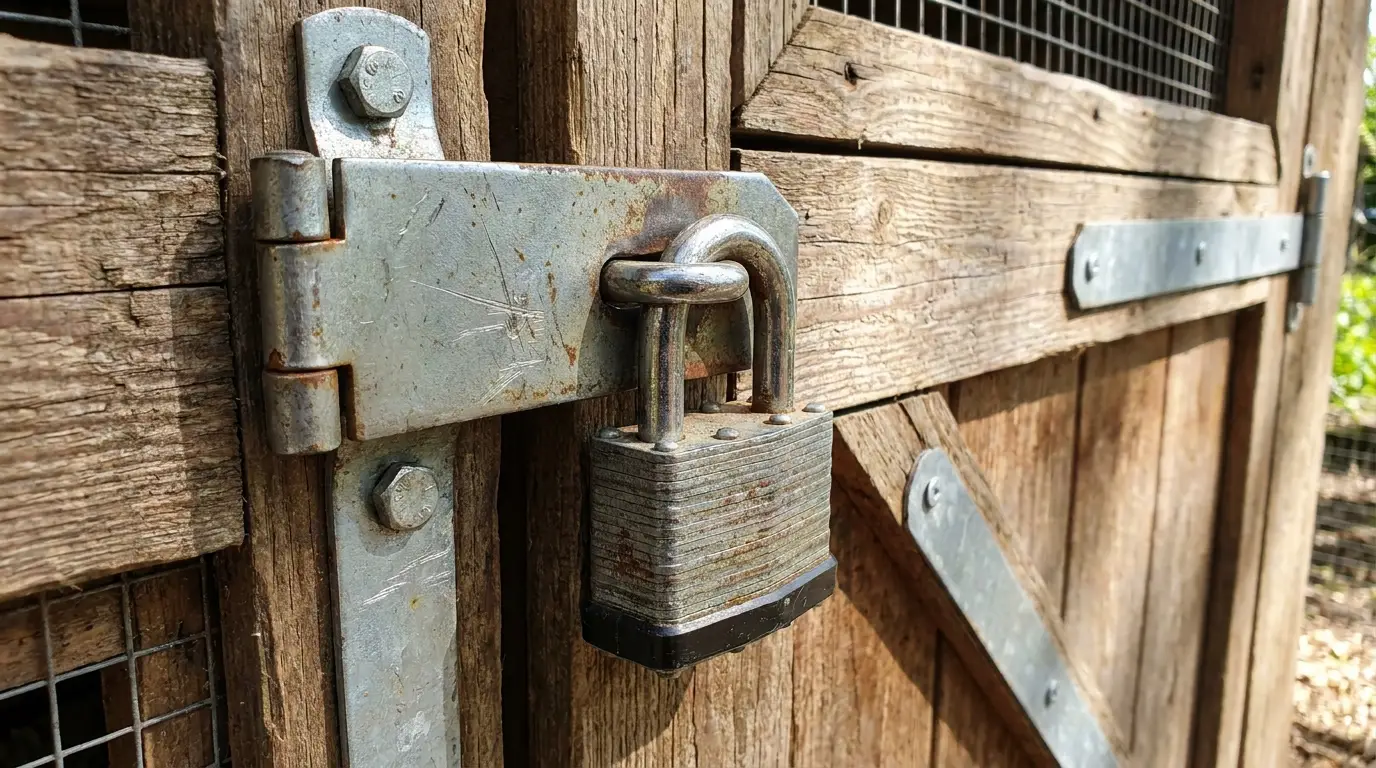 padlock securing a chicken coop door” loading=”lazy”>
3. Padlock and Hasp
A padlock through a hasp is raccoon-proof by definition — no animal is picking a lock. Use a combination padlock so you do not lose the key in the yard. Weatherproof models resist rust and freezing.
Best for: Main door on coops in high-predator areas.
Cost: $8 to $15 each.
Tip: A 4-digit combination is easier in cold weather than fumbling with a key. Choose a lock rated for outdoor use — cheap indoor padlocks seize up after a few frosts.
4. Snap-Lock Hasps
These are hinged metal hasps that snap closed and require lifting a lever while pulling outward to open. They are fast to operate for daily use but too complex for raccoon paws.
Best for: Nest box lids and access panels you open daily.
Cost: $4 to $8 each.
5. Keyed or Combination Coop Door Locks
Purpose-built coop door locks with a key or combination provide maximum security. Some models integrate with automatic coop doors for hands-free locking at dusk.
Best for: Owners with persistent predator problems or coops near wooded areas.
Cost: $15 to $30 each.
Latches Raccoons CAN Open
Avoid these on any coop in raccoon territory:
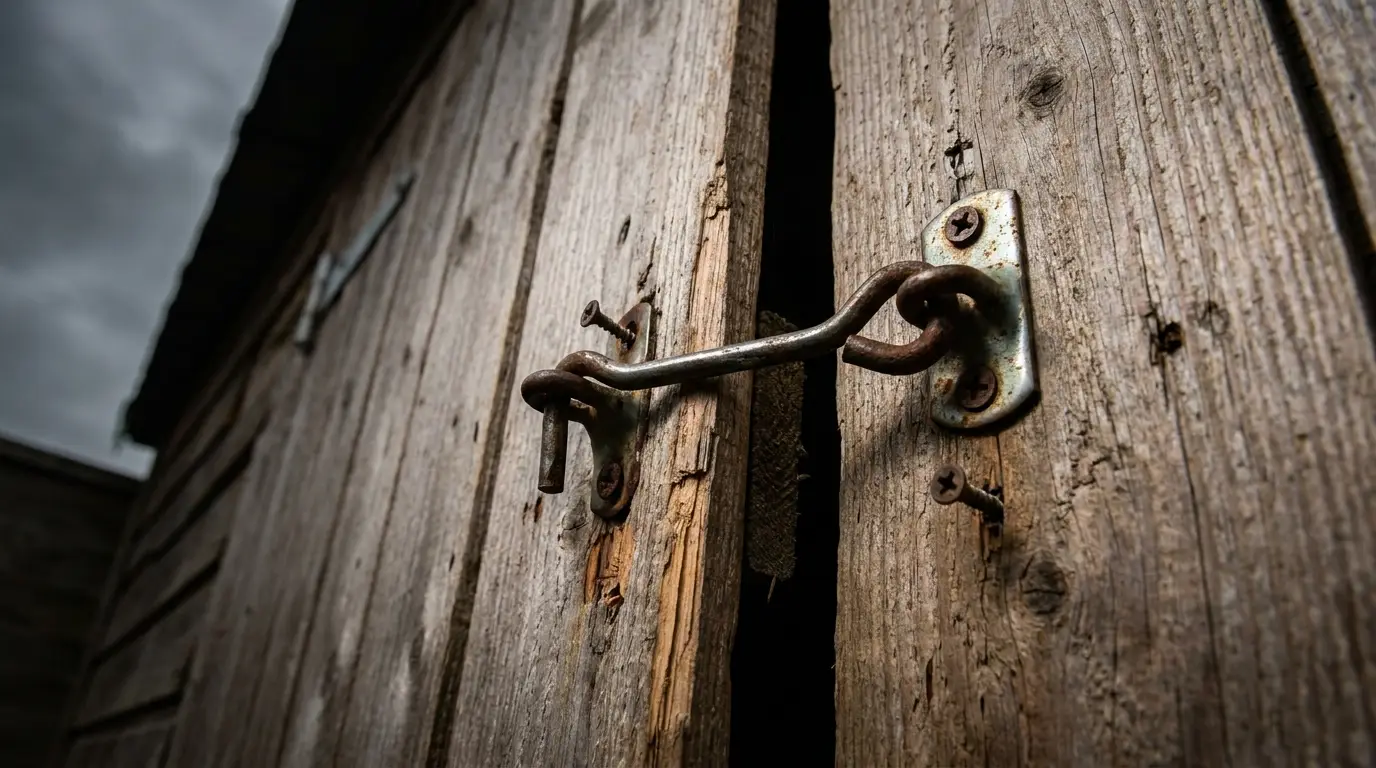
- Hook-and-eye latches: One upward motion opens them. Raccoons master this immediately.
- Simple slide bolts (no spring): One sideways push opens them.
- Twist latches: Raccoons can rotate these with their paws.
- Magnetic catches: Zero resistance to a determined pull.
- Gravity latches: A simple lift defeats them.
If your coop currently uses any of these, replace them before the next nightfall. Predator attacks happen fast — learn the warning signs so you can act before you lose birds.
Every Access Point That Needs a Lock
Most people lock the main door and forget about other openings. Raccoons check every one:
- Main coop door — carabiner or padlock
- Pop door / chicken door — spring barrel bolt or automatic door with built-in lock
- Nest box lid — snap-lock hasp or carabiner
- Clean-out panel — barrel bolt or carabiner
- Run gate — carabiner or padlock
- Ventilation panels — if removable, secure with screws not clips
For a complete checklist of every security point on your coop, see our predator-proof coop checklist — it covers locks, mesh, foundation, and wiring.
How to Install Coop Locks Correctly
Even the best lock fails if installed poorly. Follow these rules:
- Pre-drill screw holes to prevent splitting, especially on cedar and pine framing.
- Use #8 or #10 screws (at least 1.5 inches long) — not the short screws included with most hardware store latches.
- Add a backer plate on thin panels. A raccoon can rip a hasp off 3/8-inch plywood if there is no backing.
- Test the action before you close the coop for the night. A lock that is hard to close will not get closed consistently.
- Weatherproof the hardware with a coat of exterior-grade spray if the lock is not stainless or galvanized.
Lock Maintenance: Keep Your Hardware Working
Locks exposed to rain, dust, and temperature swings need seasonal maintenance:
- Spring and fall: Spray all moving parts with dry silicone lubricant (not WD-40, which attracts dust).
- Before winter: Check that combination locks spin freely. Winterize your coop by testing every lock after the first hard freeze.
- Monthly: Tug each lock to make sure screws are tight. Raccoons test hardware nightly — loose screws get looser fast.
What Locks Cost for a Full Coop Setup
A typical coop has 5 to 7 access points. Here is what a complete lock set costs:
- Budget setup (all carabiners): $10 to $25 total
- Mid-range (mix of carabiners and barrel bolts): $25 to $50
- Maximum security (padlocks + automatic door lock): $60 to $100
Compare this to the total cost to build a chicken coop — lock hardware is one of the cheapest upgrades with the highest impact on flock safety.
Frequently Asked Questions
Can raccoons really open latches?
Yes. Community experience confirms raccoons can solve multi-step puzzles and remember solutions for years. Simple single-motion latches are trivial for them.
Do I need locks if I have an automatic coop door?
Yes. Automatic doors are excellent for the pop door, but you still need locks on the main door, nest box, clean-out panel, and run gate. An automatic door also needs a lock mechanism that prevents predators from pushing it open from outside.
What about bears?
Bears require a different level of security — heavy-duty construction, electric fencing, and commercial-grade hardware. Standard coop locks will not stop a bear. If you are in bear country, electric fencing around the coop perimeter is essential.
How many locks do I need for a chicken coop?
A standard coop needs 5 to 7 locks — one for each access point (main door, pop door, nest box, clean-out panel, run gate, and any removable ventilation panels). Larger coops for 20+ chickens may have additional access panels requiring extra hardware.
Are carabiner clips really predator-proof?
Yes, when properly sized. A raccoon cannot squeeze the spring gate and rotate the clip at the same time. Use a carabiner rated for at least 100 lbs — lightweight keychain carabiners may bend under sustained pressure from larger predators.
Our predator-proof coop plans spec two-step locks on every access point so you know exactly which hardware to buy and where each lock goes.
Next step: Got your coop locked down? Now make sure you’re raising the right birds. Our guide to the 15 best egg laying chicken breeds helps you pick breeds that match your climate and flock goals.
Written by The CoopCrafts Team
Our team of DIY coop builders and backyard chicken keepers. We design, build, and field-test predator-proof coop plans so you can protect your flock with confidence.